Seoul up 0.03%, but pace of gains narrows
Gangnam 3 districts deepen losses from last week
Suwon's Gwonseon-gu leads Gyeonggi Province with 0.62% gain
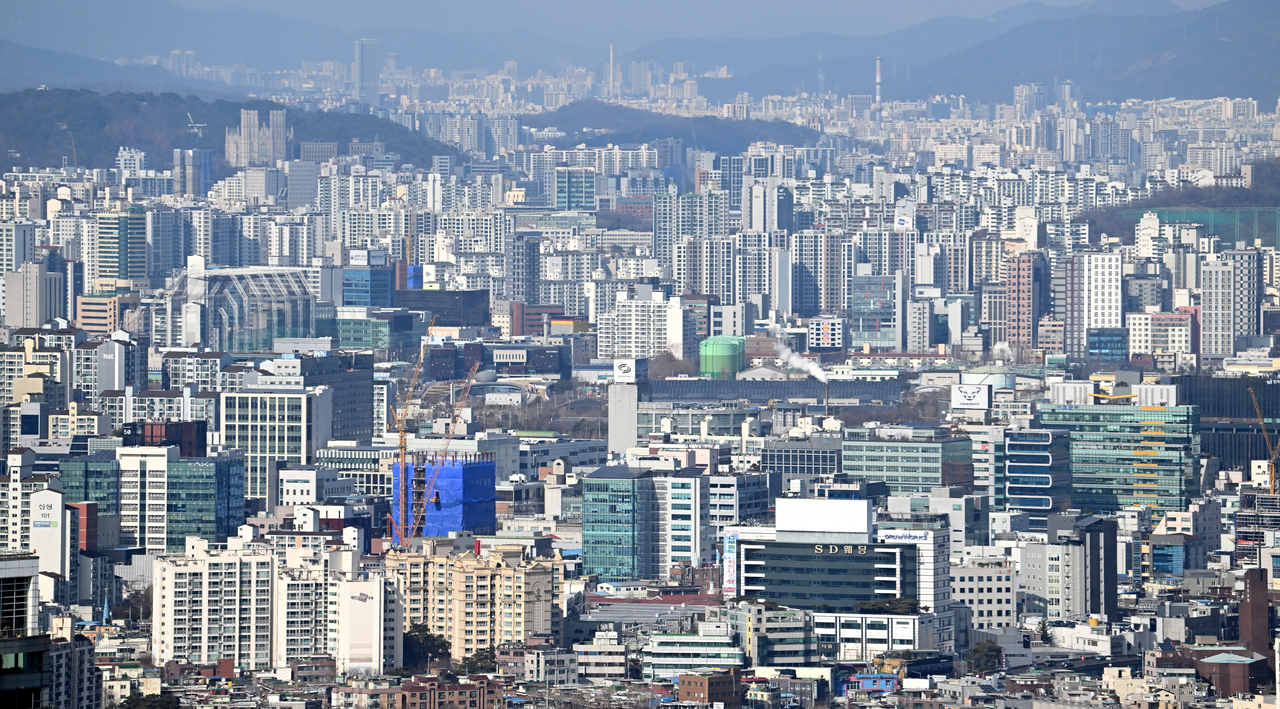
Seoul apartment prices rose for the 93rd consecutive week, even as a correction that began in the Gangnam 3 districts spread further along the Han River belt, pulling Yongsan-gu and Dongjak-gu into negative territory. Gains in outer districts kept the overall index positive. In Gyeonggi Province, Suwon's Gwonseon-gu, Anyang's Dongan-gu and Yongin's Giheung-gu posted the sharpest increases.
According to the Korea Real Estate Board's weekly apartment price survey for the third week of November (based on Monday's data), Seoul apartment prices rose 0.03% this week — down from 0.07% the previous week but extending the streak to 93 consecutive weeks.
Declines deepened in Seoul's southeastern corridor, while outer districts drove overall gains. Seongbuk-gu rose 0.34%, led by large complexes in Donam and Jeongneung-dong; Jungnang-gu gained 0.32%, centered on Sinnae and Myeonmok-dong; and Dobong-gu climbed 0.24%, driven by transit-oriented areas around Ssangmun and Chang-dong. Seongdong-gu fell 0.04% for a second straight week in the red, while Yongsan-gu slipped 0.02%, turning negative this week on weakness in Ichon and Itaewon-dong.
All three Gangnam districts deepened their losses. Songpa-gu, which had been slower to fall than Gangnam-gu and Seocho-gu, dropped 0.42% — a 0.07 percentage-point steeper decline than last week. Gangnam-gu and Seocho-gu recorded changes of minus 0.30% and minus 0.31%, respectively. Also in the Gangnam area, Dongjak-gu turned negative for the first time in six weeks, falling 0.01%.
An industry expert said the sustained release of distressed listings — particularly at early-stage reconstruction complexes — appeared to reflect concerns over reduced profitability under the reconstruction excess profit recapture scheme. "A near-term reversal of the current price weakness is unlikely," the expert said.
A Korea Real Estate Board official said downward price adjustments were being recorded in some areas and older complexes, while upward transactions continued in large complexes and transit-oriented areas with strong living conditions, keeping Seoul's overall index positive.
In Seoul's mid-to-lower-tier districts, prolonged price gains appear to be generating fatigue, with buyers increasingly adopting a wait-and-see stance. Dongdaemun-gu (up 0.15%) and Seodaemun-gu (up 0.24%) posted their weakest gains in six weeks, while Gangbuk-gu (up 0.13%) slowed by 0.19 percentage points from last week — the largest single-week deceleration in Seoul. Most previously strong districts, including Gwanak-gu (0.14%), Nowon-gu (0.13%) and Eunpyeong-gu (0.10%), also saw their pace of gains ease.
Nam Hyeok-woo, a real estate researcher at Woori Bank, said demand for homeownership in lower-priced areas — those below 1 billion won — remains intact despite a shortage of jeonse and monthly rent listings, limiting the risk of a sharp near-term price drop in that segment. "If bank lending limits are reset next year and spring moving-season demand picks up, buying momentum could revive," Nam said.
On the Gangnam market, Nam added that several factors could shape the trajectory of the Gangnam 3 districts: the possibility that prospective buyers waiting for pre-sale units in Banpo — currently renting at high jeonse rates — switch to purchasing; a deepening shortage of jeonse and monthly rent listings; and rising jeonse and rental demand heading into next year's peak moving season.
In Gyeonggi Province, the semiconductor belt continues to outperform, though this week's top performer was Suwon's Gwonseon-gu, which rose 0.62%. Anyang's Dongan-gu gained 0.61%, led by Bisan and Hogye-dong, while Yongin's Giheung-gu climbed 0.55% on small-to-mid-size units in Jung and Dongbaek-dong. Suwon's Yeongtong-gu rose 0.51%, slightly below last week's pace, while Yongin's Suji-gu accelerated to 0.43%. Gunpo gained 0.54% and Gwangmyeong rose 0.51%. Hwaseong's Byeongjeom area rose 0.49% for a second consecutive week, and Hwaseong's Hyohaeng area gained 0.29%, up 0.14 percentage points from last week.
Signs of price fatigue are also emerging in southern Gyeonggi Province, however. Seongnam's Bundang-gu posted its lowest reading in six weeks at 0.13%, while Jungwon-gu (0.23%) and Sujeong-gu (0.13%) also slowed. Hwaseong's Dongtan area rose 0.35% but decelerated by 0.21 percentage points from last week.
Meanwhile, Seoul's jeonse prices rose 0.14% this week, a slight easing from the previous week. Seongdong-gu fell 0.02%, led by small-to-mid-size units in Geumho and Majang-dong. Seongbuk-gu gained 0.39%, driven by major complexes in Gireum and Seokgwan-dong, while Gangbuk-gu rose 0.30% on strength in Mia and Beon-dong. Dobong-gu climbed 0.23%, centered on large complexes in Chang and Dobong-dong, and Nowon-gu rose 0.21% in transit-oriented areas around Sanggye and Gongreung-dong.
Among the 11 districts south of the Han River, Geumcheon-gu led with a 0.33% gain, driven by large complexes in Siheung and Doksan-dong. Gangnam-gu rose 0.22% on strength in Dogok and Gaepo-dong, while Guro-gu gained 0.16% in transit-oriented areas around Guro and Sindorim-dong. Yangcheon-gu rose 0.15%, led by well-regarded complexes in Sinjeong and Mok-dong, and Gangseo-gu climbed 0.10% on gains in Gayang and Yeomchang-dong.
Gyeonggi Province jeonse prices rose 0.16%. Gwangmyeong rose 0.38%, led by large complexes in Haan and Cheolsan-dong; Hwaseong's Dongtan district gained 0.31% on newer complexes in Yeongcheon and Jangji-dong; and Guri rose 0.31% on small-to-mid-size units in Sutaek and Inchang-dong. On the downside, Icheon fell 0.21%, concentrated in smaller units in Bubal-eup and Daewol-myeon, while Anyang's Manan-gu slipped 0.03% on weakness in Anyang-dong.
hope@heraldcorp.com