Syler, CSIS adviser: China and Russia have limited real leverage over Kim's visit
Victor Cha: Kim may have wanted to join US-China-Russia talks; Xi likely would not have agreed
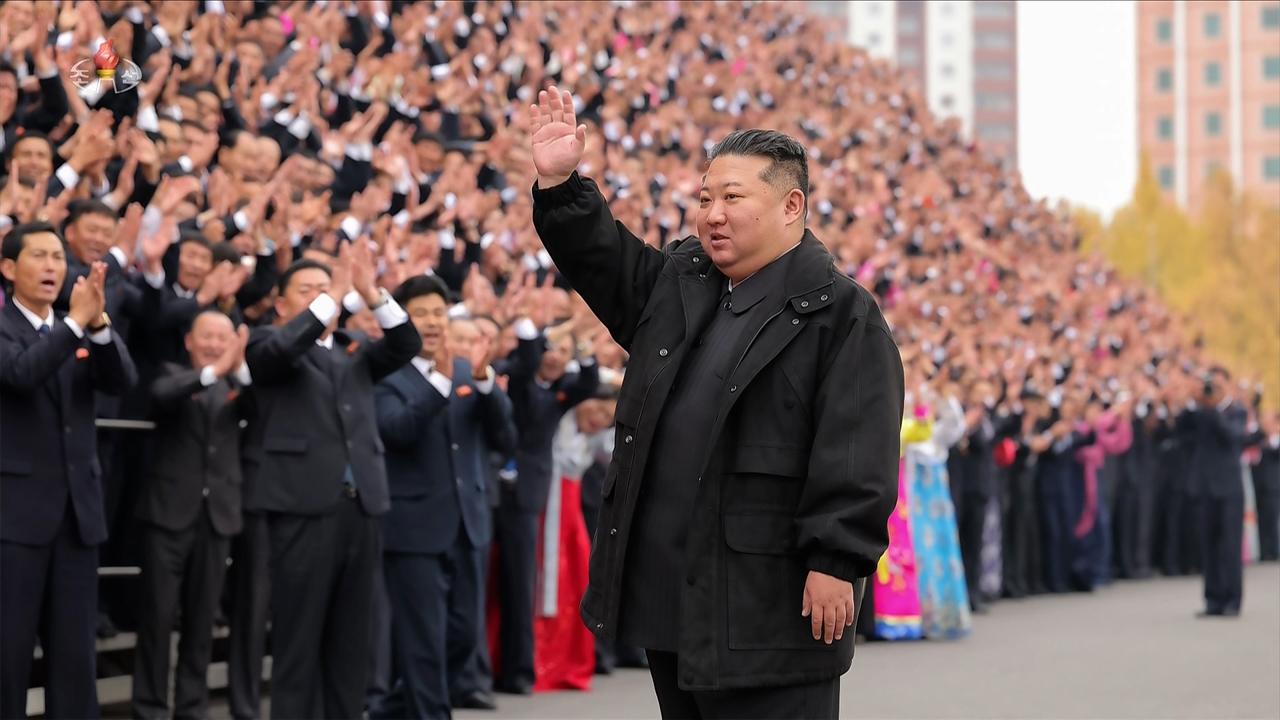
Amid the collapse of a potential surprise meeting between US President Donald Trump and North Korean leader Kim Jong-un during Trump's visit to China, a leading American Korea expert has suggested that Kim may have actually wanted to join a trilateral summit among the United States, China and Russia — not a bilateral meeting with Trump.
Victor Cha, Korea chair at the Center for Strategic and International Studies (CSIS), said Thursday on a CSIS podcast that "what Kim Jong-un really wanted in Shenzhen may not have been a bilateral meeting with the United States, but to be part of a trilateral meeting" involving the US, China and Russia.
Cha added that Kim may have sought to join such a gathering to produce an agreement among Asia's four nuclear powers — stating, for instance, that they want arms control or that nuclear war must never occur. "It's just speculation, but Kim Jong-un may have preferred to attend that kind of meeting," he said. "Of course, Xi Jinping would not have agreed to such a proposal."
Cha also noted that before Trump's visit to China, Kim had already met with Xi and with Russian President Vladimir Putin. "Despite all the bad things North Korea does, Donald Trump has had nothing but good things to say about Kim Jong-un — and Kim just decided not to show up," he said.
On the failure of the North Korea-US summit to materialize, Cha said the South Korean government would feel "a great sense of disappointment," adding that officials there "have put in a lot of effort and probably feel like they've been banging their heads against a wall."
He also said Seoul would come to realize that "the only credible opportunity to have any dialogue with North Korea is through a Trump-Kim meeting or Trump pushing hard for it — but I'm not even sure Trump will really push for that." Cha noted that Trump is "very focused on his personal relationship with Kim Jong-un" and, unlike during the Moon Jae-in administration, does not feel South Korea needs to play a mediating role.
Sid Syler, a CSIS senior adviser and former deputy national intelligence officer for North Korea at the Office of the Director of National Intelligence, said Kim is "trying to consolidate his nuclear-state status at the level of strategic diplomacy and make the world forget about denuclearization, sanctions and pressure." Syler added that Kim "doesn't need to meet Trump right now and doesn't see value in that meeting."
On North Korea's dispatch of high-level delegations to China and Russia just before the APEC summit, Syler said the move was likely intended "to explain the reasons for declining the invitation and to make clear how Pyongyang wanted its position represented" in the US-China-Russia trilateral talks.
Syler also cited two key reasons for Kim's failure to travel to China: the limited real leverage that either China or Russia had in persuading Kim to make the trip, and Kim's reluctance to put any part of his leverage on the negotiating table between the major powers.
In addition, Syler assessed that the absence of any explicit mention of North Korea in the joint statement from the US-China-Russia trilateral talks reflected a dynamic in which China and Russia are "trying to avoid making any statement that could be seen as pressuring North Korea to return to the negotiating table against its will or in a way that might offend Pyongyang."
mokiya@heraldcorp.com