European leaders warn Trump-Putin meeting only strengthens Russia's hand
NATO chief calls three-way summit 'perfectly normal'; US hints at security guarantees for Ukraine
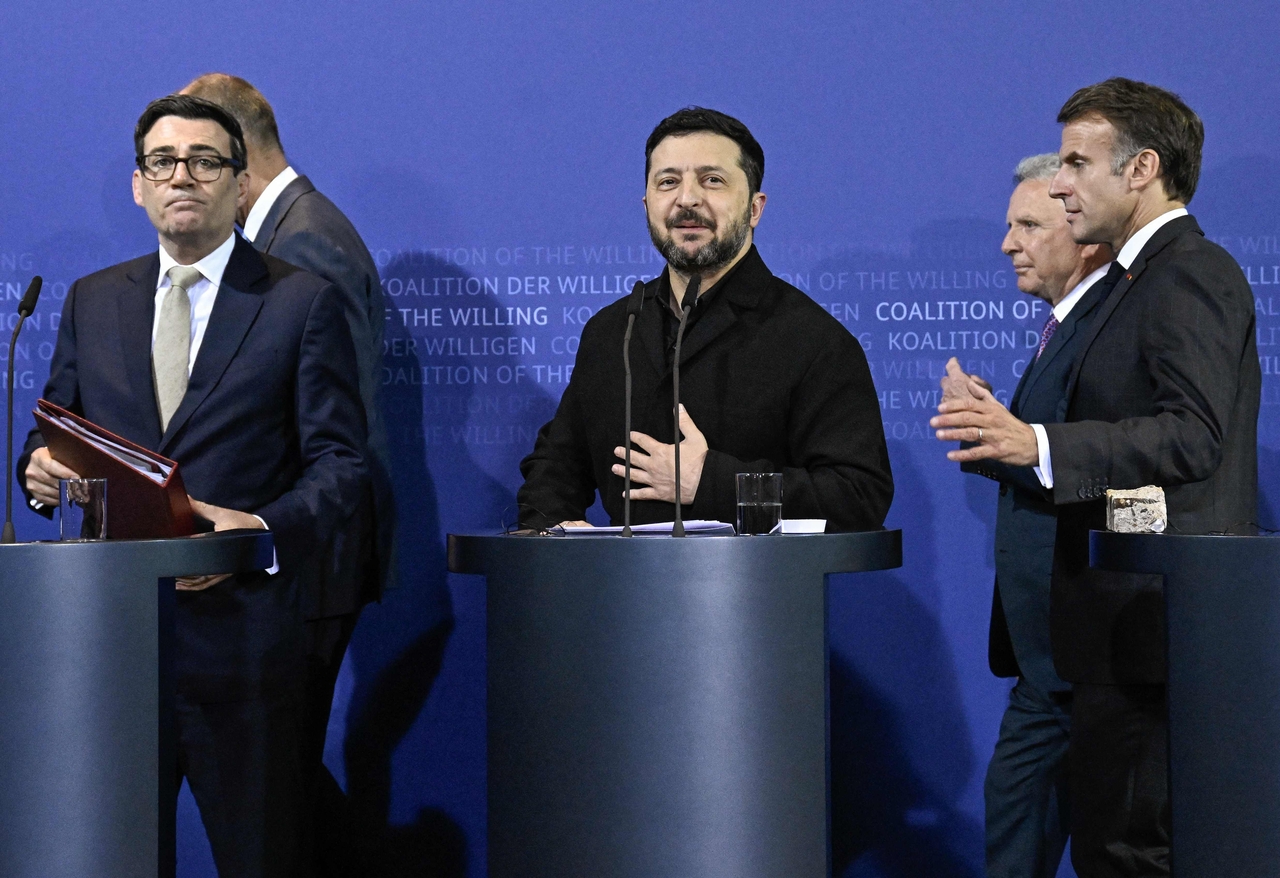
European leaders voiced alarm Thursday that a three-way summit between the United States, China and Russia would hand Russian President Vladimir Putin greater leverage in peace talks over Ukraine while leaving Europe further on the sidelines.
The United States, for its part, reiterated that it wants Europe involved in any end-of-war negotiations and signaled that Ukraine could receive security guarantees modeled on NATO's collective defense commitments.
Polish Prime Minister Donald Tusk, speaking to reporters on the sidelines of a Coalition of the Willing meeting in Berlin, was blunt. "Mr. Putin is not our friend and never will be," he said, according to Reuters.
Earlier, US President Donald Trump had met Putin on the margins of the Asia-Pacific Economic Cooperation summit in Shenzhen, China, and introduced him to onlookers with the words, "Who is this guy? My friend."
Danish Prime Minister Mette Frederiksen said she could not understand why the US president would sit down with Putin. "After today's meeting, Putin will be bolder," she said. "He looks happy. Unfortunately, that is not a good sign for world peace or for Ukraine."
Frederiksen added that she believed the summit would embolden Putin to "hit us Europeans harder."
Swedish Prime Minister Ulf Kristersson said he had low expectations for concrete results from the US-China-Russia meeting and acknowledged fears that it could become "a new Yalta conference dividing the world into spheres of influence." He said Europe, by contrast, sought to uphold "a rules-based international order in which every country can freely choose its own future."
German Chancellor Friedrich Merz also dismissed the three-way summit as a "photo opportunity," saying a Yalta-style approach could not bring peace to Ukraine.
NATO Secretary General Mark Rutte, who has worked to ease tensions between Europe and the United States, took a more measured view. "Remember that Russia and the United States are mighty nuclear powers and China is a rising nuclear power," he said, calling the meeting of the three leaders "perfectly normal."
Asked whether Trump's description of Putin as a friend concerned him, Rutte said no. "President Trump has been making Herculean efforts — like the hero from Greek mythology — to achieve peace in Ukraine," he said. "I can only applaud that."
European governments have long argued that Ukraine's security is inseparable from Europe's own and have pressed to be included in the peace talks led by Trump and Putin. NATO, the EU, Britain, France and Germany all sent delegations to Abu Dhabi in the UAE for a trilateral truce conference involving the United States, Russia and Ukraine on Nov. 10-11, but Russia blocked them from joining the negotiating table.
Jared Kushner, Trump's son-in-law and a key figure in the peace effort, sought to reassure European leaders after the Coalition of the Willing meeting. "President Trump wants to negotiate with Europe," Kushner told reporters. "He is not trying to impose anything unilaterally." Trump himself briefed the assembled leaders by speakerphone on the outcome of his talks with Russia and China.
Kushner said Russia had indicated it could accept a NATO-style collective security guarantee for Ukraine, and added that Trump was "open to it as well, as long as it serves US national interests." Europe has been wary throughout the peace process that the continent's security architecture, centered on NATO, could be reshaped to suit Moscow.
After the Abu Dhabi talks, Kushner traveled to Russia to meet Putin and said he was focused on "facilitating direct dialogue between Russia and European partners and preparing the agenda for the next trilateral meeting."
Putin, at a press conference Thursday, said Ukraine's security "should be integrated into the European security system," but called it "strange to discuss European security without Europe" — signaling a willingness to negotiate with European parties. Ukrainian President Volodymyr Zelensky also said the next round of peace talks should be a four-way meeting involving the United States, Russia, Ukraine and Europe.
The Coalition of the Willing summit, attended by leaders from 37 countries along with the heads of the EU and NATO, focused on post-war security guarantees for Ukraine and winter aid. In a joint statement, the co-chairs — Britain, France, Germany and Ukraine — called for "strong and legally binding security guarantees" for Ukraine and urged Russia to agree to an immediate energy truce for the coming winter.
mokiya@heraldcorp.com