Financial Supervisory Service releases auto insurance fraud cases and consumer tips
Hospitalized drivers continued chauffeuring and taxi work
Fuel subsidy cards used 300 km from hospital
Dozens of repeat offenders referred to investigators after reoffending post-release
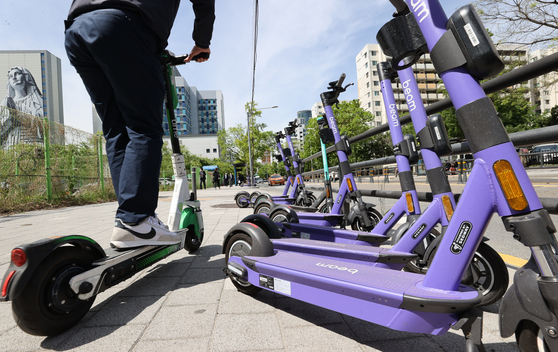
Auto insurance fraud schemes involving deliberate collisions — including riding electric kickboards into vehicles and chasing down suspected drunk drivers to stage crashes — continue to surface across South Korea. Investigators have also caught hospitalized accident victims who kept working as designated drivers or taxi operators while collecting insurance payouts.
The Financial Supervisory Service released the findings of a recent targeted probe into auto insurance fraud on Thursday, detailing major cases and offering consumer safety tips.
Suspect A waited in blind spots in residential alleyways, then struck the side or rear of vehicles with an electric kickboard the moment a car changed course or emerged from a side street. The suspect also targeted taxis as they stopped to drop off passengers, timing collisions with the opening of rear doors. More than 80 such incidents were staged this way. Immediately after each crash, the suspect exaggerated injuries and demanded cash settlements on the spot; when drivers refused, a medical certificate was obtained and an insurance claim filed. The FSS, working with the Korea Road Traffic Authority, identified a pattern of incidents concentrated in specific areas and late-night hours, confirming signs of premeditated crime, and referred the case to police.
Fraudulent hospitalization was also uncovered. Designated driver B was hospitalized for 22 days following a minor accident but continued working as a designated driver on 20 of those days, excluding the admission and discharge dates. Many suspects checked in with minor injuries such as simple sprains and then drove repeatedly during late-night hours. Multiple cases of the same individual staging repeated fake hospitalizations were also found.
Individual taxi driver C was hospitalized four times for a total of 23 days, providing taxi services on 14 of those days for a combined 36 hours — an average of about 2.5 hours per day. Taxi driver D used a fuel subsidy card — restricted to taxi operations — more than 10 times while hospitalized, with at least one transaction recorded more than 300 kilometers from the hospital. Fraudulent hospitalization to collect insurance payouts carries a penalty of up to 10 years in prison or a fine of up to 50 million won ($37,300) under the Special Act on Insurance Fraud Prevention. Improper receipt of fuel subsidies is subject to recovery of the funds, suspension of payments for up to one year, and a penalty of up to two years in prison or a fine of up to 20 million won.
Some suspects deliberately targeted vehicles they suspected of drunk driving. Suspect E spotted a car making erratic maneuvers — including running red lights — then followed it and accelerated sharply into its side as it changed lanes. Suspect F approached a vehicle traveling on a highway with its hazard lights on, moved into its blind spot and engineered a collision at the moment the car changed lanes. Some suspects operated in groups, alternating roles as the at-fault driver, the victim driver and passengers to repeat the scheme.
Repeat offenders also emerged. Suspect G had previously been sentenced to prison for conspiring with a coworker to stage intentional collisions with lane-changing vehicles and collect hundreds of millions of won in insurance payouts. After release, G teamed up with H — a fellow former inmate — and staged more than 20 deliberate crashes using several high-end vehicles in rotation. The FSS cross-referenced past fraud records and referred dozens of suspects who had repeated the same methods to investigative authorities.
The FSS advised anyone who suspects a staged accident to secure evidence first — including dashcam footage, scene photographs and witness statements — before contacting police or their insurer, and to avoid reaching any settlement with the other party in the meantime. The agency also recommended that drivers slow down in alleyways frequented by kickboards and motorcycles and in taxi pickup and drop-off zones, and that taxi passengers check behind the door before opening it.
The FSS said drunk drivers are especially vulnerable to being pressured into unreasonable settlements after an accident, and that the surest prevention is simply not to drink and drive.
The FSS said it would continue to strengthen ongoing monitoring of auto insurance fraud and proactively identify consumer harm and precautions for high-risk fraud types. "Please be aware that insurance fraud will always be detected," the agency said, urging anyone who receives an implausible offer involving high returns or who suspects fraud to report it without hesitation to the Insurance Fraud Reporting Center, accessible through individual insurers' websites.
won@heraldcorp.com