Associations say they won't accept charges; legal community mobilizes
District offices, ministry, members and market all at odds
'Growing uncertainty will further chill market transactions'
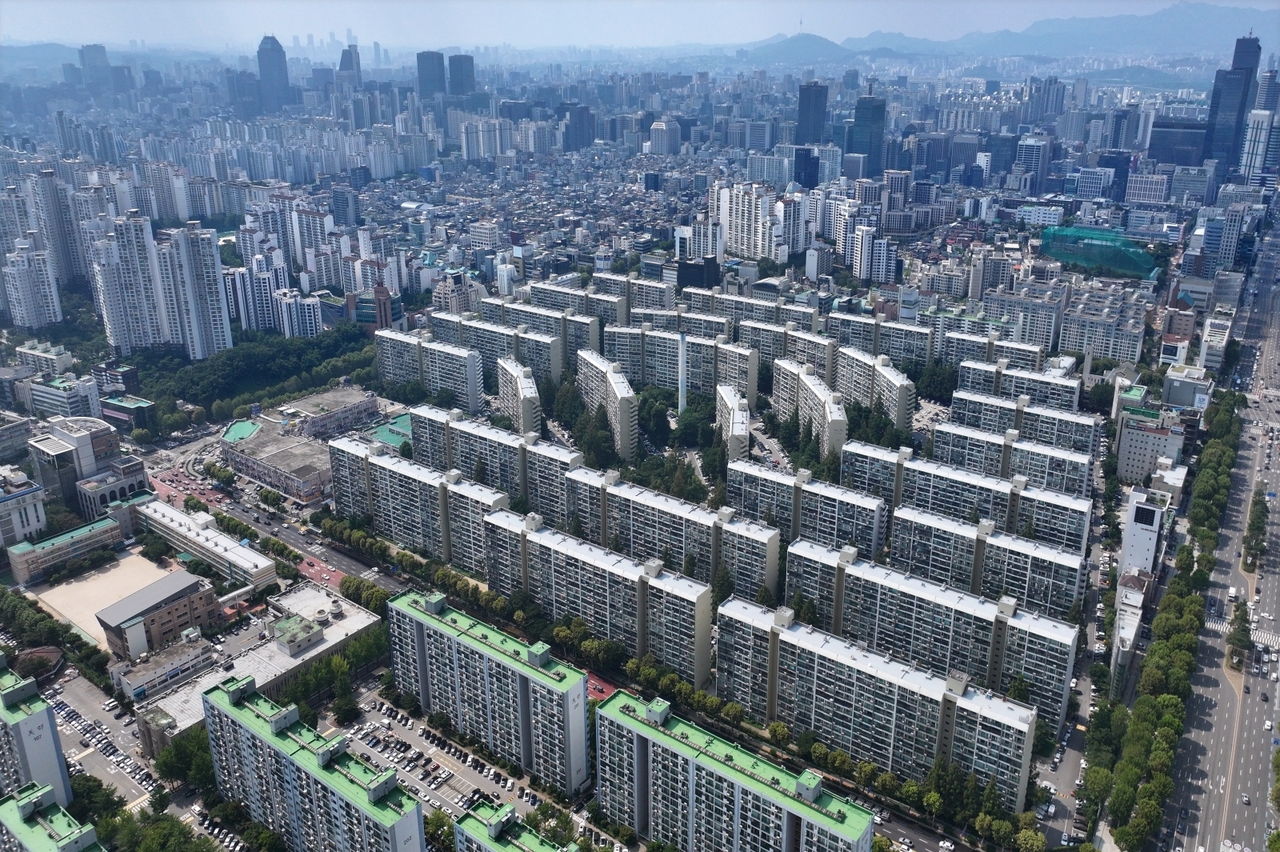
Legal firms are gearing up for litigation as the reconstruction excess profit recapture regime kicks into gear at major apartment reconstruction complexes across Seoul, including Eunma Apartment in Gangnam-gu, where members have been notified of a preliminary levy averaging 460 million won ($345,000) per person. Conflicts over charges running into the hundreds of millions of won are intensifying, with some associations vowing to pursue legal action.
Major law firms including Kim & Chang and Bae, Kim & Lee have this year formed dedicated task forces to prepare for legal disputes over reconstruction levies, according to the legal community. The firms are reviewing the criteria used to calculate the charges and providing legal counsel through those dedicated units.
What is the reconstruction excess profit recapture regime?
The reconstruction excess profit recapture regime is a system under which the government collects a portion of profits exceeding a set threshold that association members earn through reconstruction, in the form of a "reconstruction levy." It was introduced in 2006 under the Roh Moo-hyun administration.
The levy is calculated by taking the value of the housing unit at the end of the reconstruction project, then subtracting the value at the start, normal housing price appreciation and development costs to arrive at the excess profit. When the average excess profit per association member exceeds 80 million won, a rate of 10 to 50 percent is applied depending on the amount, with the profit calculation period running from the date of association establishment approval to the date of completion approval. This levy differs from the "contribution fee" — the share of project costs that cannot be covered by general pre-sale revenue and is split among members — meaning some members may end up paying both.
For single-home owners who have held the property for six or more years, the levy is reduced in proportion to the holding period. However, the levy still applies even if the owner continues to live in the home without selling it. This has drawn criticism that the system amounts to a tax on unrealized gains.
The regime has already faced a constitutional challenge. In September 2014, the reconstruction association of Hannam Yeonlib in Yongsan-gu filed a constitutional complaint arguing the system violated the principle of equality and infringed on property rights. Five years later, in 2019, the Constitutional Court ruled it did not violate the Constitution — a decision that came as a shock to reconstruction associations.
Yet despite nearly 20 years since the law took effect, not a single reconstruction levy has ever been paid.
The regime has been repeatedly revised through exemptions and legislative amendments under successive administrations. In 2012, under the Lee Myung-bak government, legislation was passed to temporarily suspend its enforcement. Under the Park Geun-hye administration, when the real estate market was sluggish, the grace period for deferring the levy was extended. The Moon Jae-in government also failed to impose any charges, and the Yoon Suk Yeol administration, after initially pursuing abolition, instead pushed through amendments that included relief and deferral measures for single-home owners.
Why the regime keeps stirring controversy
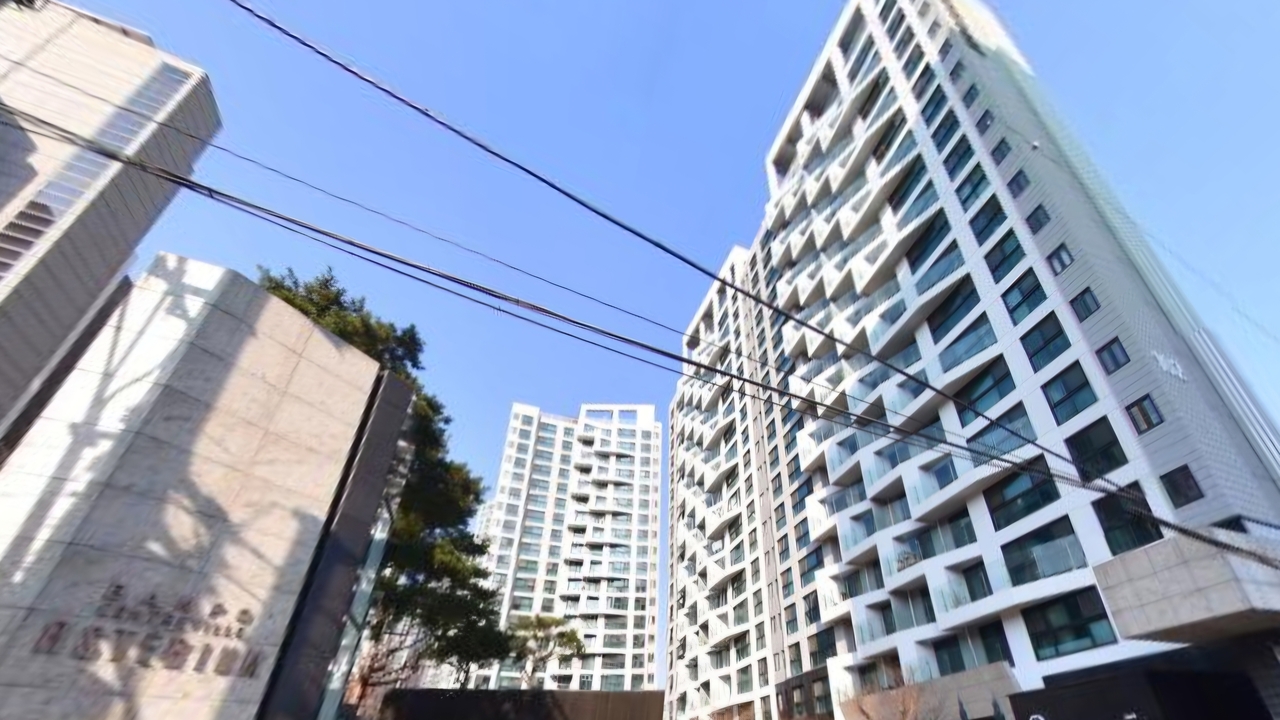
The regime has resurfaced as an issue after the Seocho-gu district office recently sent a preliminary levy notice averaging 220 million won per person to the reconstruction association of Banpo Hyundai — now Banpo Centreville Asterium — in Banpo-dong, the first complex in the Gangnam area to face a levy under the regime. District offices must observe a five-year statute of limitations when imposing the levy; the complex began move-ins in July 2021, and the district office initiated proceedings as the five-year window approached.
The industry has raised a range of contested issues, however: the appropriateness of the timing of the levy, the method used to calculate it, the fairness of applying it to reconstruction but not to redevelopment — the other main track of urban renewal — and questions over who ultimately bears the burden.
Some have argued, citing a supplementary provision added when the Reconstruction Profit Recovery Act was amended in December 2023, that the starting point for levying charges on existing reconstruction projects should be treated as 2024, when the revised law took effect, meaning charges could be imposed through 2029. South Korea's Ministry of Land, Infrastructure and Transport has also received petitions from 10 Gangnam-area reconstruction associations demanding the regime be abolished, and the Seocho-gu district office has requested an official legal interpretation on the levy deadline.
The ministry said it would announce the results of its review of the reconstruction levy deadline within this month.
Ministry says levy has limited impact on supply
While the Ministry of Land, Infrastructure and Transport has signaled it will proceed with imposing reconstruction levies as a matter of principle, the market has raised concerns that the regime could dampen reconstruction activity and become an obstacle to housing supply.
Song Seung-heon, chief executive of Urban and Economy, said that when levies of hundreds of millions of won are anticipated, the resulting burden could chill trading of reconstruction apartments and association members' occupancy rights. "If more owners become reluctant to push ahead with projects and consent rates fall, some projects could lose momentum and drift for years," Song said.
The ministry, however, drew a line on that point. "The reconstruction excess profit recapture regime recovers excess profits only when they actually arise from reconstruction," it said. "There is no strong direct link to project viability."
Meanwhile, frustration is growing in the market over the regime's uncertainty and inconsistent standards.
Even within the same neighborhood, whether a complex is exempt from the levy can differ depending on when its management and disposal plan was approved. Under a special exemption from the Park Geun-hye era — when the real estate market was in a downturn — reconstruction projects that applied for management and disposal plan approval between Dec. 18, 2012 and Dec. 31, 2017 are exempt from the levy.
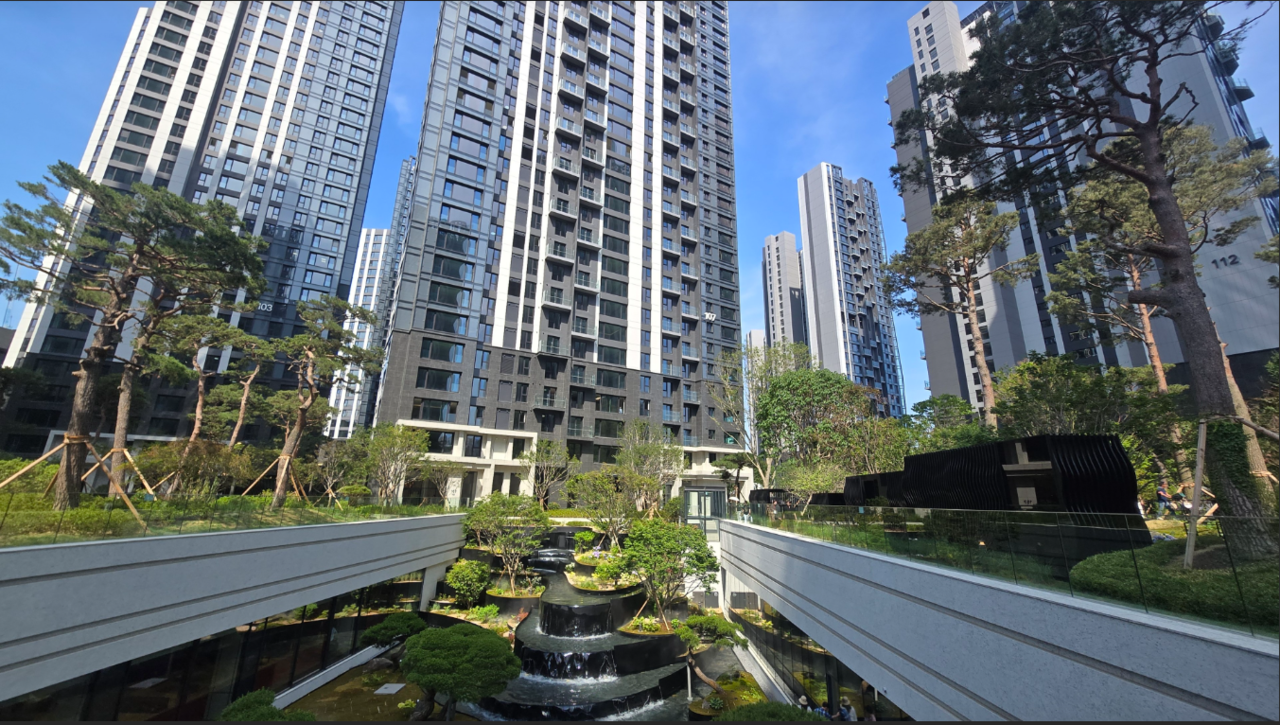
A prominent example is DIH Banpo 124 — the reconstruction of sections 1, 2 and 4 of Banpo Jugong Complex 1 — which is set for pre-sale next month. That project applied for management and disposal plan approval in March 2021 and received it in July of that year, making it exempt from the levy. By contrast, Banpo Raemian Trinione, the reconstruction of section 3 of the same complex, applied in December 2017 and received approval in December the following year, placing it within the levy's scope.
Industry observers say that with recent home price increases, the levy imposed on Banpo Raemian Trinione could come in at nearly double the preliminary figure Seocho-gu notified in 2020 — 402 million won per person. As a result, market participants say association member units subject to the levy are facing downward price pressure.
'No clear standard makes it hard to advise on reconstruction transactions'
A real estate consulting specialist said that association member units at Banpo Raemian Trinione have begun appearing on the market with asking prices more than 15 percent below the median. "The uncertainty over the levy obligation and the specific amount has been priced in," the specialist said. "With no clear standard for the reconstruction excess profit recapture regime, even brokers and market experts find it extremely difficult to advise on transactions."
Experts agree that the government must establish rational and consistent standards to reduce confusion in the market.
Song said there are calls to push back the starting point for calculating the levy to after the association is established, given that reconstruction projects can take more than a decade. "If home prices fall after someone has moved in having paid hundreds of millions of won in levies, they may not be able to recoup that money," Song said. "That is why a more sophisticated system design that accounts for a range of market conditions is needed."
Yun Su-min, a senior real estate specialist at NH NongHyup Bank, said that as uncertainty from the regime grows, the price gap between occupancy rights held by members subject to the levy and pre-sale rights held by those who are not could widen into a two-tier pricing problem. "It becomes harder to assess value, and ultimately market participants may pull back from trading," Yun said. "Standards that the market can trust need to be put in place."
hope@heraldcorp.com