Government-to-government cooperation clears local licensing hurdles
First shipment of 20 tons departs from Gunsan port Friday
Brazil approves manufacturing facility and product registration
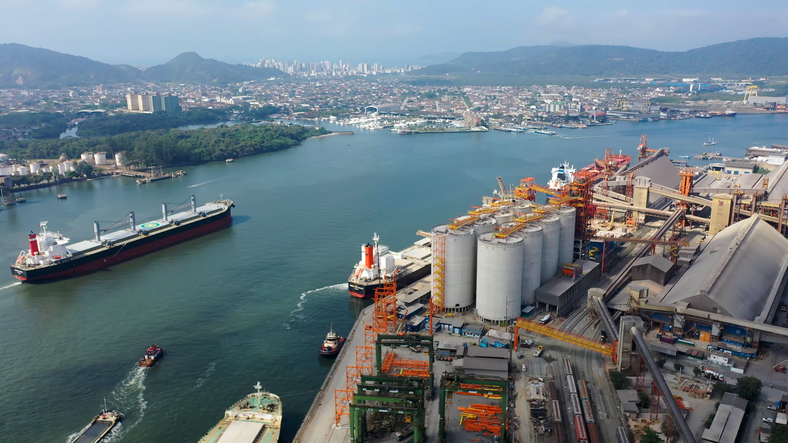
South Korean lysine, a feed additive, is entering the Brazilian market for the first time. After a domestic company ran into difficulties navigating Brazil's licensing process, the South Korean government stepped in to negotiate directly with Brazilian authorities and open the door to exports. The initial shipment stands at about 20 tons, with plans to scale up to 1,200 tons next year.
The Ministry of Agriculture, Food and Rural Affairs held a ceremony Friday at Gunsan port in North Jeolla Province to mark the first shipment of domestically produced lysine to Brazil by food and ingredient company Daesang. The event was attended by Kim Jeong-uk, director general of the ministry's agro-industry innovation policy bureau, along with Daesang Executive Vice President Ahn Sang-hun and Korea Animal Health Products Association President Jeong Byeong-gon.
Lysine is an essential amino acid that supports livestock growth and protein synthesis while improving feed efficiency. Brazil, a global powerhouse in livestock production and exports, is considered a high-potential market for animal health products including feed additives.
The export is notable for resolving an overseas licensing obstacle through government-to-government cooperation. Daesang had been pursuing local registration in Brazil to export lysine there but ran into difficulties during the licensing process and asked the ministry for support.
The ministry responded by delivering directly to Brazil's Ministry of Agriculture, Livestock and Food Supply the documents required to register the Korean manufacturing facility, and held video conferences with the Brazilian licensing authority.
As a result, Brazil's agricultural ministry approved the domestic manufacturing facility registration within a month of receiving the documents. Product registration received final approval in October, clearing the way for South Korean lysine to enter the Brazilian market.
Since June, the Ministry of Agriculture, Food and Rural Affairs has been operating a public-private joint task force to help domestic companies navigate overseas licensing and non-tariff barriers in the agro-industry sector. The lysine export marks a case where government-industry cooperation translated into an actual overseas market entry.
Daesang plans to follow up the initial shipment with exports of 1,200 tons of lysine to Brazil next year, targeting about $2 million in sales. The company intends to expand further into Latin American markets beyond Brazil going forward.
According to Brazil's national statistics agency, the country's livestock population last year stood at about 234 million cattle, about 44 million pigs and about 1.61 billion poultry. Brazil ranks first in the world in beef and chicken exports.
"Thanks to the government's active support on export licensing, we were able to realize lysine exports to Brazil ahead of schedule," Daesang Chief Executive Im Jeong-bae said. "This export is a meaningful achievement made possible through close cooperation between the government and the private sector, and we will continue to expand into Brazil and other Latin American markets."
Kim Jeong-uk said the ministry plans to actively support export licensing registration and local marketing efforts to boost exports across all agro-industry sectors, including lysine. "We will strengthen licensing and regulatory cooperation with target export countries to help Korean companies expand overseas and enhance their global competitiveness," Kim said.
adastra@heraldcorp.com