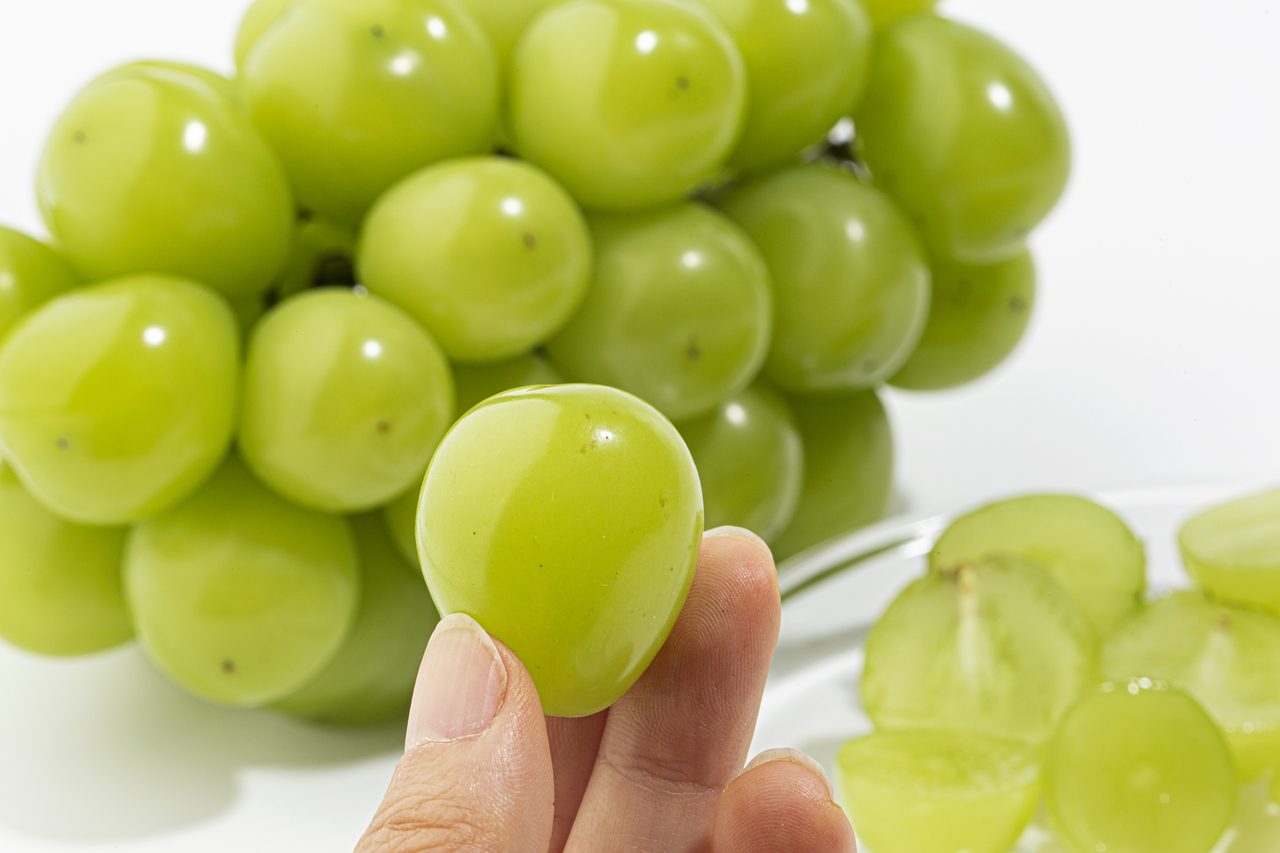
Shine muscat grapes, once dubbed a "luxury fruit" and priced accordingly, have become one of the most affordable varieties on the market.
A rush of farmers chasing high profits drove a surge in supply, and quality concerns have since shifted how consumers view the once-coveted grape.
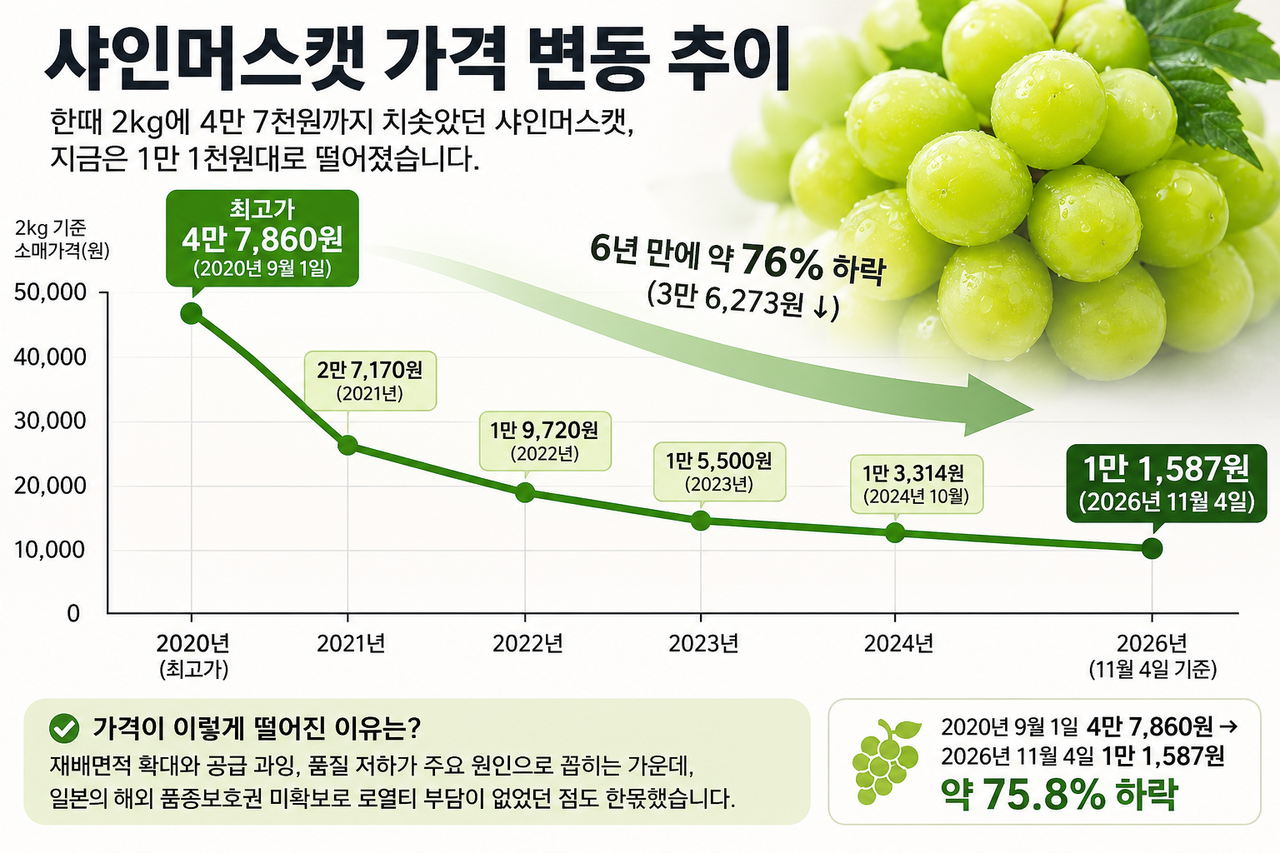
According to data obtained through the Korea Agro-Fisheries and Food Trade Corporation (aT), the average retail price of shine muscat grapes (premium grade, 2 kilograms) stood at 11,587 won ($9) on Wednesday — down 75.8 percent from the variety's peak price of 47,860 won recorded on Sept. 1, 2020.
That is now well below the retail price of Campbell Early grapes — a variety Koreans have long eaten — which sold for 15,464 won per 2 kilograms on Tuesday. Shine muscat has effectively displaced Campbell Early as the country's most consumed grape. Campbell Early led arrivals at Garak Market through 2020, but shine muscat overtook it in 2021. In 2025, shine muscat arrivals reached 16,307 tons, roughly 3.8 times the 4,310 tons recorded for Campbell Early.
The primary driver of the price collapse is a rapid expansion in cultivation as farmers rushed in to capitalize on the variety's early profitability. Shine muscat was once a star crop, fetching three times the price of conventional grapes while yielding twice the volume — translating to nearly six times the income per unit of land. That prospect drew a wave of new growers.
Shine muscat's share of South Korea's total grape cultivation area soared from 4 percent in 2017 to 22 percent in 2020 and 41 percent in 2022, reaching 43.1 percent in 2024. The concentration of production in a single variety quickly saturated the market.
Among the new entrants were farmers with limited growing experience, and quality control suffered as a result. Some growers focused on producing oversized clusters to command higher prices, while others rushed harvests to reach the market earlier. Grapes that had not fully ripened began reaching consumers, fueling complaints about sweetness and texture.
Quality problems soon fed through to prices. In 2025, shine muscat prices fell even as arrivals declined 1.7 percent from the previous year. Analysts say weak consumer demand and quality issues — not just volume — have been pulling prices down.
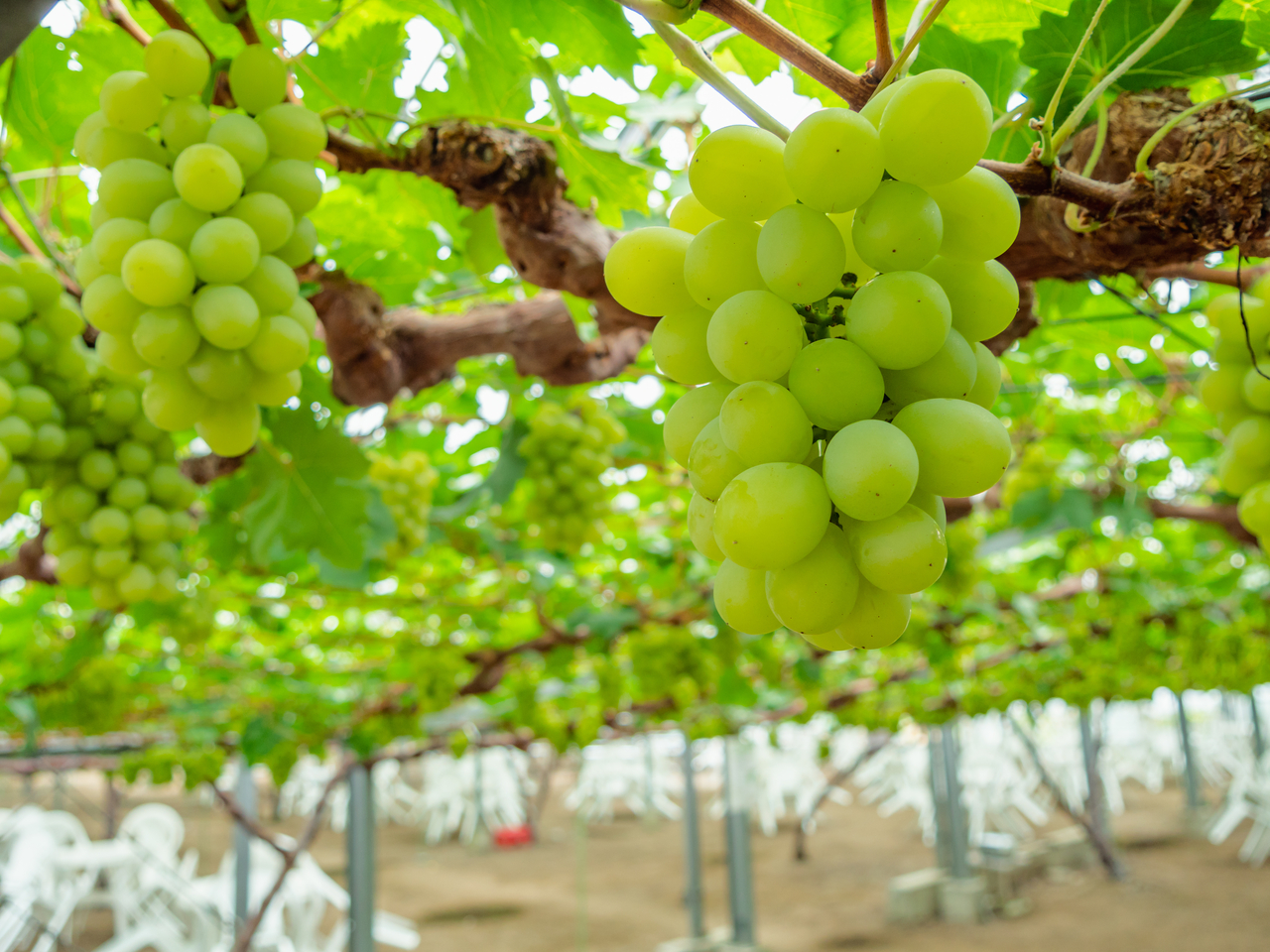
The Korea Rural Economic Institute's Agricultural Outlook Center projects that the shine muscat cultivation area will shrink 9.8 percent in 2026 from the previous year. Kyoho-type grapes and some newer varieties, by contrast, are expected to see their cultivation areas expand.
Even so, experts do not expect prices to rebound to their former highs as supply contracts.
Kim Hyeong-jin, a senior researcher at the Agricultural Outlook Center, said production area is trending downward and supply is expected to fall as a result. "However, given the shift in consumer perception of shine muscat, prices are unlikely to fall further, but a return to past levels appears difficult," Kim said.
123@heraldcorp.com