
We see the world through food. Welcome to Middam, your guide to delicious stories.
Consumers willing to pay fine-dining prices for dessert
'Want to try popular desserts even if they're expensive,' 58.8% say
Luxury dessert market expected to keep growing
Every year-end season, Seoul's top luxury hotels wage a cake war — and this year, the keyword is "luxury." Offerings range from a 600,000-won ($447) cake to creations adorned with pure gold. Consumers are readily spending what amounts to the price of a fine-dining meal on a single dessert.
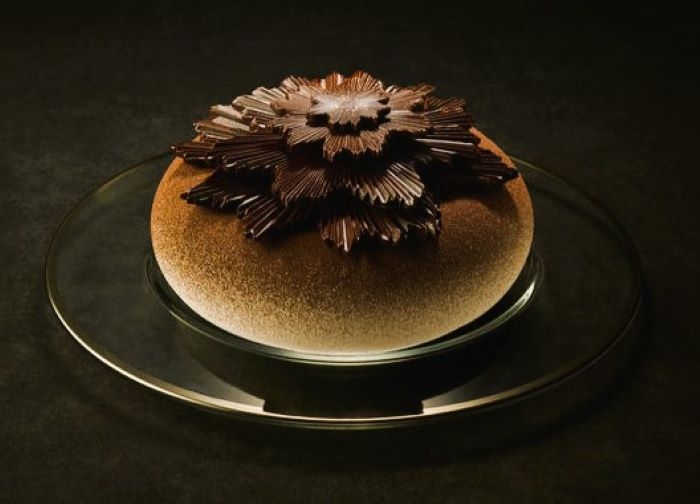
The title of most expensive cake this year goes to Hotel Shilla Seoul. Its Bakery Pastry Boutique is offering "The Finest Reserve" at 600,000 won — a 20 percent increase from last year's 500,000-won flagship cake. The product features French dessert wine Château d'Yquem and white truffle, with this year's version containing higher proportions of both white and black truffle and wine.
The production process is equally elaborate. Three pastry chefs handle everything from ingredient preparation to aging, filling and chocolate decoration. Using seasonal truffles, the boutique produces a maximum of three cakes per day. The top of each cake is crowned with a snowflake-shaped chocolate decoration; lifting it reveals a piece of fresh white truffle nestled inside a truffle-shaped chocolate. The hotel cites the rarity of the ingredients, the complexity of the process and the extremely limited output as justification for the price.
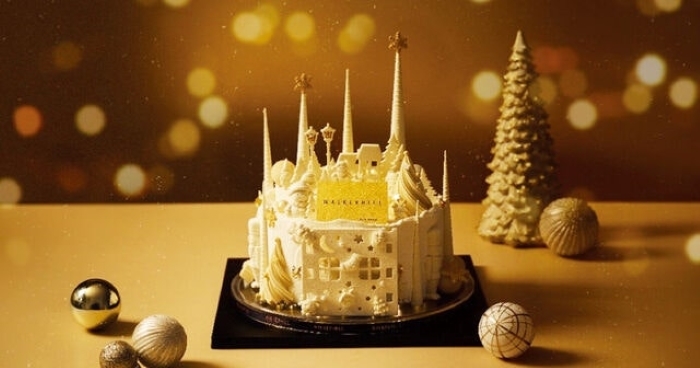
Walkerhill Hotel is betting on gold. Its "Lumière Golden Noël," priced at 550,000 won, takes the hotel's signature strawberry sand cake and tops it with a business-card-shaped ornament made from 0.5 grams of pure gold, complete with a certificate of authenticity and a dedicated case. That represents a roughly 44.7 percent increase from Walkerhill's top-priced cake last year, which sold for 380,000 won. The product combines the experience of eating the cake with the collectible value of a gold keepsake.
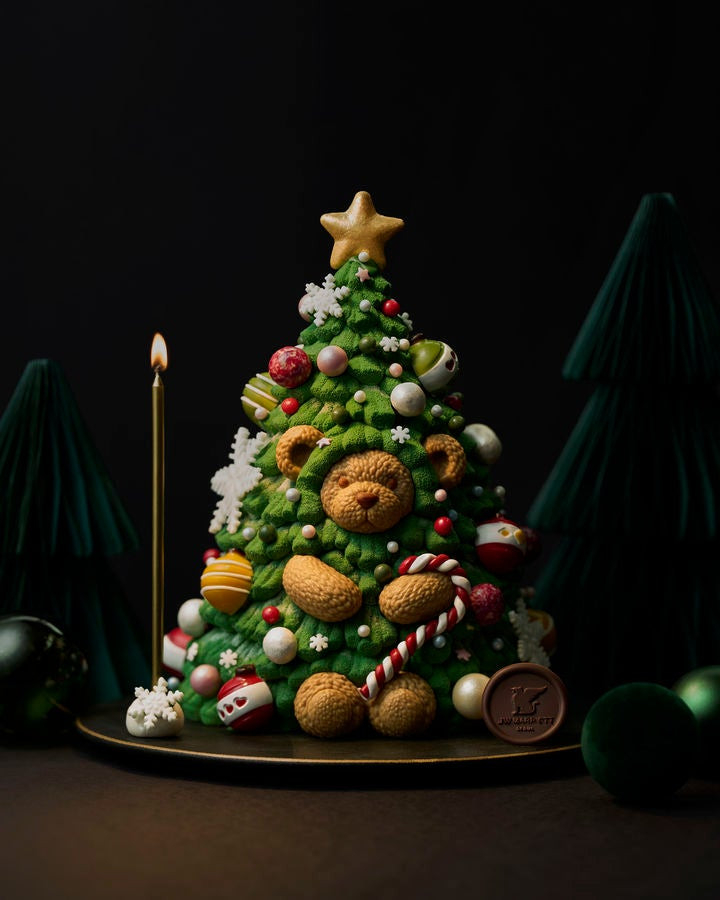
JW Marriott Hotel Seoul has set its top cake price at 450,000 won. "Teddy Bear Christmas" renders a teddy bear in the shape of a Christmas tree, using premium ingredients including French Valrhona chocolate, Spanish saffron and Bronte pistachios from Sicily. That is 100,000 won more than the hotel's priciest offering last year, which was priced at 350,000 won. JW Marriott Dongdaemun Square Seoul is also releasing a limited-edition 400,000-won cake called "The Sound of Noël" — a design inspired by a vintage turntable and LP record, with only 50 to be made.
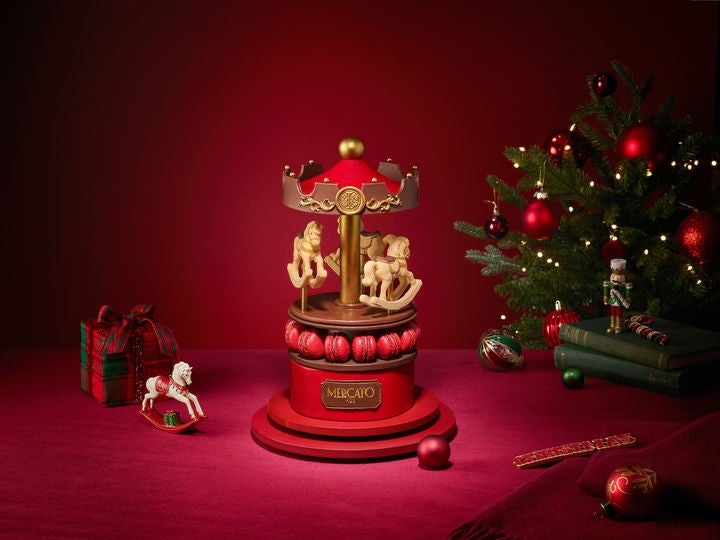
Grand InterContinental Seoul Parnas has unveiled "Merry-Go-Round," a 400,000-won cake that recreates a carousel entirely in chocolate craftsmanship. Rotating the cake stand triggers a carol and sets the carousel horses in motion; the golden patterns and three-dimensional horses are also sculpted from chocolate. A chef assembles each cake by hand, a process that takes about 30 hours per piece. Only 50 will be sold, adding to its exclusivity.
The push toward luxury products reflects a broader shift in consumer behavior. Since the COVID-19 pandemic, growing interest in fine dining has expanded the pool of consumers willing to pay for the experience of eating exceptional food.
"Value-driven spending on gourmet food has grown since the pandemic," an official from the luxury hotel industry said. "The tendency to pay for the experience of eating something delicious in a beautiful setting is consistently on the rise. Making cakes more visually spectacular — not just better in ingredients — is also part of giving consumers an even more special experience." The official added that luxury hotels are strategically targeting this demand by presenting cakes made with superior ingredients and refined preparation during the year-end season to expand the market.
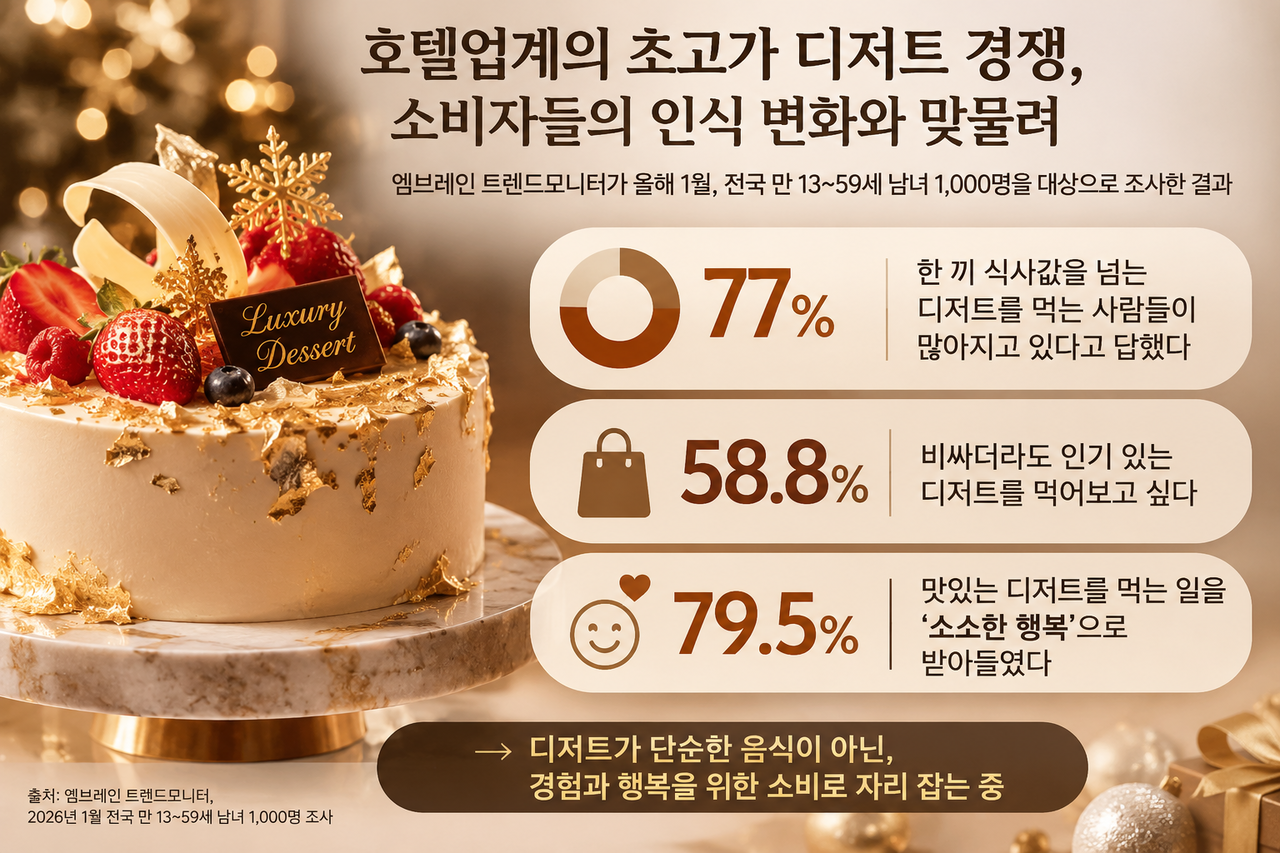
The luxury dessert market is expected to keep expanding. In a survey conducted by Macromill Embrain in January of 1,000 men and women aged 13 to 59 nationwide, 77 percent of respondents said more people are spending more on a single dessert than on a full meal. Some 58.8 percent said they want to try popular desserts even if they are expensive, and 79.5 percent described eating a delicious dessert as "a small everyday happiness."
Analysts say dessert is evolving from a simple food item into a consumer good that expresses personal experience and taste. Some 66.8 percent of respondents said experiencing a special dessert that others have not tried makes for good conversation. Hotels' strategy of releasing cakes priced in the hundreds of thousands of won — backed by premium ingredients, distinctive designs and limited production runs — is seen as a direct response to consumers' appetite for one-of-a-kind experiences.
123@heraldcorp.com




