Rotary International President Olayinka Hakeem Babalola visits South Korea ahead of Korean Rotary's centennial; says 1.2 million-member organization has donated $3 billion to cut polio cases by 99.9%; Korean Rotary ranks 4th worldwide in both membership and donations, eyes 100,000-member goal
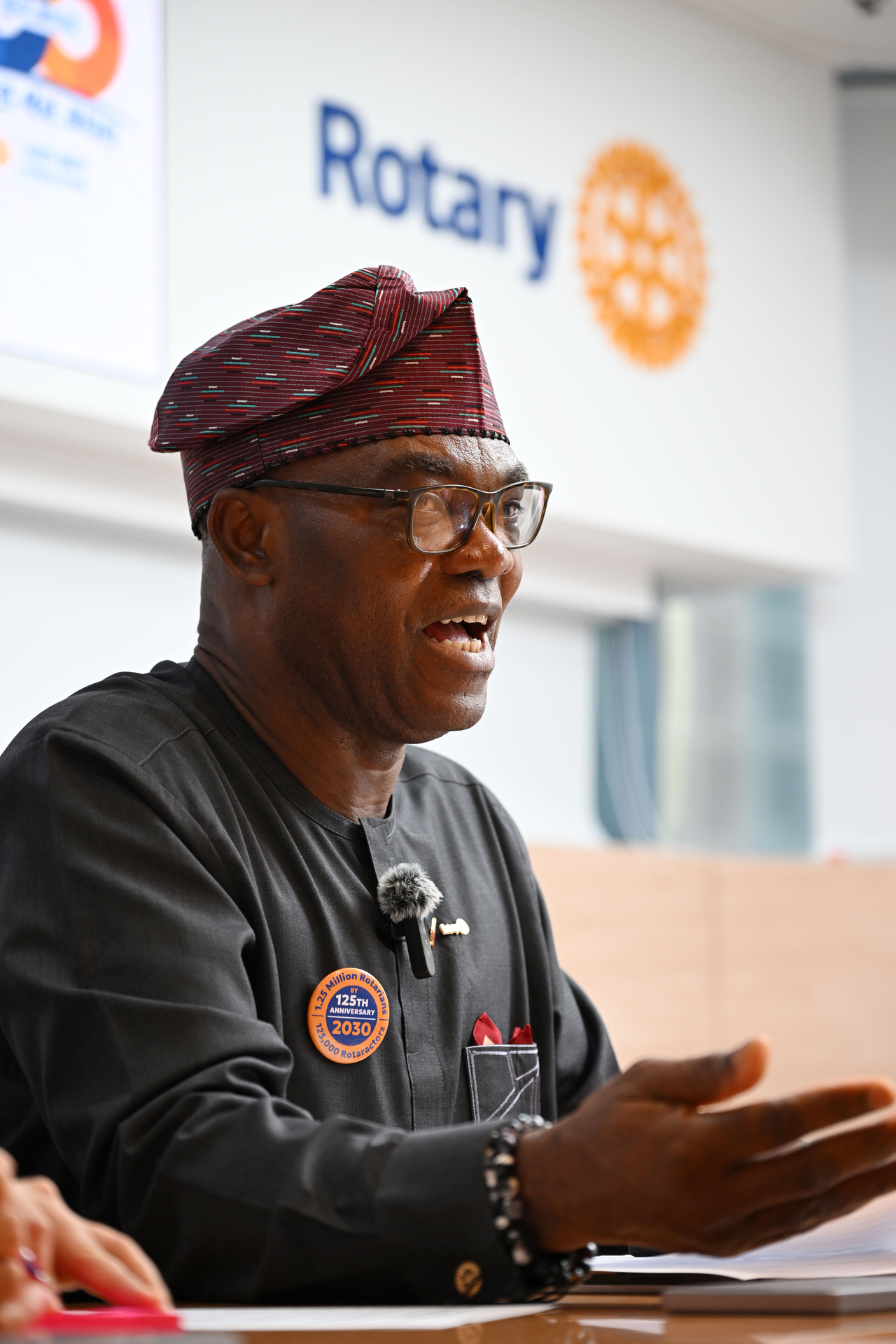
Polio, a disease that has plagued humanity for more than a century, is nearing eradication — with reported cases down 99.9 percent. Behind that achievement stands the relentless work of Rotary International, a global service organization with 1.2 million members across 200 countries. Over its 120-year history, Rotary has donated $3 billion to the fight against polio, making it one of the most sustained philanthropic campaigns ever mounted against a single disease.
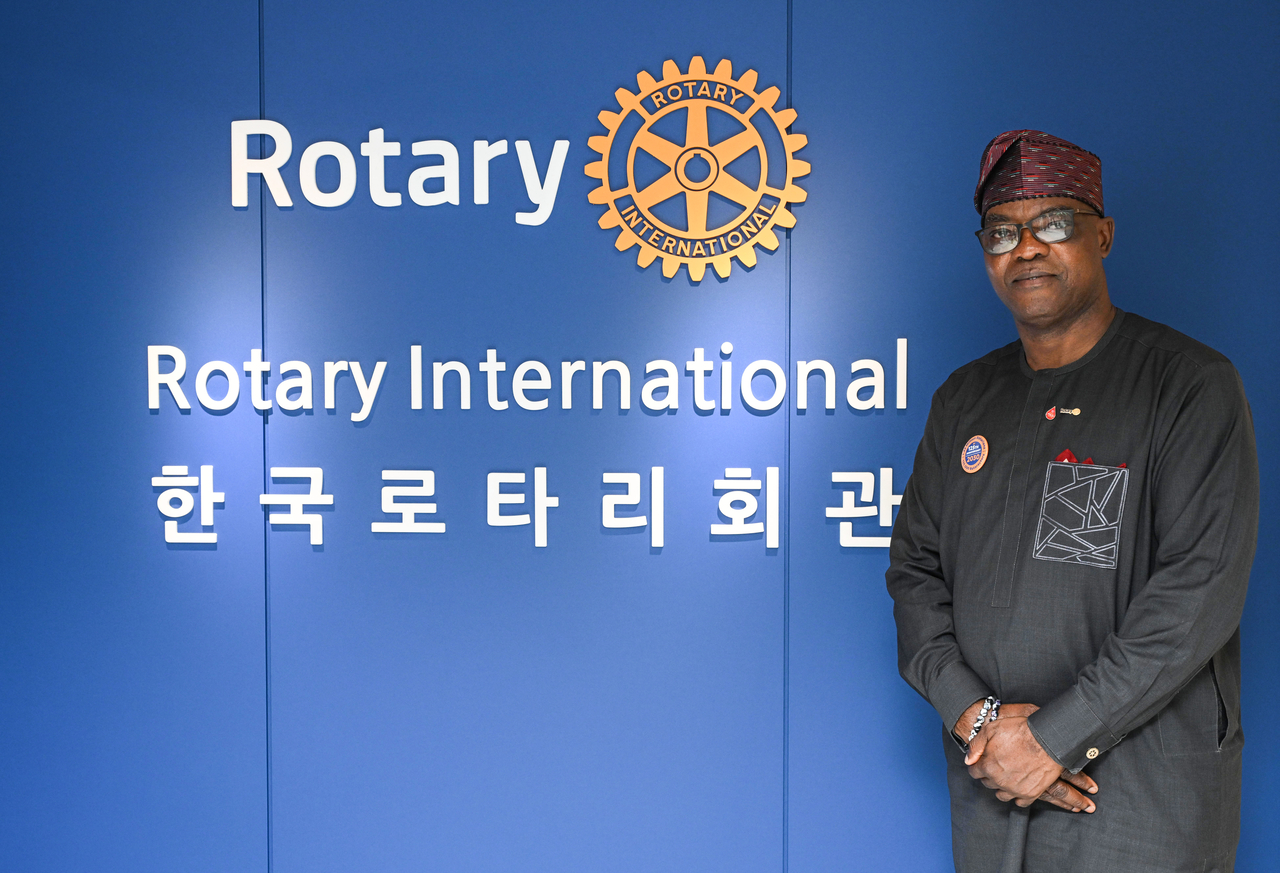
South Korea's Rotary community, home to more than 1,680 clubs, ranks fourth in the world both in donations — contributing about 25 billion won ($18.6 million) — and in membership, with roughly 67,000 members as of June. With Korean Rotary set to mark its centennial next year, Rotary International President Olayinka Hakeem Babalola visited Seoul on Sunday, meeting with members at the Korea Rotary Building in Jongno-gu.
Babalola, a Nigerian national who built a career in the oil and gas sector, has served on the boards of Rotary International and the Rotary Foundation. Babalola is only the second person of African origin to lead Rotary International, and has made community service, sustainable problem-solving and peacebuilding the pillars of the presidency. The following is an edited transcript of the interview.
— What is the most important priority you want to advance as Rotary International president for 2026–2027?
▶ The theme for Rotary International this year is "Create Lasting Impact." It is not simply about Rotary making some kind of change and stopping there. Change is just the beginning. What we want is for the changes we bring to communities to be self-sustaining — so that even after Rotary steps back, those communities can carry the momentum forward on their own. The core message is not one-off or short-term action, but creating impact that lasts.
— Next year marks the 100th anniversary of Korean Rotary. How do you hope Korean Rotary will contribute to sustainable global development going forward?
▶ The standing of Korean Rotary over the past 100 years within the 120-year history of Rotary International is truly remarkable. In humanitarian projects and fundraising, Korean Rotary has made significant contributions and achieved strong progress. Among more than 200 member countries, South Korea stands out for the scale and quality of its activities. In membership alone, it ranks fourth out of 200 countries — and it consistently achieves fourth place in donations worldwide every year. Last year, Korean Rotary donated more than $18 million. That is why I came here to celebrate. South Korea currently has about 67,000 members, and the goal is to reach 100,000. More members means more donations, and more donations means a greater impact on communities in need. I expect Korean Rotary to raise its standing within Rotary International even further over the next 100 years.
— Thanks to Rotary and its international partners, polio cases worldwide have fallen dramatically. What challenges remain on the road to full eradication, and how do you plan to sustain international engagement?
▶ Back in 1988, polio was present in 125 countries. Nearly 1,000 children were infected every single day. According to data from this October, that figure has fallen to about 60 cases a day. But we will not stop here. Through organizations such as the Bill & Melinda Gates Foundation and UNICEF, we continue to provide oral vaccines to children in many countries to prevent polio. There are still places that are very hard to reach, however — Afghanistan being one example. We will keep working until the end. Three things are essential for that. First, securing funding. Second, raising awareness — many people still resist vaccines. Third, advocacy. We work with many governmental bodies and NGOs to educate people on why vaccination matters. Ultimately, our goal is to eradicate polio 100 percent.
— Humanitarian activities such as disease prevention, education, healthcare and local economic development affect not only individual lives but also community growth. How does Rotary assess the value of such work, and how does it plan to expand collaboration with other organizations?
▶ What I want to emphasize above all is that delivering sustainable, high-impact projects cannot be the responsibility of any single organization. The polio example alone shows that progress of this scale was possible only because many organizations — WHO, UNICEF and others — worked together under Rotary's leadership. Rotary has a special grant program called the "Serve to Scale" project, which accepts proposals through a competitive process and selects one country per year to receive $2 million in support. In South Korea, for instance, Rotary has for several years run programs providing psychological counseling to young people struggling with mental health. But counseling alone is not enough for the highest-risk cases. Some children carry wounds from self-harm or suicide attempts, and for them we also provide medical services — including surgery — to treat those physical injuries alongside the mental health support. It is not enough to offer a single project or a first-level service. What truly matters is planning comprehensively: how do we take that initial service and ultimately help every one of these people live a fulfilling life?
— What is your message to encourage greater participation from younger generations in Rotary?
▶ Rotary is not a place young people should find intimidating. It is a stage where they can thrive. Rotary offers the chance to work alongside many people, learn from one another and grow — so I hope young people will come without hesitation and enjoy what it has to offer. And Rotary is not just a local gathering — it is international. We have many channels through which people can connect in all kinds of ways. Those who prefer in-person meetings can attend them; clubs that want to network online can do so digitally. From the outside, Rotary may seem unfamiliar, but once you step inside, you will find a wide range of programs that can meet your needs.
ikson@heraldcorp.com