
Civil servant unions warned of staffing, office and workload concerns before launch — now those warnings are being tested against reality
Scholarship disruptions and fiscal uncertainty raise questions about whether streamlining has translated into better services for residents
The restructuring was designed under the eighth elected city government; the ninth now faces the task of making it work
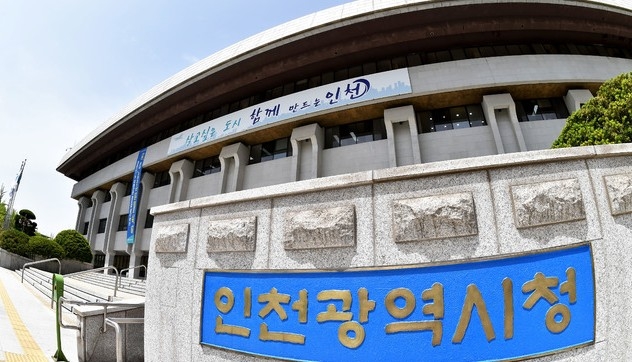
Incheon's administrative restructuring has achieved its outward goal — the creation of new autonomous districts — but the harder work of stabilizing the civil service and maintaining uninterrupted services for residents remains unfinished.
Concerns over staffing assignments, handover procedures, office space and administrative systems have persisted since the launch. Delays in settling fiscal and property accounts between districts are fueling growing doubt about whether the overhaul is delivering the resident convenience and administrative efficiency it promised.
The restructuring was driven by the eighth elected city government and took effect July 1 when the ninth took office, with Jeomulpo-gu, Yeongjong-gu, Seohaee-gu and Geomdan-gu formally established.
Yet several organizational and fiscal problems flagged during the preparation process have carried over as unresolved challenges since the launch.
Redrawing administrative boundaries can be accomplished through legislation and procedure. But for a new organization to function stably, it must be backed by adequate staffing, budgets, facilities and operational systems.
The problems that have surfaced since the launch invite scrutiny of whether that preparation adequately reflected the demands of the field.
Civil servant unions sounded the alarm early, raising concerns about personnel assignments and workloads before the new districts opened. The warnings centered on whether the groundwork — offices, budgets, staffing — was truly in place.
The Incheon chapter of the National Civil Servants' Union raised concerns last year about inadequate preparation, citing unresolved questions over office space, budget allocation, workload distribution and personnel imbalances.
The concern was that some staff in the former Jung-gu — now Yeongjong-gu — were being asked to simultaneously handle integration work for Jeomulpo-gu and separation preparations for the Yeongjong area, concentrating the burden on a small number of employees.
Standing up a new autonomous district is not simply a matter of redrawing an organizational chart. It requires splitting existing departmental functions, assigning responsible civil servants, and transferring civil complaints, contracts, budgets, records and IT systems to fit the new structure.
Without clear lines of responsibility and authority for each function, the handover process carries a real risk of confusion.
Workplace relocations and staffing assignments are also sensitive. The conditions of temporary offices, commuting distances and unfamiliar work environments directly affect employee satisfaction. When personnel criteria are not clearly explained, or when workloads and staffing levels are mismatched, internal discontent can grow.
The key questions are whether Incheon city and each district reviewed and addressed the concerns raised before the launch, and whether objective data exist to verify actual workloads and the handling of resident complaints.
The city and the districts should audit staffing levels, workloads and any delays in processing resident requests — and where necessary, ease the burden on frontline staff through reassignments and workload adjustments.
The ultimate beneficiaries of any administrative restructuring should be residents, not the civil service or local government. Whether the overhaul has actually improved their lives is the central question.
Yeongjong and Geomdan have seen rapid population growth and urban development, generating expanding demand for public services. The core argument for giving them separate autonomous districts was that independent governance would allow policies tailored to local conditions and faster responses to residents' needs.
But the mere existence of a new district does not automatically improve residents' experience.
Service counters and responsible departments must operate reliably, and the issuance of certificates along with welfare, environmental and transportation services must continue without disruption. Instability in office space, information systems or staffing can mean that the change residents actually feel is inconvenience rather than improvement.
Fiscal problems touch residents' daily lives as well. If delayed settlements between districts strain the funding of essential services, or if disputes over asset succession disrupt scholarship programs and public services, residents end up indirectly bearing the cost of the restructuring.
Evaluating the overhaul's impact therefore requires looking beyond whether new districts were launched or how large their organizations are. Processing times for resident requests, satisfaction levels, accessibility of administrative services by area, and the stability of budget execution all need to be examined together.
That is why calls are growing for the city to publish objective indicators comparing service levels before and after the restructuring, and to conduct regular assessments of both improvements and shortcomings.
Questions about responsibility for preparing, implementing and managing the restructuring are also being directed at Incheon city itself.
The overhaul was conceived under the eighth elected city government, but the day-to-day administrative work and problem-solving after the districts launched has fallen to the ninth.
The city promoted the restructuring as a way to align services with residents' living patterns and advance regional development. It must now verify whether those goals are actually being met — and whether the fiscal, staffing and physical foundations are genuinely in place.
Particularly if fiscal settlements between districts drag on and pressure over office space and operating costs persists, there is a need to examine how rigorously the fiscal requirements and risk factors were analyzed during the preparation phase.
Completing the legal formalities required for a launch and guaranteeing stable administrative operations are two separate tasks.
It also matters whether Incheon city is fulfilling its role as mediator in disputes between districts.
The city must establish clear settlement criteria and verification procedures, and present a support plan that distinguishes between launch costs and long-term operating expenses. Uniform support that ignores the differing fiscal conditions and administrative demands of each district will not resolve the underlying problems.
The city should also compare the plans drawn up during the preparation phase with actual outcomes, disclose where the gaps were, and clarify who is responsible and on what timeline improvements will be made.
Only then can the problems of this restructuring be treated not as routine early turbulence but as lessons for future administrative reforms.
It would be premature to declare Incheon's administrative restructuring a failure outright. Large-scale boundary adjustments require a period of adjustment as organizations, facilities and budgets are realigned, and the newly established districts have real potential to pursue policies suited to their local character.
But fiscal and property settlements, along with personnel and organizational issues, cannot be left unresolved indefinitely under the banner of early-stage growing pains.
Scholarship programs, essential administrative funding and the operation of public facilities — all of which directly affect residents — must be stabilized as a priority.
Incheon city should first set out a clear schedule for resolving fiscal settlements and the succession of assets and liabilities between districts, and spell out concrete plans for securing office space and covering operating costs.
Workload burdens and staffing imbalances within the civil service also need to be reviewed with input from frontline staff.
At the same time, the city must build an evaluation framework that allows service levels before and after the restructuring to be compared and made public.
Objective indicators should show whether complaint-processing times have improved, whether access to administrative services has increased, and whether locally tailored policies have in fact expanded.
The administrative restructuring launched by the eighth elected city government is now a test of the ninth Incheon city government's governing capacity.
The first step — the launch itself — is complete. The harder tasks of stabilizing finances and the organization, and producing results that residents can actually feel, are only beginning.
If a change in administrative boundaries does not translate into better governance, the value of the restructuring will inevitably be diminished.
How quickly and transparently Incheon city resolves the problems that have emerged since the launch will ultimately determine how this overhaul is judged.
gilbert@heraldcorp.com




