Songdo District 6 complex cultural library misses 2026 opening pledge, yet to break ground
Edison Science Education Museum relocation review adds to resident confusion
Jeomulpo, Songdo amusement park contracts terminated after partial spending
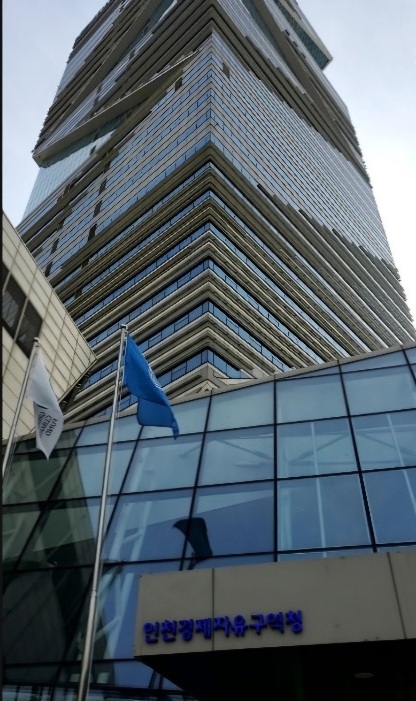
The Incheon City Council has raised concerns over the Incheon Free Economic Zone Authority's management of major development projects, citing prolonged delays and the mid-contract termination of consulting services due to insufficient feasibility.
Critics say the authority wasted administrative resources and public funds by failing to break ground on public facilities it promised residents, while separately halting consulting work on free economic zone expansion after spending large sums.
Lawmakers said it must be made clear whether proper feasibility reviews were conducted before projects were launched and who bears responsibility for the changes and delays.
Lee Gang-gu, a lawmaker on the Incheon City Council's Industry and Economy Committee representing Yeonsu-gu District 5, on Thursday pressed the authority on the stalled cultural and science infrastructure in Songdo District 6, the sluggish waterfront project and the repeated suspension of consulting contracts related to free economic zone designation.
The most immediate concern was the long-running delay in delivering public facilities promised to residents of Songdo District 6.
The C1 Block complex cultural library — originally planned to open in 2026 using roughly 71 billion won ($53.3 million) recovered from SLC development profits — has yet to break ground after running into a preliminary feasibility review requirement from the Ministry of Culture, Sports and Tourism.
With the target opening date approaching and construction not yet started, the project's timeline and direction have become uncertain.
News that the Edison Science Education Museum is also being considered for relocation has added to residents' confusion.
The authority's ability to deliver on its commitments and the credibility of its policies are now in question, given that its original plan to expand cultural and educational facilities in the area has not been carried out.
Lee called out the confusion and disappointment residents have experienced and urged the authority to proceed with both the complex cultural library and the Edison Science Education Museum as originally planned.
Lee also said the authority should disclose specific project plans and ground-breaking schedules to the city council and residents.
The Songdo waterfront project also came under scrutiny for its slow progress.
Launched in 2012 and funded through the authority's special account, the waterfront project is one of its flagship large-scale public undertakings, but only Phase 1-1 has been completed to date.
Budget cuts along the way have deepened concerns about whether the project will ever be finished.
Lee said that even accounting for the scale of investment required, the prolonged lack of tangible results reflects unclear priorities and insufficient will to follow through on policy.
Lee urged the authority to actively benchmark advanced overseas waterfront development cases — given the scarcity of comparable domestic examples — and to build momentum to move the project forward at a faster pace.
Perhaps the most notable issue raised was the repeated suspension of consulting contracts related to free economic zone designation.
Expanding the free economic zone is a significant policy initiative with direct implications for regional development and investment attraction, but the repeated halting of related consulting work on grounds of insufficient feasibility has drawn scrutiny over whether the spending was appropriate.
The consulting contract for the Jeomulpo free economic zone designation was terminated after 1.3 billion won of a 3 billion won contract had been spent.
A consulting contract related to the Songdo amusement park was also cut short after 393 million won of a total 2.259 billion won contract was spent. A separate contract for expanding the Yeongjong designation was likewise halted due to insufficient feasibility.
The deeper issue, lawmakers said, is not simply that the contracts were stopped, but how thoroughly the viability and economic merits of each project were examined before work began.
If contracts were awarded without adequate verification of feasibility, only for the authority to conclude later that the projects were not viable, that cannot be dismissed as a routine policy change, Lee said.
Lee also said it must be examined how much of the money already spent on the terminated contracts was actually used in policy development or follow-on projects.
Lee added that accountability for the suspensions and the resulting budget losses must be clearly established, and that institutional safeguards should be put in place to prevent similar cases from recurring.
"This is not simply an administrative rebuke," Lee said. "It is about keeping promises made to residents and preventing the waste of public funds."
gilbert@heraldcorp.com