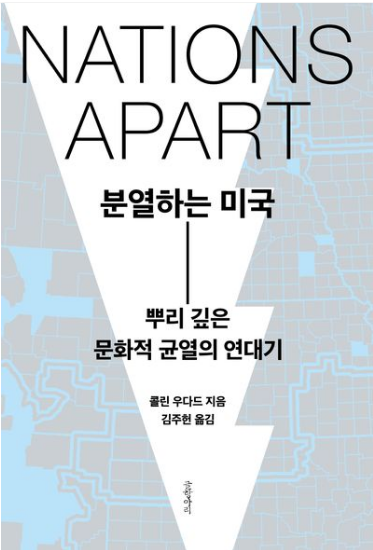
"Nations Apart" by Colin Woodard, translated by Kim Ju-heon (Geulhangari) — In January 2021, a mob stormed the US Capitol, the very heart of liberal democracy. Supporters of Donald Trump, who had lost the 2020 presidential election to Democratic candidate Joe Biden, stormed Congress in an attempt to block certification of the incoming president after Trump pushed conspiracy theories about a stolen election. The assault was quickly suppressed, but it stands as a defining symbol of America's deep divisions. Woodard, a historian, argues that the United States — outwardly "One Nation" — is in fact divided into nine distinct regional cultures, which can be further grouped into four broad camps along the lines of individualism versus collectivism, or a liberal spirit versus a communitarian one. Differing views on gun regulation, social and health spending, immigration, abortion and climate change, he contends, reflect cultural gaps so profound that the country's regional populations might as well be called "nine nations." Life outcomes — life expectancy, economic power, social cohesion — vary as much by which cultural zone a person comes from as by class or race, he adds.
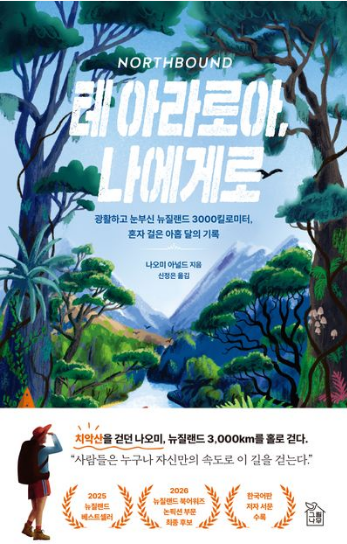
"Te Araroa, Back to Myself" by Naomi Arnold, translated by Shin Jeong-eun (Grimmanu) — Journalist and author Naomi Arnold recounts her solo journey along Te Araroa, New Zealand's long-distance walking trail, with nothing but a backpack. Te Araroa means "the long pathway" in Maori and stretches roughly 3,000 kilometers from Bluff at the southern tip of the South Island to Cape Reinga at the northern end of the North Island. Arnold walks the entire route over nine months, through all four seasons. She covers dozens of kilometers a day, pushing through mud, torrential rain, bitter cold and hunger. Harder than any physical obstacle, she finds, is the loneliness — days can pass without a single encounter with another person. She cries from the pain in her feet, crumbles under the isolation and questions why she ever set out, yet each morning she shoulders her pack again. The days blur into one another, but change arrives slowly. She confronts wounds and memories long avoided, learns to care for herself, and discovers, in solitude, how precious human connection truly is. What waits at the end of the long path is not only the achievement of finishing, but a self transformed.
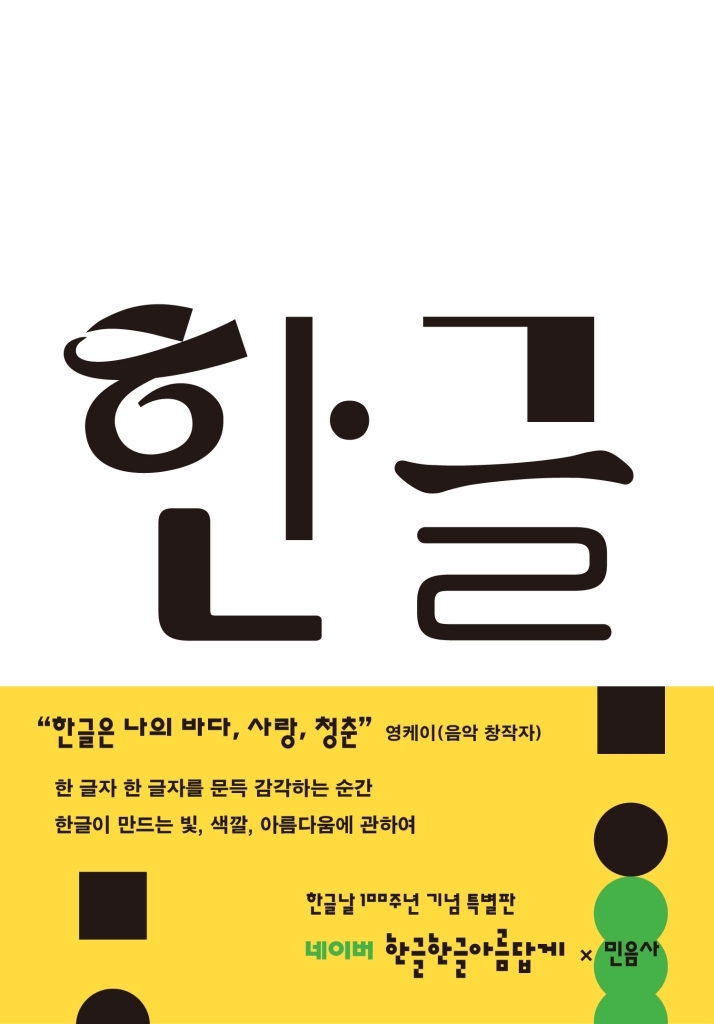
"Hangul" by Young K, Kim Ina, Bae Si-eun and seven others (Minumsa) — Hangul Day marks its 100th anniversary this year, tracing its origins to "Gagya Day" in 1926, during the Japanese colonial period. The scientific writing system created by King Sejong has since earned global recognition. The book brings together ten hangul users from diverse professions, each sharing the moment they felt the script's beauty most keenly. To a singer, hangul runs as deep as the ocean; to a lyricist, it cuts as sharply as a weapon. A typeface designer renders all 11,172 possible character combinations, while a graphic designer searches for ways to make each syllable block more vivid. A Sino-Korean literature scholar feels a kind of tenderness for a script that survived the Joseon era, when spoken and written language were worlds apart, while a hangul linguist looks ahead to the script's future. A poet reaches for the letter before the concept; in a Korean-language class filled with people from around the world, and in the writing of outsiders, hangul grows bolder. In the digital realm, vast accumulations of hangul text give rise to emergent meaning. The book closes by wondering how hangul will be perceived and what worlds it will embrace in the age of AI.
carrier@heraldcorp.com
pink@heraldcorp.com