Next-generation maritime patrol aircraft targeted for deployment in early-to-mid 2030s
Lawmaker Yu Yong-won warns of operational gap between retirement and replacement
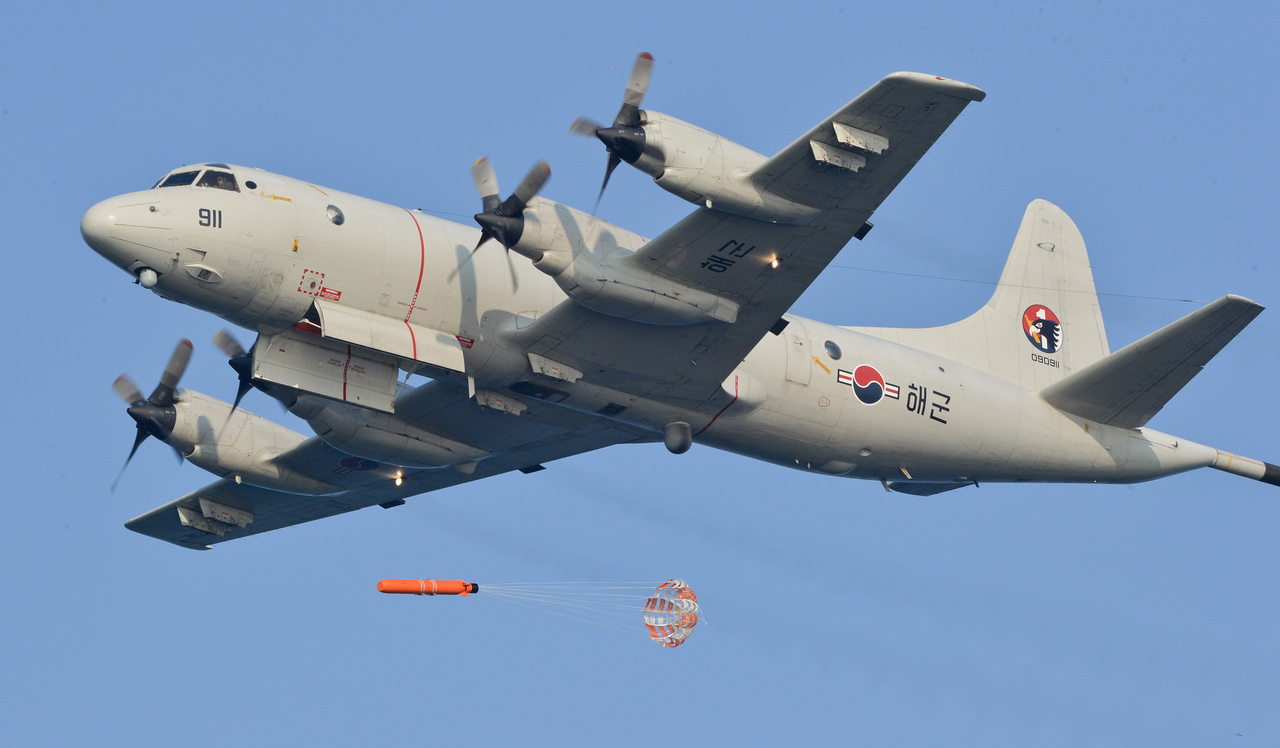
South Korea's Navy faces a potential gap in maritime surveillance and anti-submarine operations as its P-3CK patrol aircraft are set to be retired starting in 2030, even as North Korea and China continue to expand their naval capabilities in the Yellow Sea.
According to documents the Navy provided to People Power Party lawmaker Yu Yong-won of the National Assembly's Defense Committee and released Monday, the Navy submitted a formal requirement in January for a "Maritime Patrol Aircraft-III" program to replace the P-3CK. A decision on the requirement is under review for this year, with the new aircraft targeted for deployment in the early-to-mid 2030s.
The existing P-3CK fleet, however, is scheduled to begin retirement in 2030. Even if the next-generation aircraft is introduced on schedule, concerns have been raised that maritime surveillance and submarine detection and tracking capabilities could be temporarily weakened, depending on how quickly the old aircraft are phased out and how many new ones are procured.
The P-3CK was originally built in the United States in the 1960s and operated by the US Navy before being retired. South Korea acquired and refurbished the aircraft, introducing them into service in 2010. Following a crash in May last year, all flights were suspended. After a detailed inspection and safety upgrades, test flights resumed in September.
The Navy said it plans to operate its existing P-3C and P-8A maritime patrol aircraft flexibly until the new fleet is introduced, and will also draw on maritime operation helicopters and surface vessels to prevent any operational gap. However, critics note that since the next-generation program has yet to clear the requirements-determination stage, more concrete plans are needed to manage the retirement schedule and address any capability shortfall.
Meanwhile, China's Navy continues its military activities in the Yellow Sea, conducting approximately five to 10 maritime exercises there each year, according to the Navy.
The Defense Intelligence Agency, drawing on US Department of Defense data, assessed that China's Northern Theater Command Navy — which operates directly in waters linked to the Yellow Sea — maintains aircraft carriers, surface combatants and submarines, and focuses primarily on defending northern maritime approaches and supporting naval operations in other theaters during contingencies. The agency noted that the Northern Theater Command Navy operates major assets centered on the aircraft carrier Liaoning, including cruisers and destroyers, and assessed that its capabilities will continue to grow.
North Korea is also pursuing naval modernization. In June, it deployed the Choe Hyon-ho, a new 5,000-ton destroyer, to the Yellow Sea.
However, the Defense Intelligence Agency cautioned that North Korea's publicly disclosed submarine capabilities must be assessed carefully to determine what has actually been operationalized. It said the Kim Gun-ok, described by Pyongyang as a "tactical nuclear attack submarine" capable of launching submarine-launched ballistic missiles, has not yet been operationalized. A large submarine that North Korea unveiled in December last year, claiming it was a "nuclear-powered submarine," was also assessed as likely requiring considerable time before becoming operational.
"Maritime patrol aircraft are a core asset for monitoring and tracking enemy vessels and submarines and for responding swiftly in contingencies," Yu said. "Even if the next-generation maritime patrol aircraft program proceeds as planned, an operational gap could emerge depending on when the existing fleet is retired — so the Navy must prepare not only a deployment timeline but also a concrete operational plan to cover that gap period."
Yu added that "as China and North Korea's maritime threats in the Yellow Sea persist, our Navy must develop the maritime operational capabilities to respond to the changing security environment," calling for rigorous program management and contingency planning to ensure that key naval buildup projects — including a manned-unmanned teaming carrier and next-generation submarines — proceed without delay and that necessary assets are secured on time.
rimsclub@heraldcorp.com