
Seminar on relocation challenges in urban renewal projects
'Housing policy is complex and dynamic, like a web'
Third-generation new towns proposed as regional relocation buffer
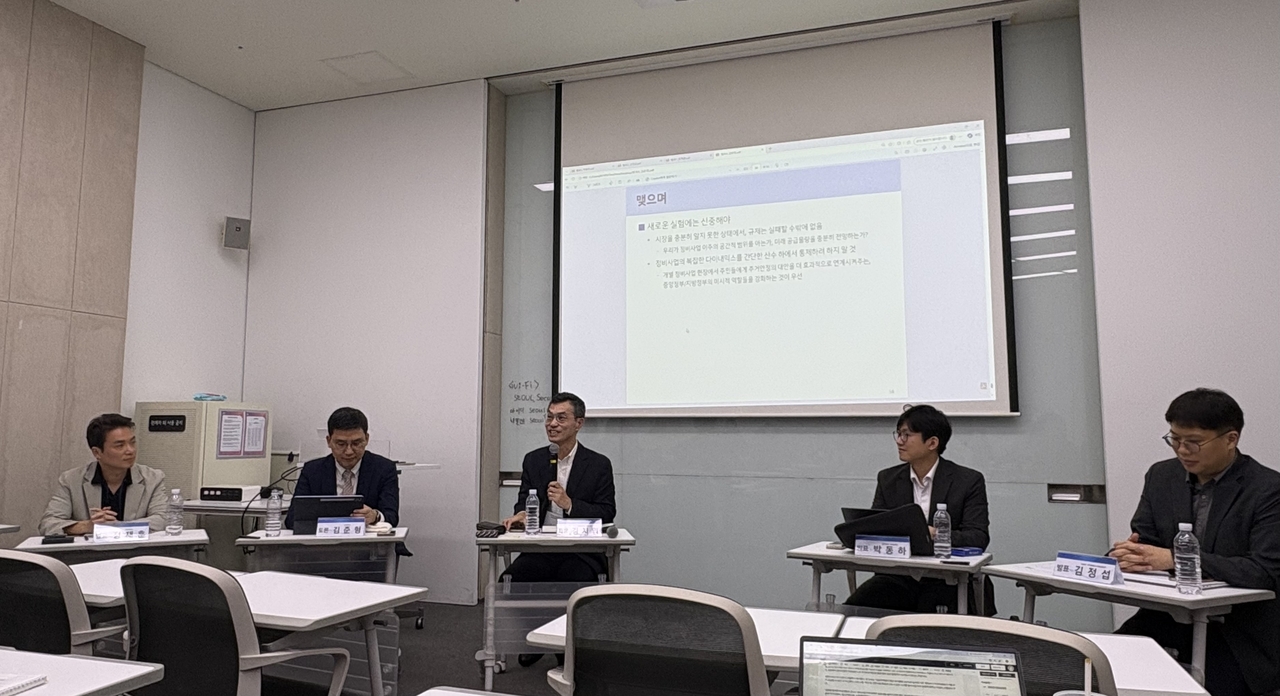
As the Seoul Metropolitan Government accelerates housing supply through redevelopment and reconstruction projects, experts are calling for a metropolitan-wide relocation strategy covering the entire Greater Seoul area to manage the large-scale displacement such projects generate. Rather than slowing urban renewal out of concern over short-term housing demolition, they say careful analysis and a dispersal of the impact are needed.
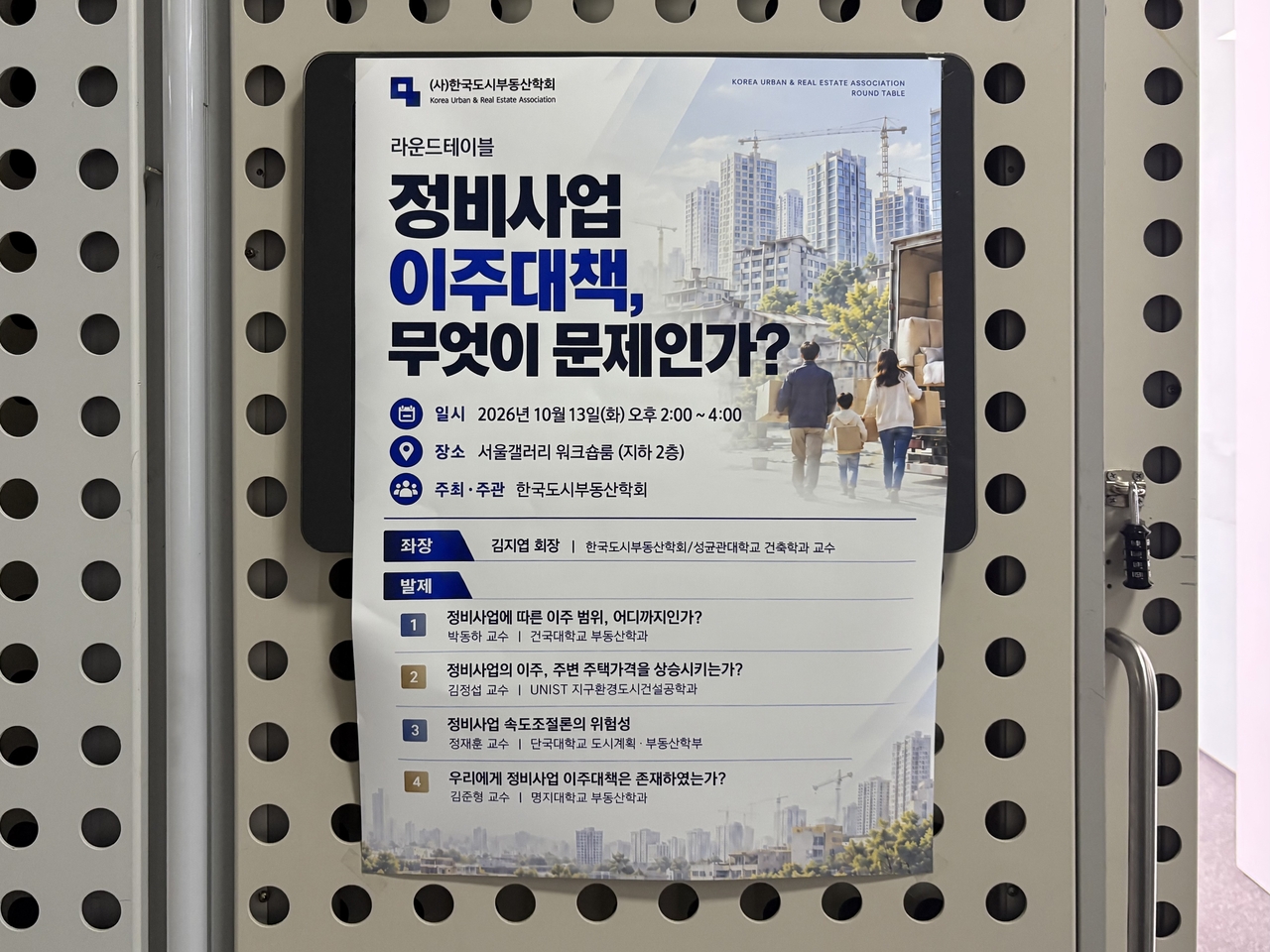
The roundtable, titled "Relocation Measures for Urban Renewal Projects: What Are the Problems?", was held Tuesday at Seoul Gallery in Jung-gu, Seoul. Participants discussed how housing demolition and relocation demand from urban renewal projects affect the real estate market, and what policy responses are available.
Kim Ji-yeop, chairman of the Korea Urban Real Estate Association and moderator of the session, said the Seoul Metropolitan Government has set a target of breaking ground on 310,000 units by 2031, but that one argument against the plan is that relocation demand will send home prices soaring and worsen the jeonse and monthly rent shortage. "Housing policy is complex and dynamic — many factors are intertwined, like a web," he said.
The first presenter, Park Dong-ha, a professor in the real estate department at Konkuk University, said it was inappropriate to assess relocation demand from urban renewal projects solely on the basis of total housing demolition figures across Seoul. He proposed that the concept of sub-markets be incorporated into the analysis and that the negative framing around residents moving outside Seoul be challenged.
"The volume of units under the Sintong Planning 2.0 scheme is playing out in diverse ways across Seoul depending on local conditions and how residents are moving," Park said. "Focusing only on the number of demolished units risks overstating the problem." He added that the capacity to absorb relocation demand should be viewed not just through the lens of Seoul's lease market but extended to the broader metropolitan area.
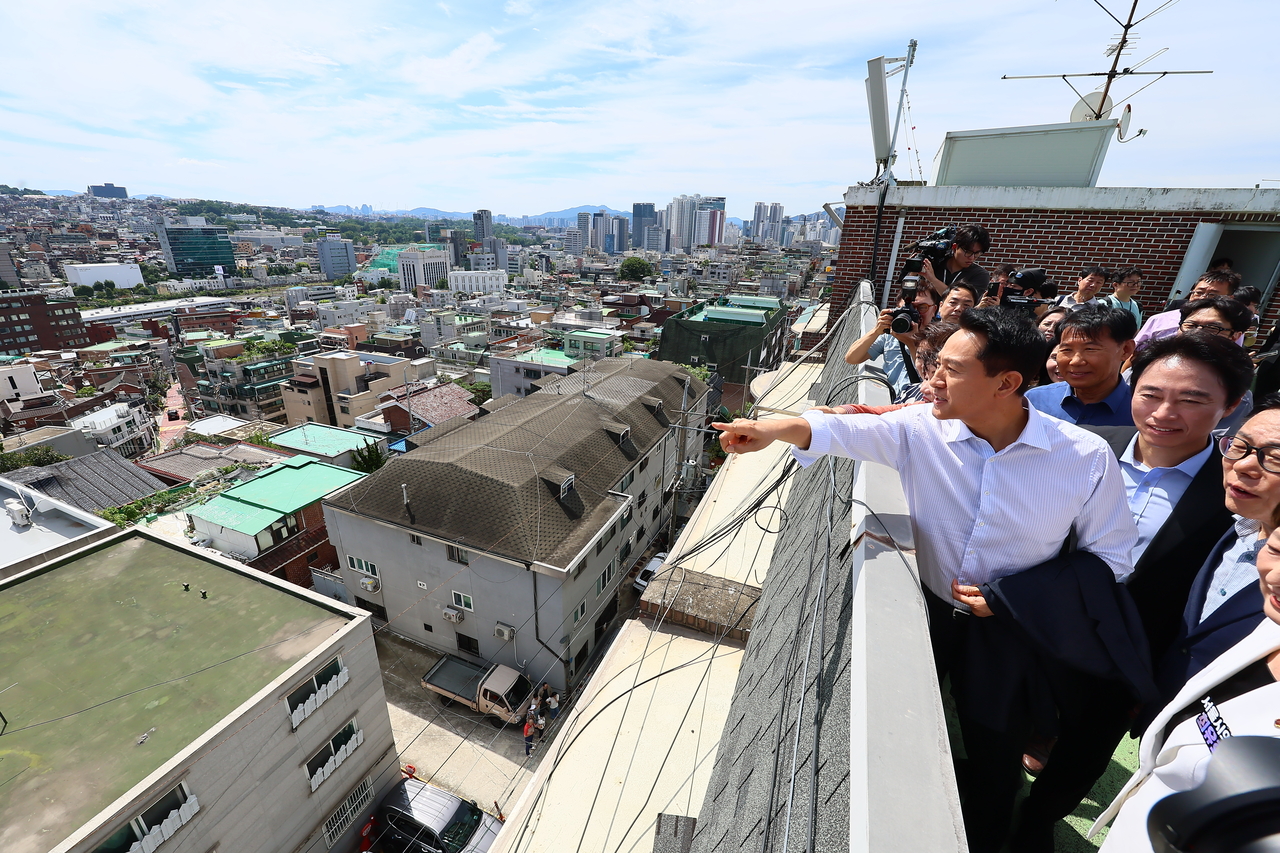
Another presenter argued that the short-term impact of urban renewal relocations on rental prices can be addressed through systematic policy. Kim Jeong-seop, a professor at the Urban Future Strategy Research Center at Ulsan National Institute of Science and Technology (UNIST), said his analysis of existing domestic research found that a reduction in housing stock and an increase in rental demand caused by relocation and demolition can push up rental prices in nearby areas in the short term.
"Prior research shows that rental price increases tend to be concentrated in the one to two months before relocations begin in earnest, and that prices stabilize afterward," Kim said. "Because the rental price impact of relocation and demolition is short-term in nature, there is a need to systematically manage and monitor which areas are absorbing concentrated relocation demand." He added that evidence-based, systematic policy is needed to minimize negative effects and maximize the benefits of expanded supply.
Jeong Jae-hun, a professor in the urban planning and real estate department at Dankook University, criticized the approach of slowing urban renewal projects, arguing it would only prolong housing instability. Before his presentation, Jeong cited a jeonse market case involving Olympicpark Foreon in Gangdong-gu, Seoul, saying "the current triple surge in sales prices, jeonse and monthly rents is more serious than people realize."
He said calls to slow the pace of urban renewal could lead to prolonged housing instability, rising costs, a loss of momentum and urban blight. "The policy goal needs to shift from how to slow down urban renewal projects to how to accelerate supply," he said.
As a concrete alternative, Jeong proposed creating a metropolitan-wide relocation buffer zone using third-generation new towns. He estimated that raising the planned floor-area ratio for those new towns to around 300 percent could add approximately 64,000 units on top of existing plans. "Seoul should not try to resolve its relocation demand within Seoul alone," he said. "We need to create a metropolitan-wide buffer zone covering the entire Greater Seoul area, and a portion of the additional supply could be used as rental housing for residents displaced by urban renewal projects."
The final presenter, Kim Jun-hyeong, a professor in the real estate department at Myongji University, highlighted the legal limitations of the current relocation framework for urban renewal projects. "Relocation measures are currently grounded in the Land Compensation Act and the Urban Renewal Act, and the entity responsible for drawing up and implementing those measures is essentially the reconstruction association as the project operator," he said. "The Seoul Metropolitan Government's role is largely confined to adjusting the timing of urban renewal projects."
Kim also raised concerns about the "annual permissible renewal volume" introduced under the Special Act on the Improvement of Aging Planned Cities. "Capping the volume of urban renewal permits based on surrounding housing supply may look reasonable at first glance, but it is difficult to accurately predict future supply volumes and the actual scope of displacement," he said. He added that the priority should be to assess how exposed residents at individual urban renewal sites are to housing instability and to provide them with direct support.
shy@heraldcorp.com
hwshin@heraldcorp.com




