Only 2,392 jeonse listings found across 66,480 units in Seoul's top 10 complexes
Actual availability likely even lower due to duplicate and completed listings
Jeonse shortage seen propping up Seoul apartment sale prices
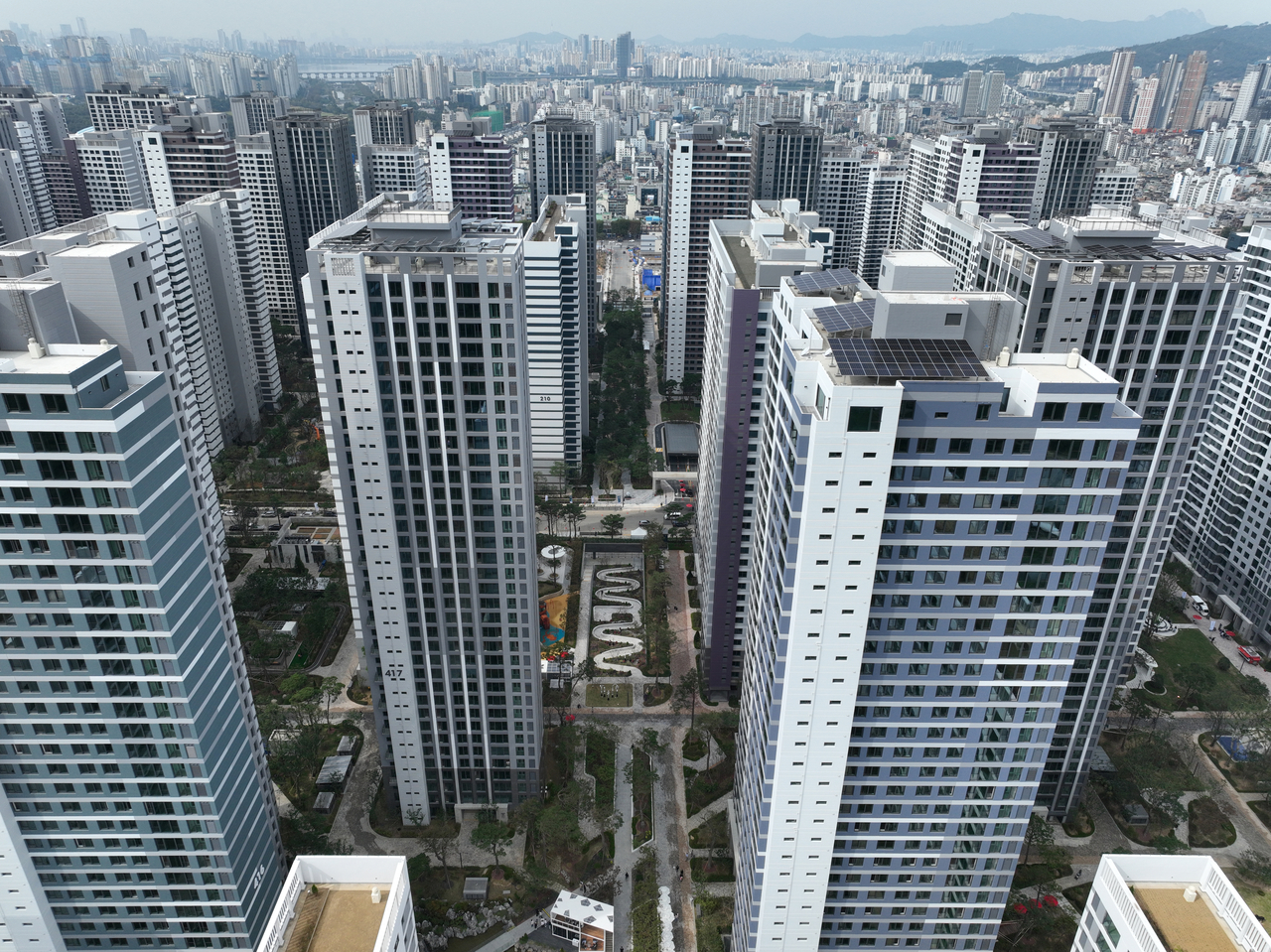
Jeonse shortages in Seoul apartments are becoming entrenched as owner-occupancy requirements, lending restrictions and a lack of new supply take hold — and now even the city's largest complexes, with thousands of units, are seeing jeonse listings all but disappear. The top 10 apartment complexes in Seoul account for more than 66,000 units combined, yet available jeonse listings represent just over 3 percent of total households. While apartment prices have shown signs of softening in some high-end areas, including the three Gangnam districts of Gangnam-gu, Seocho-gu and Songpa-gu, analysts say the chronic shortage of jeonse supply could act as a floor for Seoul apartment prices.
A survey of jeonse listings across Seoul's top 10 largest apartment complexes on Naver Real Estate on Wednesday found that only about 3.6 percent of units had jeonse listings registered. The 10 complexes together hold 66,480 households, yet only 2,392 jeonse listings were on the market. The actual number available to prospective tenants is likely even lower, as the figure includes listings for deals already completed but not yet removed, as well as duplicate entries.
Olympic Park Foreon in Gangdong-gu — Seoul's largest complex at 12,032 units — had only 847 jeonse listings. Helio City in Songpa-gu, the second-largest at 9,510 units, had 593 listings, or about 6 percent of its total. Jamsil Park Rio, also in Songpa-gu with 6,864 units, had 194 jeonse listings, while the nearby Jamsil Els complex (5,678 units) had just 176. Ricenz, another Songpa-gu complex with 5,563 units, had only 49 jeonse listings — a rate of just 0.9 percent.
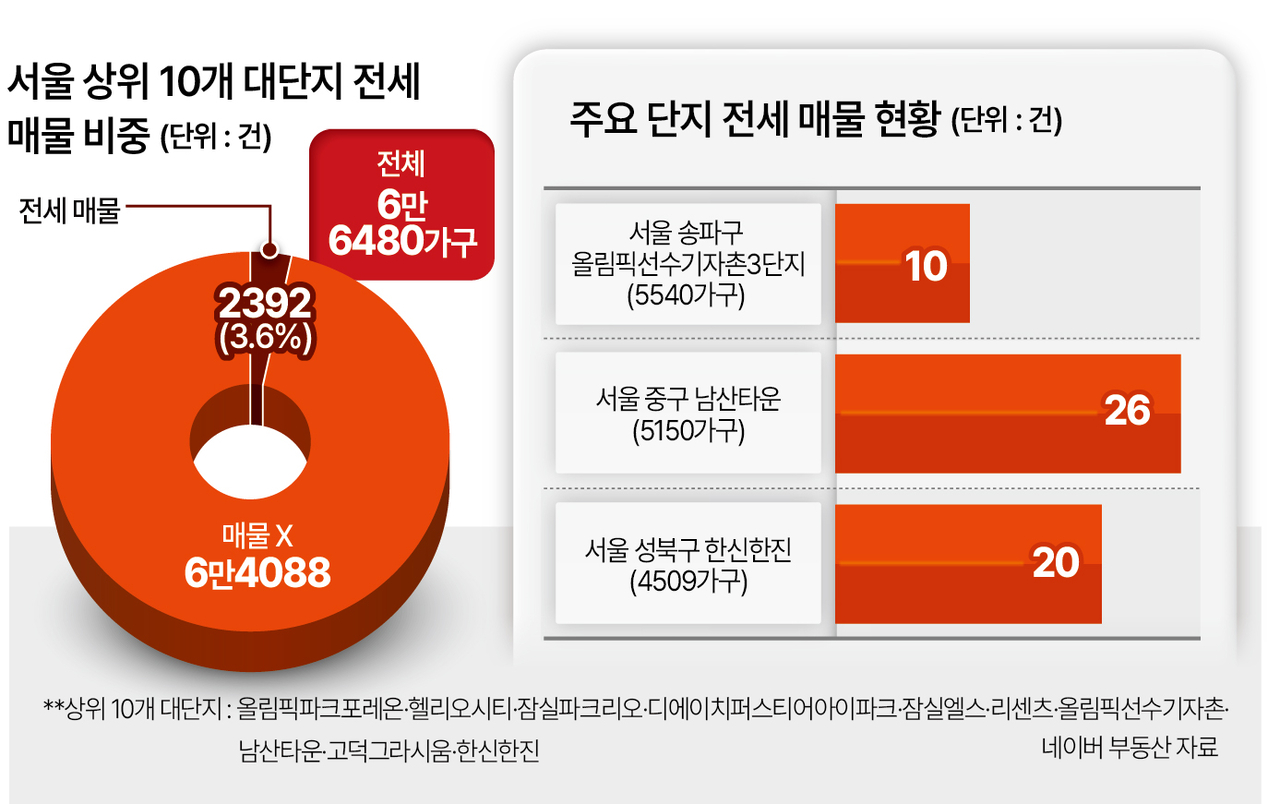
In Gangdong-gu, the 4,932-unit Godeok Gracium complex had just 36 jeonse listings. Olympic Athletes' Village Complex 3 in Songpa-gu, with 5,540 units, had only 10 — a near-total jeonse drought.
The shortage is not confined to the Gangnam area or the Han River belt. Mid- and lower-priced districts are experiencing the same squeeze without exception. Namsan Town in Jung-gu, with 5,150 units, had just 26 jeonse listings registered, while Hanshin Hanjin in Seongbuk-gu, a 4,509-unit complex, had only 20.
The concern is that this jeonse shortage is doing more than unsettling the rental market — it may also be propping up sale prices across Seoul. Analysts say that rising deposits driven by the listing shortage, combined with renters converting to buyers out of necessity, are pushing up sale prices even as values climb in mid-priced areas and along the Han River belt.
"For average-priced housing in Seoul, the shortage of jeonse listings and rising jeonse prices are a baseline condition, and that dynamic is supporting a floor under sale prices," said Yun Su-min, a senior real estate specialist at NH NongHyup Bank. "This jeonse supply shortage will persist through the year after next, when new move-in supply will still be insufficient."
President Lee Jae Myung recently pointed to a surge in apartment listings and falling transaction prices in key Seoul neighborhoods, but analysts say a broader price decline in mid-priced areas and along the Han River belt is unlikely as long as the jeonse shortage remains unresolved.
At a Cabinet meeting on Tuesday, Lee said, "Apartment listings in Seoul are increasing rapidly, and transaction volumes are falling rapidly. Actual transaction prices in major areas are dropping at a surprising pace — the most desirable outcome is for real estate prices to stabilize."
Experts say that easing jeonse instability and stabilizing home prices will require a swift push to secure new move-in supply in central urban areas and to expand housing supply in a meaningful way. "It is true that Gangnam reconstruction complexes are seeing price declines, but it is difficult for that trend to spread across all of Seoul," said a real estate expert who asked not to be named. "We need to face the current jeonse shortage squarely and focus on supply measures that deliver effective new housing in the city."
Meanwhile, the government announced last month in its Oct. 29 supply plan that it would release six greenbelt sites in Greater Seoul areas adjacent to the capital — including Gimpo, Guri and Hanam in Gyeonggi Province — to break ground on 76,700 units by 2030, applying an accelerated public land development model to speed up delivery.
hwshin@heraldcorp.com