Booking app Korail+ to receive UI/UX upgrades and new features by year-end
Customer satisfaction positive response rate reaches 82.2% in October
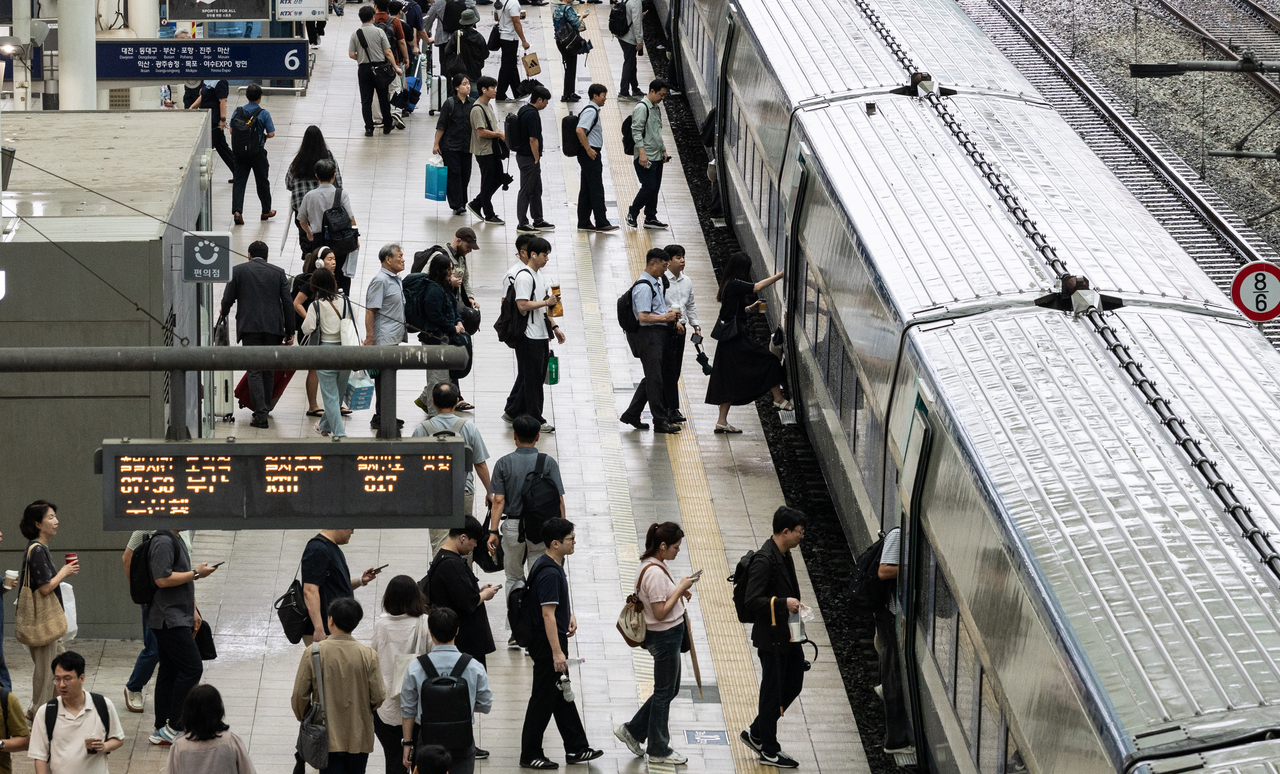
The integration of South Korea's high-speed rail network has driven a 12.6 percent year-on-year rise in daily ridership, as expanded seat supply, more frequent services and broader discount benefits take hold. Analysts say the easing of chronic seat shortages on the Suseo line and the extension of transfer discounts have translated directly into the ridership gains.
According to the Ministry of Land, Infrastructure and Transport and Korea Railroad Corporation (Korail), average daily ridership on the high-speed rail network reached 322,000 in the two months from Sept. 1 through Oct. 30 — the period following integration — up 36,000 riders, or 12.6 percent, from the same period a year earlier. Monthly growth rates also accelerated, coming in at 11.9 percent in September and 13.3 percent in October.
Particularly notable was the surge in ridership on the Suseo corridor, which had long suffered from chronic seat shortages. With seat supply and service frequency expanded, average daily ridership on the Suseo line reached about 90,000 — a jump of 29.5 percent year on year. The unification of transfer discount schemes between high-speed and conventional rail also pushed average daily transfer passengers from 6,110 before integration to 9,441, a 54.4 percent increase, significantly improving inter-regional travel convenience.
The financial relief for passengers is also becoming tangible. The government and Korail extended public discount categories — previously limited to KTX services — to SRT routes as well, covering fares for children, teenagers, senior citizens and pregnant passengers. Over the two months since integration, the combined fare discounts and mileage benefits returned to the public totaled 51.5 billion won ($38.4 million).
Steps are also being taken to address booking inconveniences and connection delays flagged in the early days of integration. The ministry and Korail have already carried out user interface and user experience improvements to the integrated booking app Korail+, and plan to add a refund amount preview function and a quick-booking feature by year-end. The agencies will also inspect systems prone to connection delays during peak travel periods such as public holidays, and strengthen detection and blocking of fraudulent bookings made using automated macros.
Safety and service standards are being reinforced as well. Restroom renovations on KTX-1 trains and additional cabin cleaning staff are under way to improve the onboard environment. Customer satisfaction surveys conducted in September and October recorded positive response rates of 81.6 percent and 82.2 percent, respectively.
Land Minister Hong Ji-sun said the integration is already delivering results, with more than 320,000 people riding the trains daily and transportation costs falling. "We will carefully attend to even small on-the-ground issues such as booking inconveniences, and return the benefits of integration to the public with safety as our top priority," Hong said.
Korail President Kim Tae-seung said the corporation would repay passengers' trust through rigorous safety and service standards, adding that a unified high-speed rail network could contribute to balanced national development by connecting the country quickly and safely as a backbone transportation network.
Meanwhile, Korail conducted its first comprehensive field emergency drill since integration at Pyeongtaek-Jije Station on the Suseo high-speed line late last month. The nationwide exercise was designed to prepare railway staff for new types of disasters, including extreme rainfall events and battery fires.
hwshin@heraldcorp.com