Three core principles for investing retirement pension funds in volatile markets
① Set your risk profile ② Diversify ③ Rebalance
TDFs, index-tracking ETFs and sector plays can work in combination
Default options and discretionary robo-advisors offer hands-off alternatives
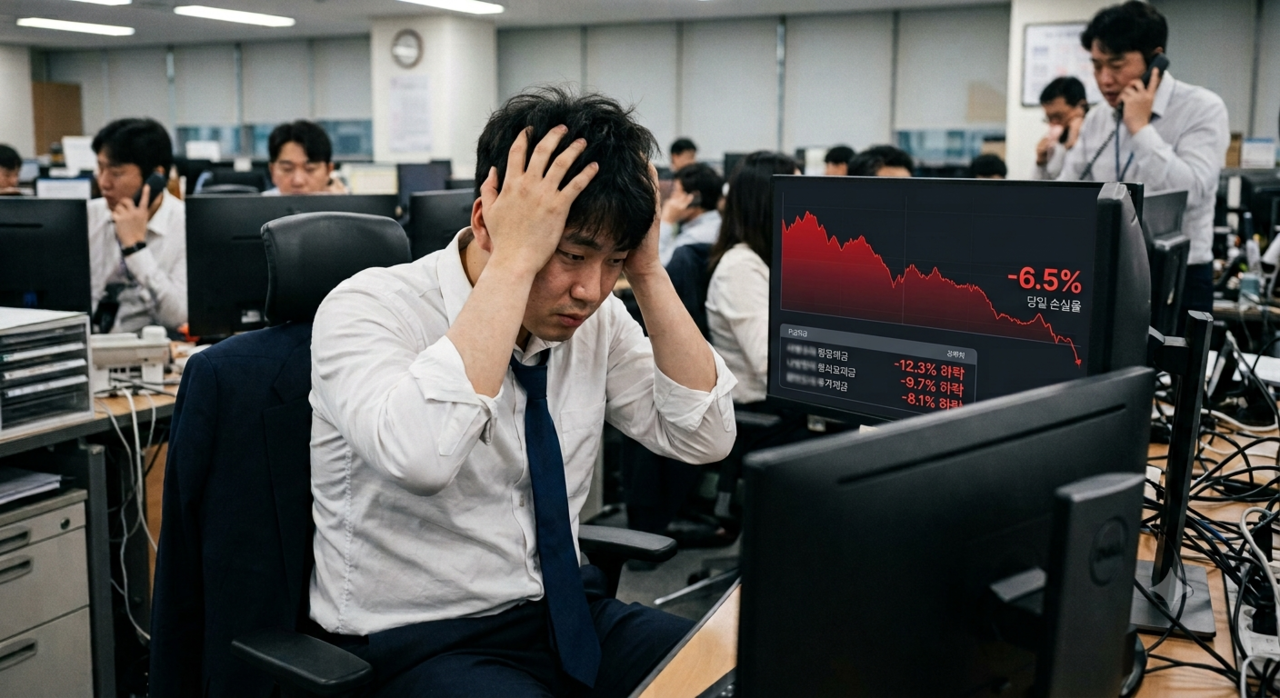
Kim Jeong-hwan (a pseudonym), a 42-year-old office worker, set a goal at the start of this year to contribute at least 300,000 won ($224) a month to his individual retirement pension (IRP) account — and consistently followed through. On the advice of people around him, he concentrated his investments in domestic semiconductor-related ETFs.
As the bull market sent his account returns soaring, Kim's confidence grew. He ultimately cashed out a fixed-term deposit he had held as a safe asset and poured the proceeds into his portfolio.
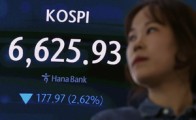
The Kospi, which had seemed unstoppable, began to plunge the moment Kim moved that money in. Rather than surpassing 9,000 and pushing toward 10,000 as domestic and foreign economists had forecast, the index fell at one point to the low 6,000s. "What if I can't even get my principal back?" Kim said, blaming himself for breaking into his fixed deposit.
In early September, a frustrated Kim visited his bank for a pension strategy consultation. His private banker's advice was straightforward: allocation and rebalancing. However promising AI may be, the semiconductor sector cannot always stay strong, the banker said, recommending that Kim trim his semiconductor weighting and buy a range of products — bonds, index-tracking ETFs and others — to build a buffer that could hold up even in a downturn.
Following that advice, Kim sold 60 percent of his semiconductor-heavy ETF holdings and rebalanced the rest into a target-date fund (TDF) and an S&P 500-tracking ETF. His strategy, in keeping with his "conservative" risk profile, is to lower volatility through asset allocation while keeping a semiconductor position to capture growth opportunities. He has not yet recovered his losses, but the experience taught him that preparing for a downturn matters just as much as chasing gains in a rising market.
Q. Are ETFs really the best product for retirement pension investment?
A. ETFs come in many types and categories, so it is important to understand what you are buying before you invest.
Broadly speaking, broad-market index funds, passive funds and widely diversified products tend to be relatively stable, while sector funds, active funds and concentrated single-theme products tend to be more aggressive.
As the case above illustrates, if your risk profile is "conservative," a core strategy built around broad-market passive index products can provide steady returns, while mixing in sector, active or concentrated-holdings products can give you a shot at outperformance.
For example, a core strategy using asset-allocation products such as TDFs or broadly diversified instruments like MSCI ACWI- or S&P 500-linked products, combined with a satellite strategy in sector plays such as AI, semiconductors or aerospace, appears to be a sound approach.

Q. I'm afraid of losing money. Is there a way to invest in products chosen by professionals?
A. There are ways to invest retirement pension funds in non-principal-guaranteed products without having to select them yourself. The two main options are the default option (a pre-designated investment regime) and discretionary robo-advisors.
The default option automatically manages your account balance according to a pre-set investment method when you give no investment instructions. A discretionary robo-advisor, by contrast, enters into a discretionary investment contract with an investment manager, builds a customized portfolio suited to your risk profile, and has the robo-advisor manage the account on your behalf.
Recently, some providers have begun offering portfolio subscription and enrollment services to help investors who struggle to choose products on their own.
Q. There seem to be several types of default options — how should I choose among them?
A. The default option is a system that applies to defined-contribution (DC) and IRP account holders when no investment instruction is given for four weeks after a product matures, and again after an additional two-week notice period with still no instruction — at which point the account is managed according to the pre-designated method.
The "stable" type consists of principal-guaranteed products; the "stable investment" type mixes principal-guaranteed products with funds; and the "neutral investment" and "aggressive investment" types are composed of either a mix of principal-guaranteed products and funds, or funds alone. The funds included in default options are generally TDFs or balanced funds (BFs).
When choosing a default option, you should consider your age, investment horizon and risk tolerance. Those who have already reached retirement age or begun receiving pension payments should prioritize safety and minimize volatility, so the "stable investment" or "stable" type is recommended.
In short, those with more time before retirement are better suited to more aggressive products, while those approaching retirement should lean toward more conservative ones.
The same logic applies to TDFs and BFs. TDFs suit stable investors; BFs suit aggressive ones. Investors who want a balanced portfolio can consider a mixed approach combining both. For an aggressive investor in their early 30s, a BF-based default option is worth considering; for a conservative investor in their mid-50s, a TDF2030 — a product designed for those retiring around 2030 — paired with a principal-guaranteed default option is recommended.
Q. Are there any restrictions on choosing or changing a default option?
A. As noted earlier, the default option kicks in when cash assets arise from a product maturity and you have given no investment instruction. Designating a default option does not mean you are immediately enrolled in it — it only applies once cash assets are generated. You can designate or change your default option at any time.
You can also buy into or exit a default option directly. Opting in means instructing the account to be managed under the default option immediately when funds such as maturity proceeds become available, rather than waiting for the automatic trigger. Opting out means selling the default option product currently being managed and switching to a different product.
However, the default option does not mean a professional is actively trading on your behalf based on market conditions. You still need to review it periodically as market conditions, your risk profile and your personal circumstances change.
Q. How does a discretionary robo-advisor work, what are its advantages, and can it really be trusted?
A. A discretionary robo-advisor analyzes your risk profile and investment goals, then uses a verified algorithm from an investment management firm to build a customized portfolio suited to your profile and directs the management of your IRP savings accordingly.
It is a system that automatically manages a portfolio — investing in ETFs and similar products — using algorithms, for retirement pension funds that might otherwise sit idle for years. It addresses the difficulties faced by investors who lack experience or knowledge, and provides a consistent management framework that keeps investment on a disciplined, ongoing track.
It is worth comparing data on returns, costs, loss potential and drawdown magnitude against your own risk profile, and trying the robo-advisor with a portion of your account balance as an investment alternative.
Q. I've heard that returns on overseas investment products can vary significantly depending on how you handle exchange rate fluctuations. How should I choose between currency-hedged and currency-exposed products?
A. When investing in overseas products, it is important to consider both the return on the underlying investment and the impact of exchange rate movements when converted back to won. Even if the underlying investment gains, exchange rate changes can either add to or offset those returns.
Historically, overseas equities and exchange rates have had a strong negative correlation. This means that when overseas stocks fall, exchange rate movements tend to offset some of the losses. In a typical investment environment, currency-hedged products may therefore be advantageous for medium- to long-term investors.
Given the current interest rate environment, hedging costs can also weigh on returns. For medium- to long-term investment, currency-exposed products generally appear more favorable, while short-term investors will need to make their choice based on current exchange rate levels and the outlook.
Q. Market volatility has been extremely high lately. How can investors cope with it and protect their retirement pension returns?
A. There is no way to time the market. What matters is accurately understanding your investment horizon and risk tolerance, then building an investment strategy and set of principles you can stick to without changing course during short-term swings.
A retirement pension is not money you invest on Saturday and withdraw on Sunday. If you have a meaningful amount of time before retirement, you need to hold some growth assets. Conversely, if retirement is imminent, you have little time to recover from a large loss, so it is worth reviewing your exposure to riskier assets.
The single most important principle in retirement pension investing is diversification — not concentrating in any one thing. Putting everything into a single country, sector or asset class means your entire account can be severely shaken when markets drop sharply.
Spreading across equities, bonds and cash-equivalent assets, and diversifying geographically across domestic and overseas markets, developed and emerging economies, can cushion the impact of market shocks. Ultimately, the key question is not "what should I buy?" but "how should I spread it?"

Rather than trying to time the market, investors should rely on asset allocation and rebalancing. If you have decided to hold equities and bonds in a set ratio, for example, and rising share prices push your equity weighting too high, you trim it and add to the assets whose weighting has fallen.
No one can consistently and accurately predict market direction. Adjusting asset weightings according to pre-set principles also helps reduce emotionally driven momentum buying and panic selling.
In short, the key is not to predict the market but to build a structure — as Kim did — that can withstand market turbulence. Selling in fear and buying in euphoria is a recipe for always being one step behind.
The three principles that matter most are: set your investment horizon and risk tolerance first, diversify appropriately, and rebalance regularly.
Q. Finally, what should investors be most careful about — and most focused on — when investing their retirement pension?
A. In retirement pension investing, avoiding losses is paramount. The goal is not to win big in a single innings but to consistently accumulate one point at a time. Rather than trying to outscore a deficit with a big comeback, the better strategy is to minimize errors and avoid conceding in the first place. Investing in products that can deliver steady, stable returns over time is the most important point.
Predicting the market is impossible. Even those who claim expertise in market timing cannot get it right every time. Spreading both your investment targets and your investment timing to reduce risk is essential. Going all-in on a single bet is a mistake.
By Kim Ji-hoon, deputy general manager at Woori Bank

hyuk@heraldcorp.com