Financial investment profit surges 72.8% to 5.1 trillion won
Bank earnings fall 7.9%, share of total profit drops to 47.1%
Substandard loan ratio rises to 1.03%, raising asset quality concerns

South Korea's financial holding companies posted combined net profit of more than 17 trillion won ($12.7 billion) in the first half of this year, as a buoyant stock market and heightened market volatility drove a sharp rise in financial investment earnings that more than offset a decline in banking profit. Rising bad-loan ratios and falling loan-loss coverage rates, however, have increased pressure on asset quality management.
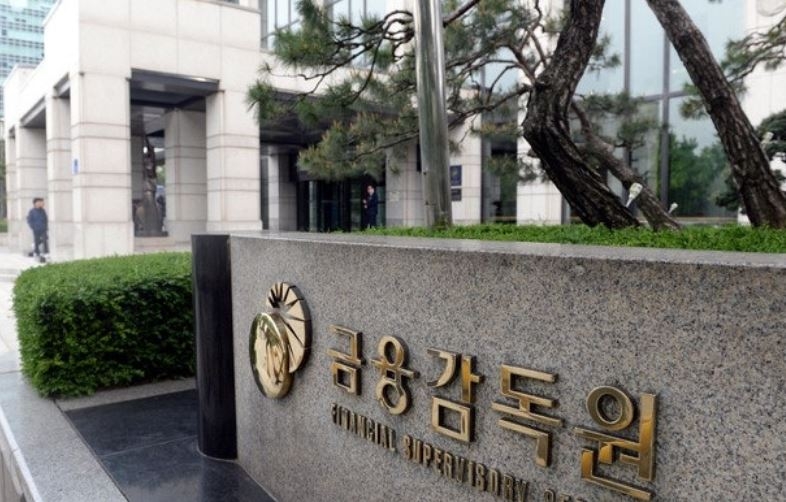
The Financial Supervisory Service said Thursday that the 10 financial holding companies reported combined net profit for the period of 17.6 trillion won on a consolidated basis in the first half of this year, up 2.2 trillion won, or 13.7 percent, from 15.4 trillion won in the same period last year.
Non-banking operations led the improvement. The financial investment segment posted net profit of 5.1 trillion won, up 2.1 trillion won from a year earlier — a jump of 72.8 percent. Installment finance and other credit companies rose 36.8 percent to 1.8 trillion won, and insurance gained 6.5 percent to 2.5 trillion won. Banking profit, by contrast, fell 800 billion won to 9.6 trillion won, a decline of 7.9 percent from the same period last year.
The shift in earnings mix was equally pronounced. Banks' share of total profit at the holding-company level fell to 47.1 percent, down 11.9 percentage points from a year earlier, while the financial investment segment's share rose 8.3 percentage points to 24.9 percent. The FSS attributed the investment segment's strong performance to gains in securities, fees and foreign-exchange income driven by the stock market rally and fluctuations in exchange rates and interest rates.
Total assets at the 10 financial holding companies also expanded rapidly. Combined consolidated assets stood at 4,391 trillion won as of end-June, up 323.6 trillion won, or 8.0 percent, from 4,067.4 trillion won at the end of last year.
Financial investment again led asset growth. Assets in that segment rose 136 trillion won, or 27.0 percent, from the end of last year, while banking assets grew 180 trillion won, or 6.1 percent, over the same period. As a result, the financial investment segment's share of total holding-company assets expanded 2.2 percentage points to 14.5 percent. Banking still accounted for the largest share at 71.3 percent, down from 72.6 percent at the end of last year.
Asset quality indicators, however, deteriorated. The substandard-and-below loan ratio at financial holding companies rose to 1.03 percent as of end-June, up 0.08 percentage points from 0.95 percent at the end of last year. The loan-loss coverage ratio fell 10.3 percentage points over the same period, from 106.8 percent to 96.5 percent.
Leverage metrics also moved higher. The debt ratio rose 0.9 percentage points from the end of last year to 33.1 percent, and the double-leverage ratio climbed 2.6 percentage points to 117.3 percent. The common equity tier 1 ratio at banking holding companies, however, improved 0.21 percentage points to 13.36 percent.
The FSS said earnings growth was driven by higher non-banking and non-interest income — reflecting the stock market rally and increased exchange rate and interest rate volatility — as well as expansion of interest-earning assets such as corporate loans. It added that the rise in bad-loan ratios and the growing weight of market-sensitive segments such as financial investment make it necessary to strengthen asset quality management at subsidiaries, enhance consumer protection and tighten internal controls.
Looking ahead, the FSS said it plans to encourage financial holding companies to build up their loss-absorption capacity in preparation for a prolonged global rate-tightening cycle and geopolitical risks, and will also monitor whether portfolio shifts are leading to a buildup of high-risk assets.
Meanwhile, amid growing calls for stronger internal controls across the financial sector, the FSS said it has been sharing threat intelligence — including IP addresses linked to hacking attempts — with financial institutions industry-wide in response to recent cyberattacks. A total of 33 attacker IP addresses have been identified so far (28 after removing duplicates). On Thursday, the FSS distributed 25 attacker IPs and security advisories to approximately 500 financial companies.
rim@heraldcorp.com