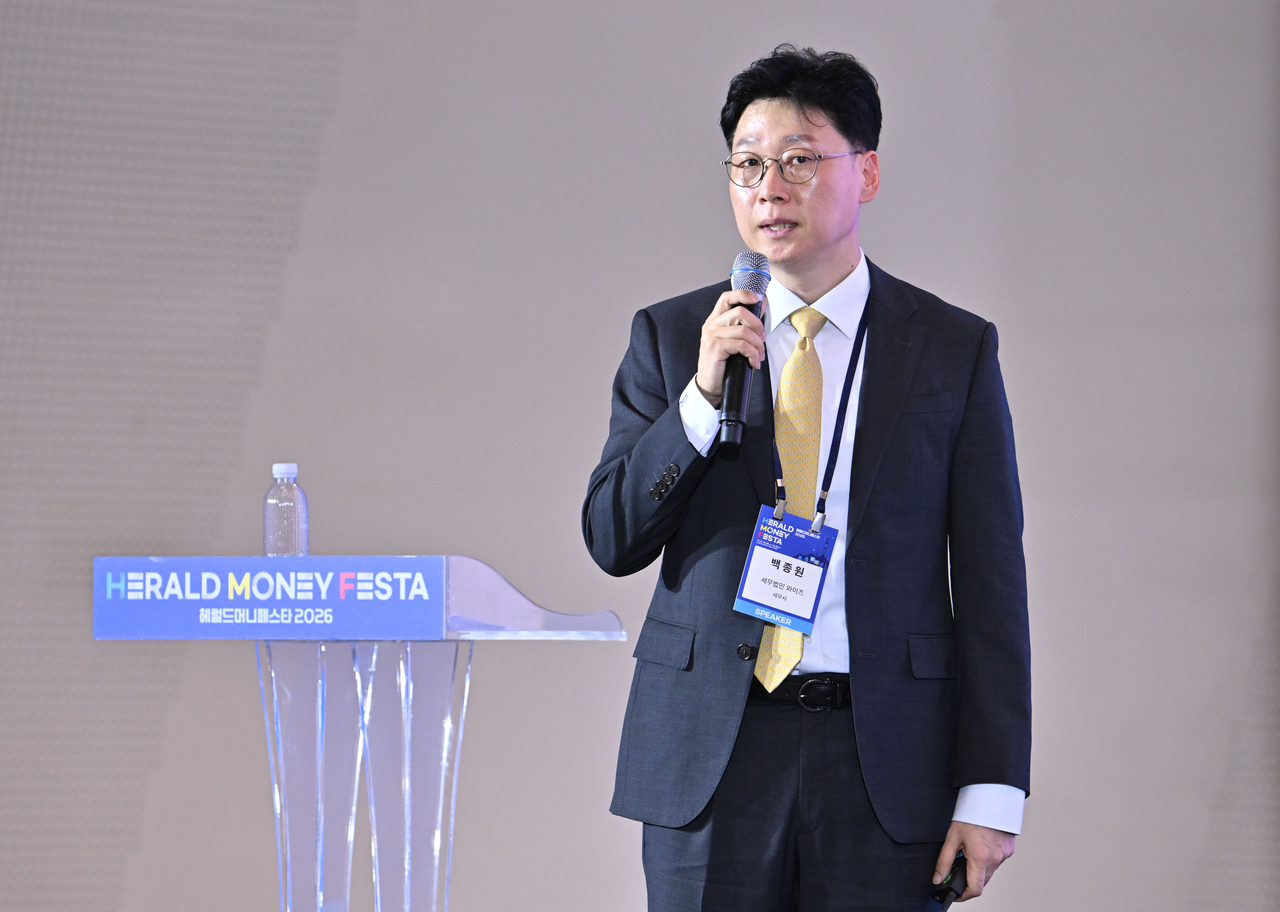
Tax attorney Baek Jong-won of Wise Tax Corporation
Presents strategy at Herald Money Festa 2026
Visitors line up for tax-saving consultations
There is a seller who acquired an Apgujeong Hyundai apartment 10 years ago for 2.5 billion won ($1.84 million) and sold it last year for 12.7 billion won. Because the seller was a single-home owner who had lived there their entire life, they received all available deduction exemptions and paid about 700 million won in capital gains tax. But once the tax reform proposal takes full effect, the tax bill in the same situation would rise to 4 billion won.
Tax attorney Baek Jong-won of Wise Tax Corporation warned that if the 2026 tax reform proposal is enacted, the tax burden on owners of high-value homes could increase sharply. His advice: single-home owners should carefully assess whether they actually live in their property, while multi-home owners should start planning tax-saving measures such as selling or gifting homes in advance. After the lecture Saturday, a stream of attendees pressed Baek with questions about tax-saving options tailored to their own housing situations.
Baek took the stage at Art Hall 1 of Dongdaemun Design Plaza in Jung-gu, Seoul, at Herald Money Festa 2026, delivering a lecture under the title "Own a home in Seoul? Not knowing your taxes will cost you more."
After walking the audience through the key real estate tax provisions, Baek said, "If the 2026 tax reform proposal is enacted, the tax burden on some high-value homeowners could increase far beyond what it is today."
On the comprehensive real estate tax, he explained that the basic deduction for single-home, single-household owners would rise from 1.2 billion won to 1.4 billion won. However, non-residents would remain at the existing 1.2 billion won threshold, and the deduction method for jointly owned properties held by couples could also change depending on residency status. Previously, a couple holding a single home jointly each received a 900 million won deduction; under the reform, non-resident households would see that individual deduction cut to 600 million won each.
Baek also cautioned that rental housing offers no escape from capital gains tax liability. "Before, one of the biggest benefits in capital gains tax was that if you registered a long-term rental and complied with all the rental regulations, even a multi-home owner could sell at any time and pay only the standard tax rate," he said. "But under this amendment, those properties must all be sold by 2027 — otherwise they will be subject to the heavier surcharge rate."
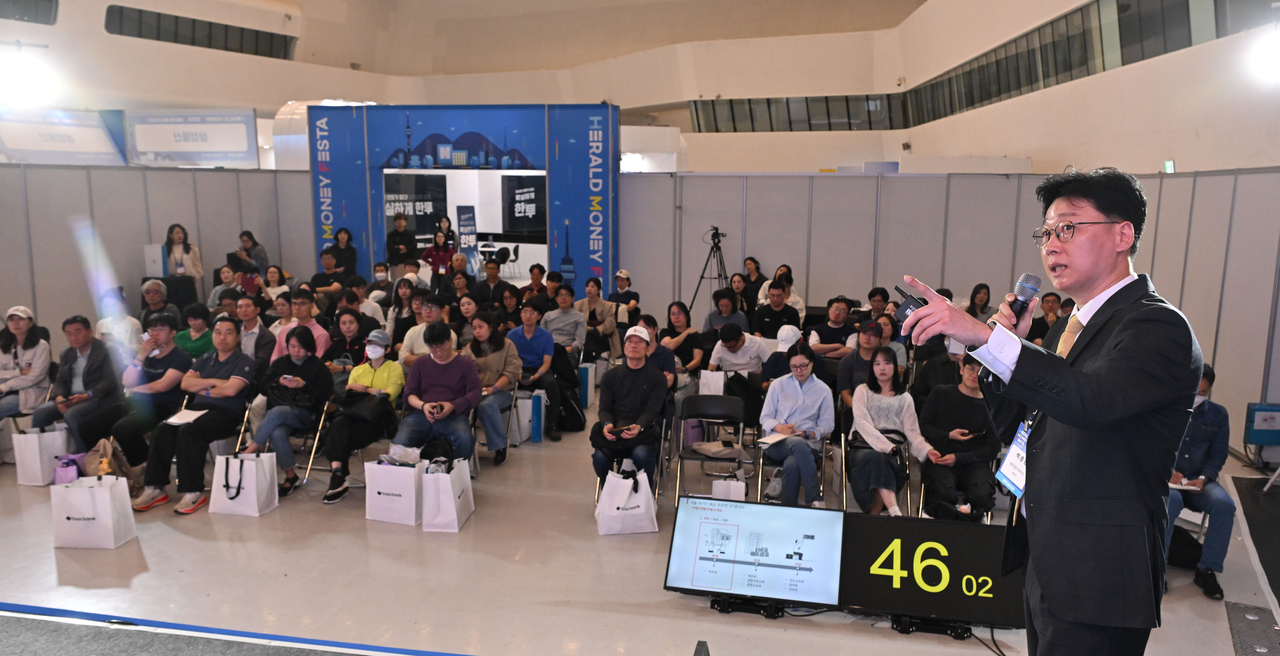
The provision Baek highlighted most was the long-term holding special deduction, a regime that reduces capital gains tax by exempting a portion of gains for owners who have held and lived in a property for an extended period. If the reform takes effect, the tax burden on single-home owners of high-value properties could change dramatically.
"From 2029 onward, once the 2026 tax reform is in force, no deduction will be given for holding a property no matter how long you have owned it if you have not actually lived there," Baek said. "We are also seeing cases where owners of ultra-high-value homes are raising their acquisition cost through property swaps."
During the lecture, Baek used the Apgujeong Hyundai apartment as a concrete example. A single-home owner who acquired the property for 2.5 billion won a decade ago and sold it in March last year for 12.7 billion won paid about 700 million won in capital gains tax after meeting long-term residency and other requirements. Baek said that if the same property were sold after the reform takes effect, the applicable deduction cap would be limited to 1 billion won, potentially pushing the tax bill to around 4 billion won.
Baek advised high-value homeowners to carefully consider their "golden window" for selling. "Single-home owners need to think hard about whether it is better to live in the property themselves, and multi-home owners need to decide whether to reduce their holdings through gifting now," he said. "There are even cases where couples are considering divorce so that each spouse can hold one home."
Baek stressed, however, that using a sham divorce to reduce taxes is not a realistic option in practice. "The National Tax Service's data systems have become highly transparent, and sham divorces can be detected," he said.
On the timing of sales for multi-home owners, he said, "If you have decided to sell, you need to complete the transaction by Dec. 31, 2027 — that is, by the end of next year — to achieve any tax savings."
He added, however, that hasty decisions should be avoided given that the reform proposal has yet to pass the National Assembly. "The 2026 tax reform proposal has not been finalized," Baek said. "Unless you are in a situation where every day counts, it would be better to wait and see whether the proposal passes the Assembly at year-end before making any decisions."
After the lecture Saturday, Baek held an extended round of one-on-one consultations with attendees worried about their tax situations. One single-home owner, a 45-year-old surnamed Song, said she owns a home in Magok-dong, Gangseo-gu, Seoul, but rents it out while living in Gwanggyo for work, and asked whether she should sell before her capital gains tax exposure grows further.
Baek advised her that because she had lived in the property for only two years, she was only accruing a residency-based deduction of 4 percent per year. "You need to carefully weigh whether to keep bearing the property holding tax as a non-resident, or sell now while you can still save on capital gains tax and move into something else," he said.
A woman in her 30s living in Seoul said she owns a home in the Hannam District 5 redevelopment zone and had heard that property holding taxes would change for larger units. "I'm worried about the holding tax and would like to get some advice," she said. Baek replied that because the building has not yet been constructed, the figures would be similar to the current assessed value, but that a simulation was possible.

hss@heraldcorp.com