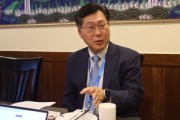
Ministry of Land, Infrastructure and Transport data on Housing and Urban Fund reserve balances
Balance stood at 13.76 trillion won as of end-August, down 628 billion won from a year earlier
Spending pressure set to grow as public housing supply expands
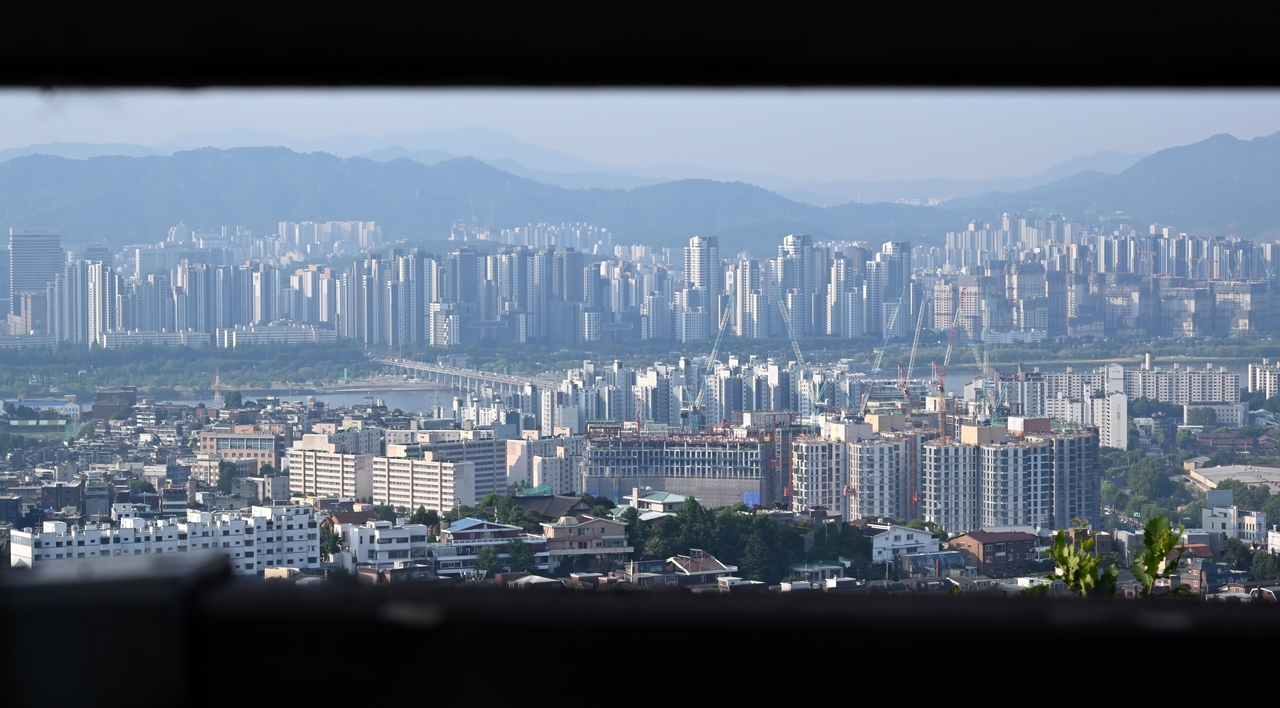
The government is pushing to supply about 1.19 million public housing units by 2030 to stabilize housing conditions for lower-income households, but the reserves of the Housing and Urban Fund — the primary financing vehicle for that plan — have plunged nearly 70 percent over the past several years, newly obtained government data show. Analysts say the fund's dwindling cushion reflects a drop in housing subscription account holders on one side and rising demand for policy loans and public rental construction on the other, and that structural reform of the fund is urgently needed to keep the supply drive on track.
According to data submitted by the Ministry of Land, Infrastructure and Transport to the office of People Power Party lawmaker Kim Jong-yang of the National Assembly's Land and Transport Committee, the Housing and Urban Fund's available reserve balance stood at 13.76 trillion won ($10.1 billion) as of the end of August. That is down about 628 billion won from the year-end balance of 14.39 trillion won — a decline recorded in just eight months.
The Housing and Urban Fund is financed primarily through housing subscription accounts and is used to support residential welfare and housing supply. Its reserve balance functions as a liquidity buffer — emergency funds that can be deployed immediately for policy mortgage lending to lower-income households, public housing construction loans, and indemnity payments by the Korea Housing and Urban Guarantee Corporation.
The year-by-year trend shows the reserves eroding at a steep pace. The balance stood at 48.98 trillion won in 2021, then plunged to 28.72 trillion won in 2022 and 18.87 trillion won in 2023. As the real estate downturn deepened in 2024, it fell further to 10.1 trillion won — a five-year low. The balance rebounded to 14.39 trillion won last year but has resumed its decline this year.
The sharpest driver of the drawdown has been a drop in the number of housing subscription account holders, who form the fund's main revenue base. Korea Real Estate Board data from its apartment subscription platform show the number of account holders stood at about 25.74 million as of the end of August, down about 2.82 million from about 28.56 million in August 2022. Analysts attribute the decline to a growing number of subscribers canceling their accounts as rising pre-sale prices and increasingly competitive point-based selection criteria have eroded the appeal of the subscription system.
While revenue has contracted, spending pressure on the fund has grown on multiple fronts simultaneously. These include support for victims of jeonse fraud, rising demand for policy loan products such as the Didimbol and Beorimok mortgage programs, the conversion of distressed project financing sites into publicly supported private rental housing, and loans for public housing construction.
"Beyond the rise in account cancellations, demographic trends mean the pool of new subscribers will inevitably shrink," said Lee Eun-hyung, a research fellow at the Korea Construction Policy Research Institute. "With the low birth rate sharply reducing the number of young people who would newly open housing subscription accounts, it has become difficult to expect any meaningful increase in fund revenue from subscription deposits going forward."
The more pressing concern is that spending pressure on the fund is set to intensify. With the government committed to supplying 1.19 million public housing units by 2030, demand on the fund will only grow. Once disbursements for expanded public rental supply — covering construction-based, purchase-based and jeonse-based rental programs — kick into full gear, the pace at which reserves are depleted could accelerate further.
Experts say the fund needs structural reform: reprioritizing projects, sharpening demand forecasts, and reallocating resources more efficiently so that limited funds can deliver deeper, more targeted support to the most vulnerable households.
"When there is little room for the fund to grow substantially, the key is to cut waste in the existing spending structure and rigorously reassess project priorities," Lee said. "Given the fund's limited capacity, the pace of public housing supply targets and policy finance disbursements needs to be calibrated more precisely."
The Housing and Urban Fund's reserve return rate stood at 6.05 percent as of the end of August. The medium- to long-term return across domestic equities, domestic bonds, overseas equities, overseas bonds and alternative investments came to 7.45 percent, edging down from 7.47 percent at the end of last year. By asset class, the domestic equity return fell more than 20 percentage points to 76.03 percent from 96.34 percent at the end of last year, while the domestic bond return dropped to 0.93 percent from 2.70 percent.
"The government keeps trumpeting plans for mass public housing supply, but the coffers needed to actually build those homes are emptying out year by year," said People Power Party lawmaker Kim Jong-yang. "Supply targets drawn up without a proper financing plan will ultimately amount to nothing more than numbers on a press release. The government must lay out its fund management plan and specific financing strategy clearly before the public."
Kim added that the Ministry of Planning and Budget's fiscal year 2025 fund management evaluation report had also flagged that the Housing and Urban Fund's bond assets were underperforming their benchmark return and that alternative investments were lagging. "Personnel management at fund operators was also cited as a problem," he said. "As the fund's trustee, the government must manage it with far greater rigor."
hwshin@heraldcorp.com