Prosecutors' Office abolished after 78 years as inauguration ceremony held behind closed doors
Prosecutors greet new organization with worry rather than hope
Detailed guidelines still incomplete — frontline staff say they have no time to read them
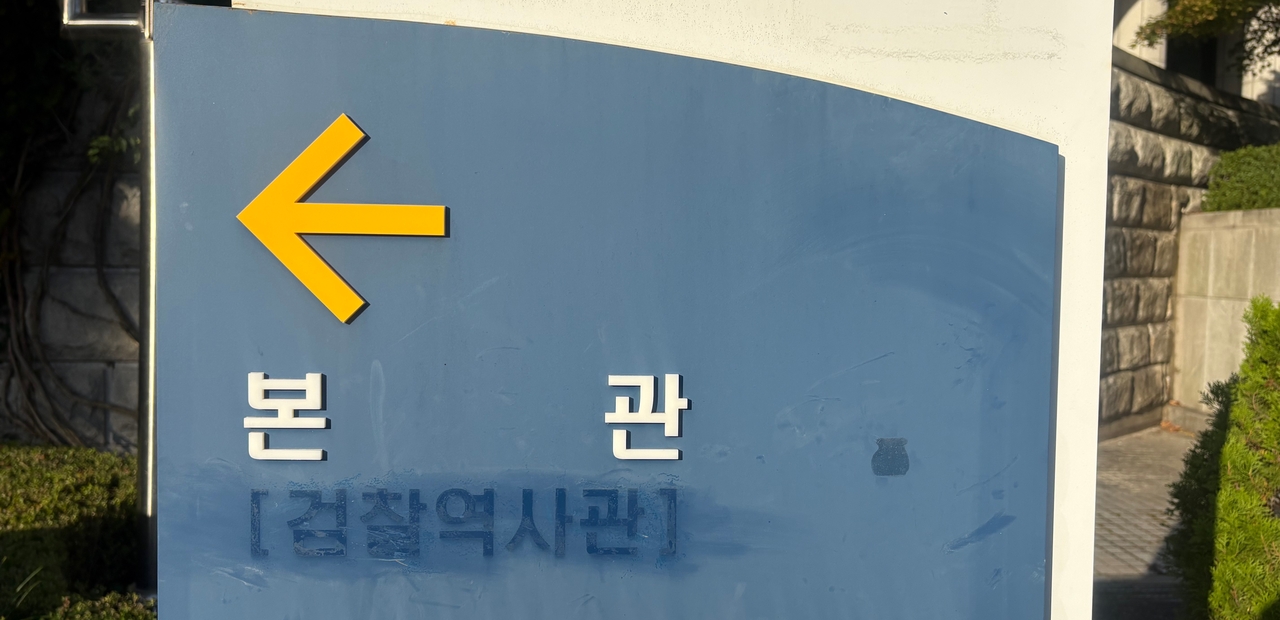
The Prosecutors' Office, established in 1948, reached the final day of its 78-year history on Thursday. Within hours, its nameplate will come down and the Public Prosecution Service will open its doors — yet frontline prosecutors are greeting the transition not with anticipation but with anxiety about an uncertain future. Detailed operational guidelines governing how cases will be handled and how the new agency will interact with investigative bodies have yet to be fully drawn up, and a wave of resignations has added to the unsettled, somber mood inside the organization.
The inauguration ceremony for the Public Prosecution Service will be held at 10 a.m. Friday at its main office in Seocho-gu, Seoul — the current site of the Supreme Prosecutors' Office — according to prosecutors. The event will be closed to the media and the public, proceeding quietly as an internal gathering attended by senior officials. Lee Jeong-hyeon, deputy prosecutor general of the Supreme Prosecutors' Office, who will serve as acting head of the new agency, is expected to lay out its operational direction amid the sweeping overhaul of the criminal justice system. On his first day at the Supreme Prosecutors' Office on Sept. 23, Lee said, "I feel the weight of this responsibility keenly at such a difficult time, but I will do everything in my power to help the Public Prosecution Service take root quickly as an institution that upholds and protects human rights."
While the organization's name and mandate are changing overnight, frontline prosecutors say the new reality has yet to sink in. Across the country, existing prosecutors' office signs and insignia have been removed and replaced with Public Prosecution Service branding in recent weeks. The Ministry of Justice also carried out a reshuffle on Tuesday, reassigning or appointing 192 prosecutors to align with the new structure. Most high prosecutors' office and district prosecutors' office chiefs moved into equivalent roles as heads of the new regional and local public prosecution offices, underscoring a priority on organizational stability in the early days.
The real challenge lies in day-to-day operations. With direct investigative authority stripped away, detailed working guidelines for the new criminal justice system — covering how cases will be transferred to and from investigative bodies such as the police and the newly established Serious Crimes Investigation Agency, and how those relationships will function in practice — were reportedly still not fully in place as the launch approached. Trial and error on the ground appears unavoidable for now, observers say.
"It is impossible to have all the guidelines ready before the opening," one senior prosecutor said. "Ultimately, frontline staff will have no choice but to muddle through after the launch, identifying problems and making adjustments as they go." A prosecutor in the criminal division of a Seoul-area district office said directives from the Supreme Prosecutors' Office on new or revised guidelines had been arriving in a flood. "They range from simple name changes to complex procedural matters," the prosecutor said. "With work piling up ahead of the launch, there is no time to read them properly." The prosecutor added, "I have no idea how we are supposed to get things done."
In practice, the Supreme Prosecutors' Office held meetings as recently as Tuesday — just three days before the launch — with the Korean National Police Agency, the Korea Coast Guard and the Serious Crimes Investigation Agency's preparatory team to discuss the scope and mechanics of transferring cases that prosecutors had been directly investigating, as well as procedures for handling electronic evidence. The Supreme Prosecutors' Office said it would continue coordinating with relevant agencies to ensure no gaps emerge in investigations or case processing during the handover.
The unsettled atmosphere inside the organization is also reflected in a string of resignations. Departing prosecutors have been posting farewell messages on the internal network.
On Tuesday, Yun Won-gi, a prosecutor at the Suwon High Prosecutors' Office, and No Seon-gyun, second deputy chief of the Daegu District Prosecutors' Office, both posted resignation notices. Yun said he was "wrapping up 18 years and five months as a prosecutor," adding, "I am deeply sorry for not being able to stay by your side during such a difficult time." No wrote that he had been able to serve as a prosecutor for 20 years thanks to "sunbae who set an example, steadfast peers and passionate juniors," and expressed his belief that "as long as the members of the prosecution stand as firm as pine trees, the future of the prosecution will also be bright." So Chang-beom, head of the violent crimes investigation division at the Seoul Central District Prosecutors' Office, also posted a farewell message on Wednesday. "We have never once worked for our own advancement," So wrote. "That is why I hold such deep respect for the colleagues I have worked alongside."
Legal circles expect the first few months after the Public Prosecution Service's launch to serve as the first real test of the new criminal justice system. As an organization that once handled both investigation and indictment transforms into one focused solely on prosecution and the maintenance of public actions, the key question will be how quickly it can establish a working relationship with investigative agencies — and whether the systemic change leads to delays in case processing or gaps in investigations.
yg@heraldcorp.com