
Tim Hortons to open first flagship store in Seongsu-dong on Nov. 3
Half of 100-plus menu items exclusive to new location; meal offerings expanded
Global first for the brand as 'Phase 2' strategy accelerates
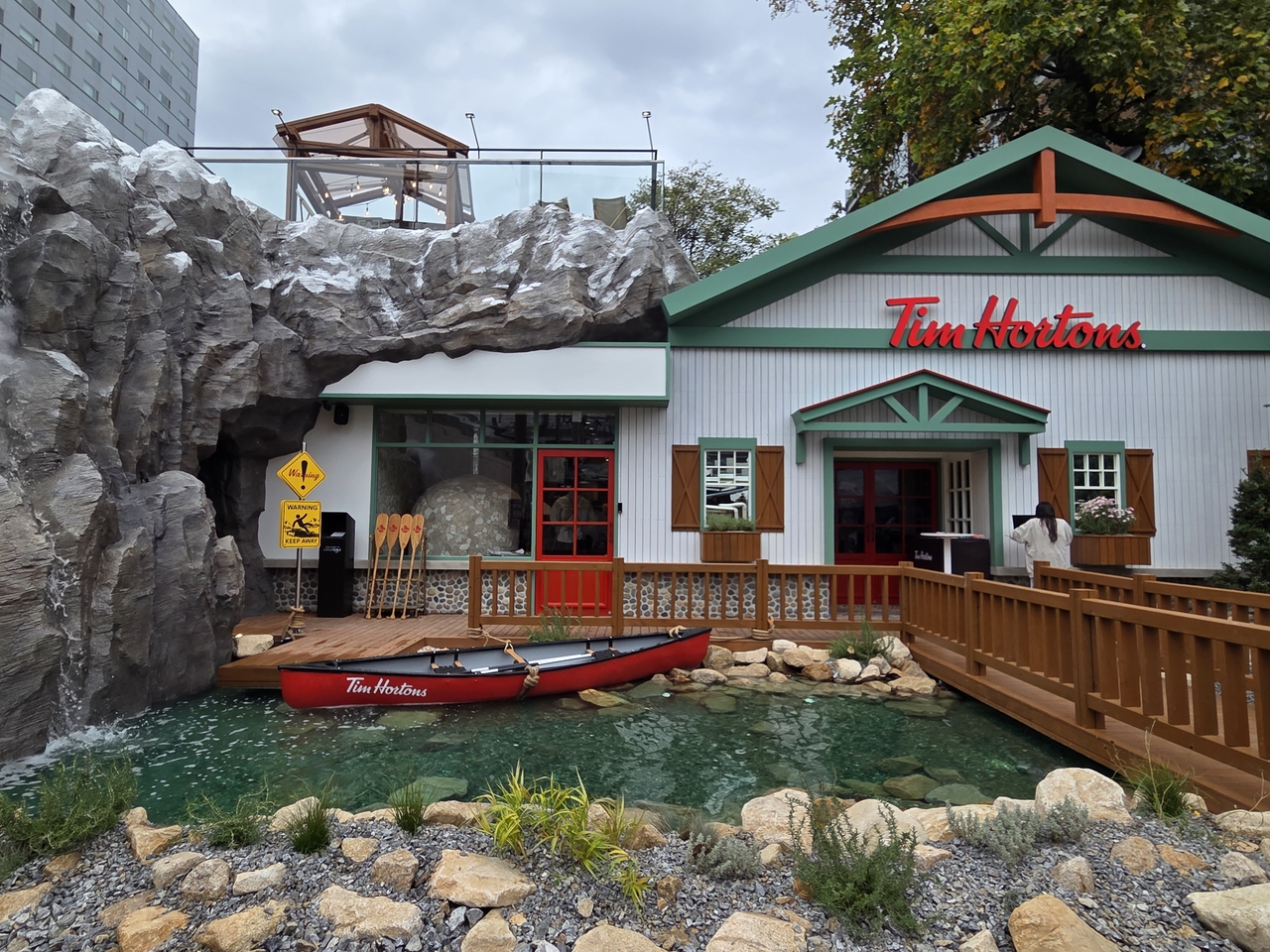
An emerald lake and waterfall stretch across the heart of Seoul's Seongsu-dong. A wooden bridge and a red canoe sit moored at the water's edge. Cabin-style seating and wooden fences are scattered throughout the space — the whole scene feels like stepping into a Canadian mountain village.
Canadian coffee brand Tim Hortons will open its first flagship store in South Korea in Seongsu-dong on Sunday. The "Tim Hortons Banff Town Seongsu" location, previewed Thursday, recreates the natural scenery and townscape of Banff, the iconic destination in the Canadian Rockies. The store's signature draw is Canadian food made on-site, including Montreal-style bagels baked in a wood-fired oven and Quebec-style poutine.
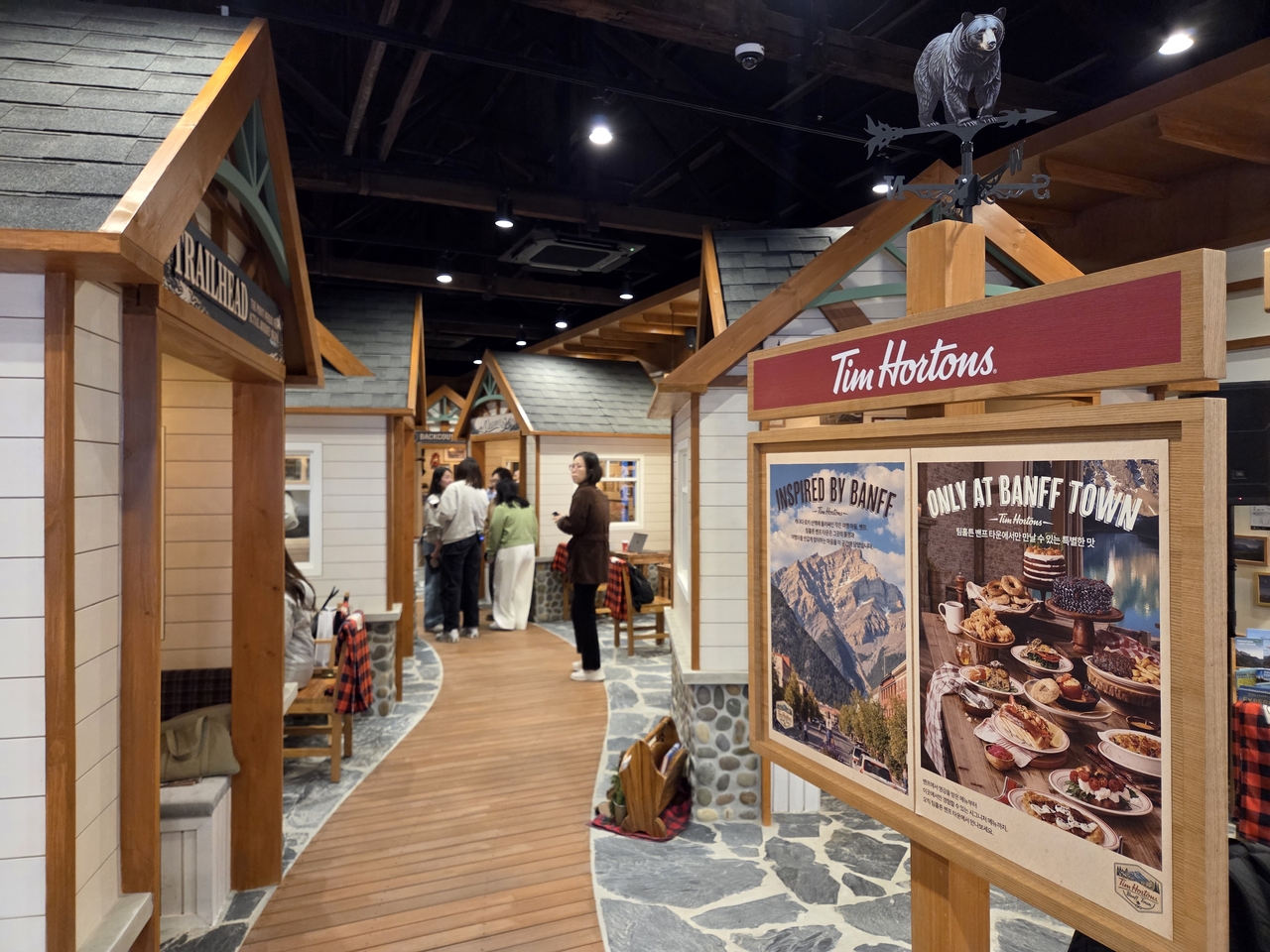
The interior uses natural wood throughout to create a warm atmosphere, with stone pillars and wooden fences dividing the space into distinct zones and cabin-style seats tucked throughout. Videos of Canadian landscapes play on the walls, accompanied by ambient nature sounds including birdsong and insects. The exterior likewise evokes Canada's outdoors, with the overall design focused on capturing the everyday feel of people strolling through a village, coffee and meal in hand.
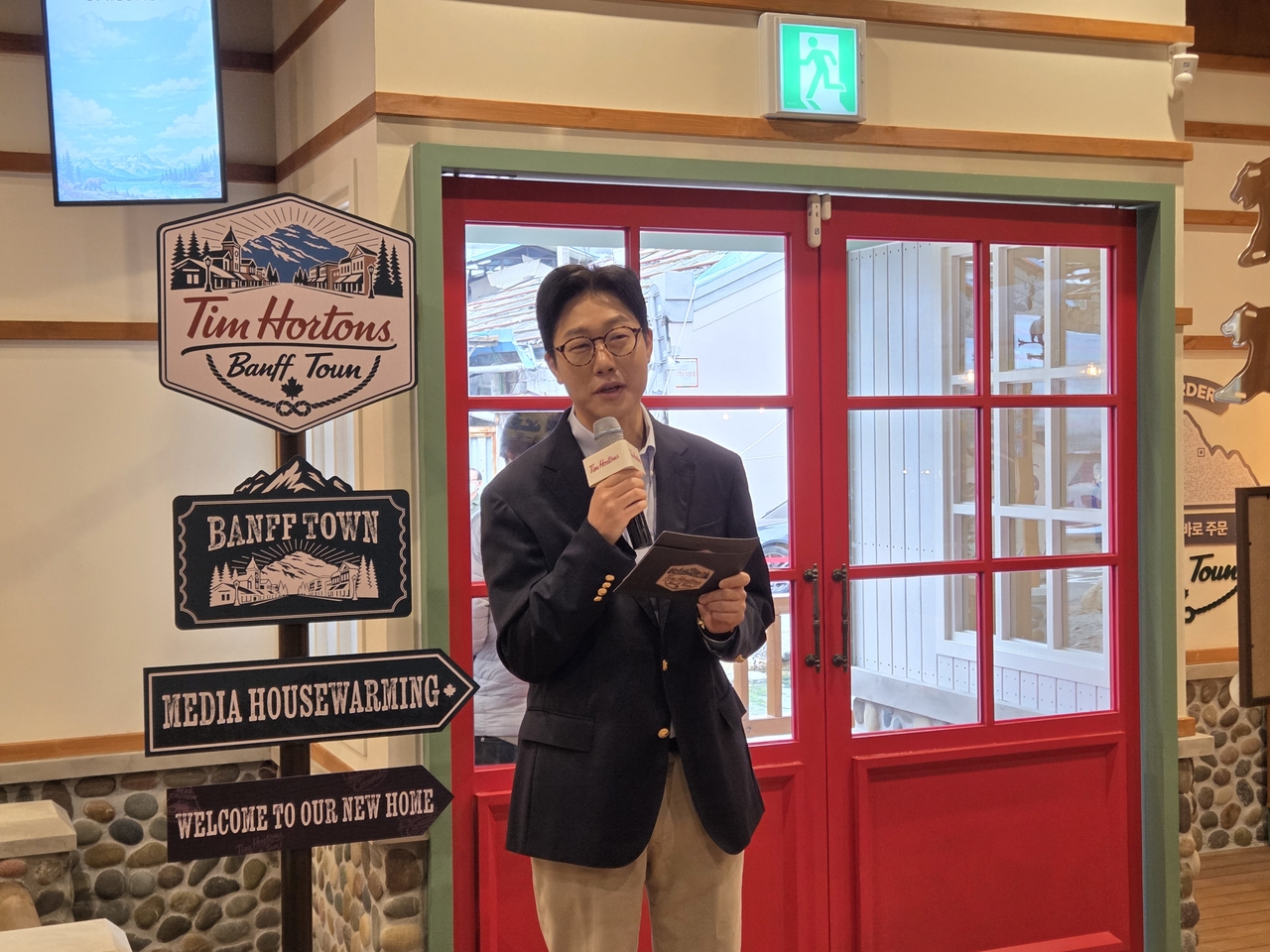
An Tae-yeol, chief business officer of BKR, the company that operates Tim Hortons in South Korea, said the store is "a blueprint showing what kind of brand Tim Hortons aspires to become in Korea." Rather than chasing spectacle, An said the team "tried to bring the warmth of Canada — its nature, people, food and community — to life in a way that fits the daily lives and tastes of Korean customers."
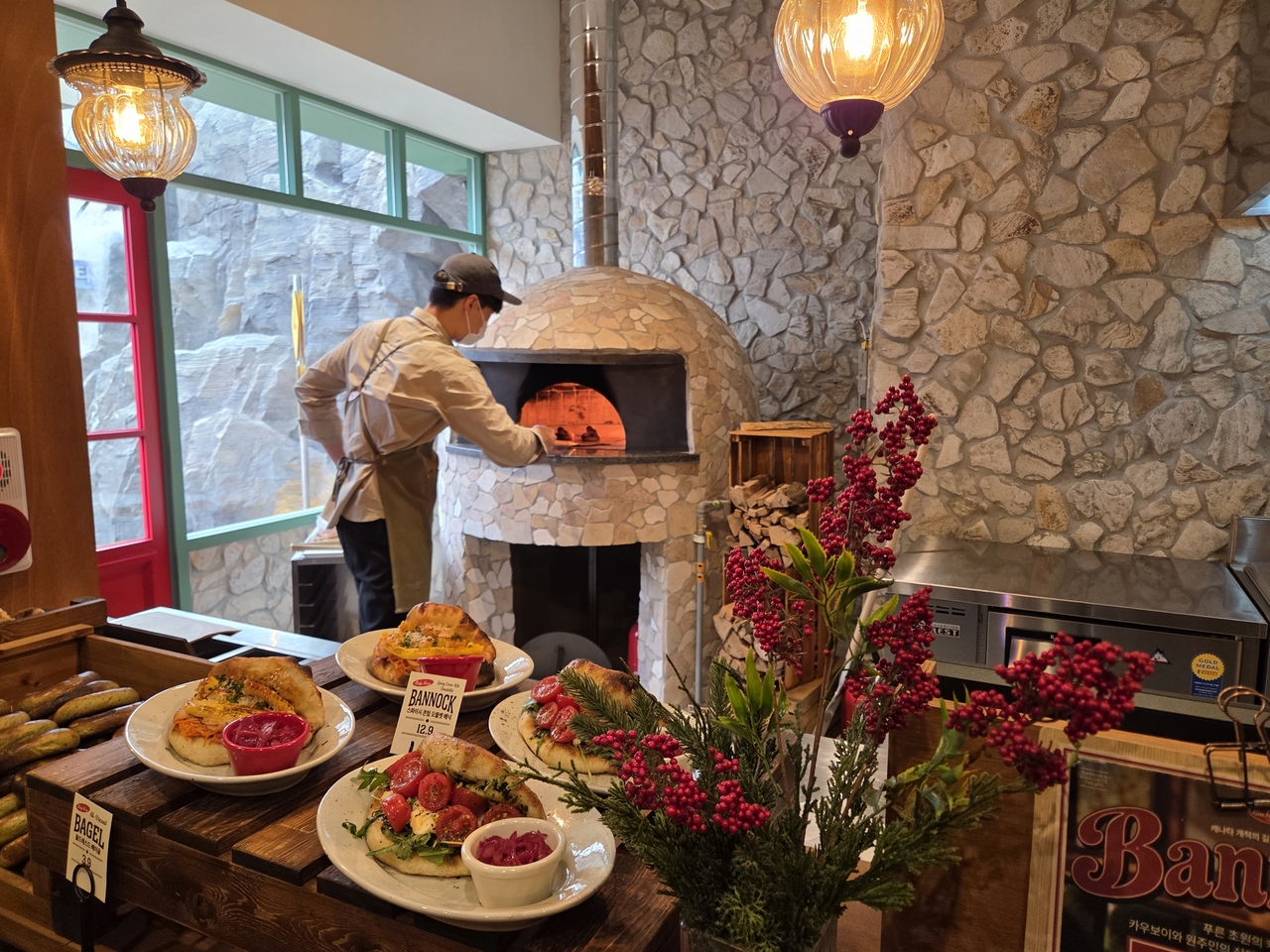
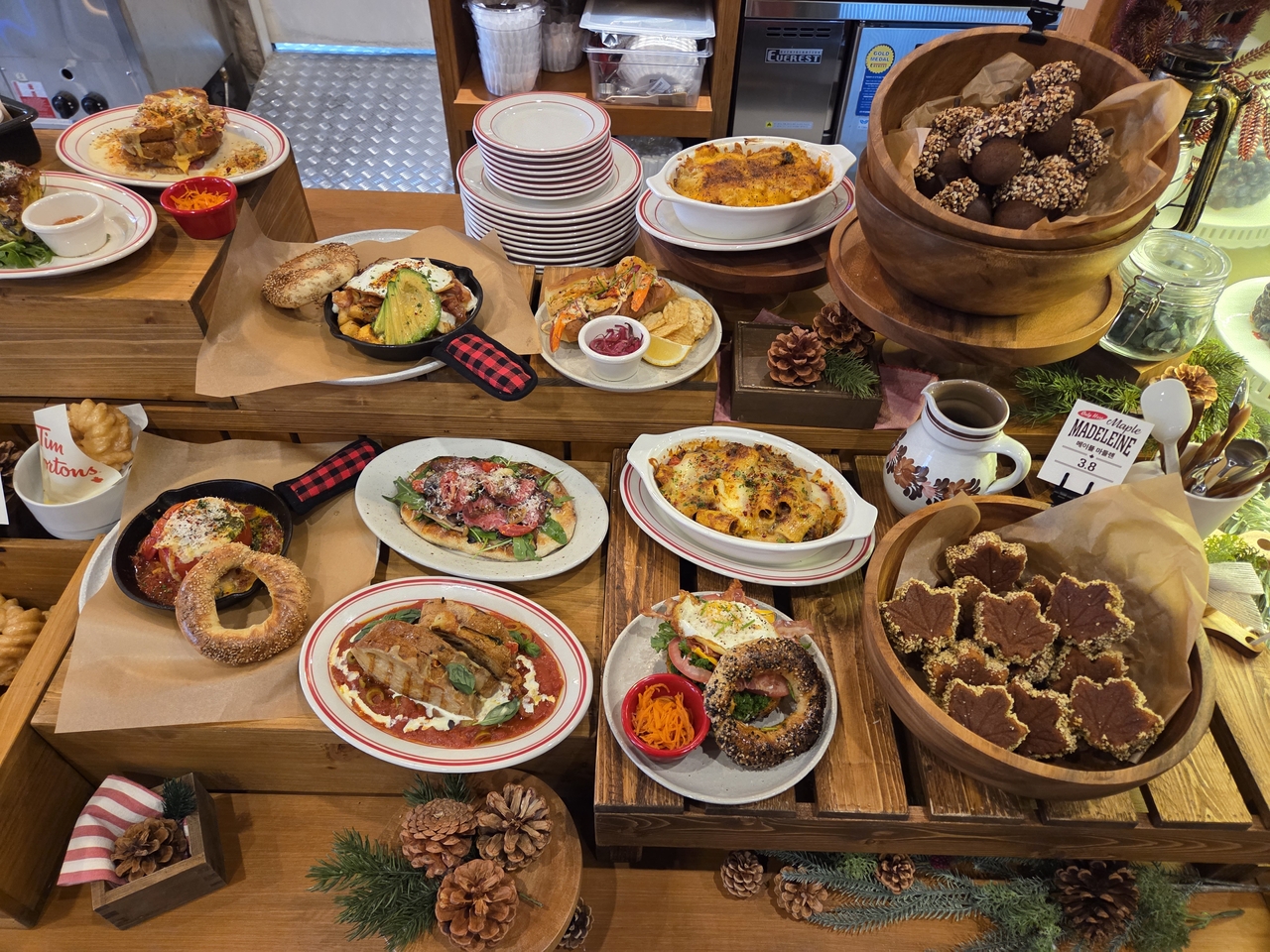
The menu carries an equally strong Canadian identity. The standout item is the Montreal-style bagel baked fresh in a dedicated wood-fired oven installed inside the store. Also on offer are poutine — the Quebec staple of french fries topped with cheese curds and gravy — and the Nanaimo bar, a dessert named after the British Columbia city of Nanaimo. All were developed independently for the Korean market.
The coffee lineup has also grown. A brewing bar offers four black coffee options — dark roast, maple, Mexican light and Colombian — all brewed by pouring hot water directly over freshly ground beans, unlike an Americano, which dilutes espresso with water. Every black coffee is brewed fresh every 30 minutes.
The Seongsu-dong store carries more than 100 menu items, 50 of which are exclusive to the location. While existing Tim Hortons outlets already sell sandwiches and similar items through a "Tim's Kitchen" counter, the flagship expands into full meals — brunch dishes, pasta and other substantial options.
The store format is a first for Tim Hortons anywhere in the world. An said Seongsu-dong is "where all of South Korea's trends converge — a commercial district where you simply cannot survive without something genuinely compelling to offer." An added that the team saw Seongsu-dong as "the most unforgiving place to put Tim Hortons' Korean evolution to the test."
An also noted that Seongsu-dong draws a significant number of foreign tourists, adding that "feedback on how international customers perceive a Korea-evolved Tim Hortons is strategically very important to us."
The flagship also serves as the clearest expression yet of the "Phase 2" management strategy Tim Hortons announced earlier this year, centered on menu diversification and quality improvements built around freshness. The brand entered the South Korean market in December 2023 when it opened its first domestic store near Sinnonhyeon Station in Seoul.
Since then, Tim Hortons has steadily expanded its footprint while broadening its menu beyond coffee and doughnuts to include bakery items and full meals, and refreshing its store designs along the way. The chain currently operates 36 locations and is targeting 50 by year-end.
The Seongsu-dong store was designed with comfort over capacity in mind — cabins and alleyway-style passages are laid out with room to breathe rather than packed with seats. An acknowledged that "this kind of store will have lower table turnover and longer dwell times, which is actually a disadvantageous structure for sales," but said that at this stage of establishing the brand in Korea, "what matters more than sales or profit is how customers come to perceive Tim Hortons."
korean@heraldcorp.com




