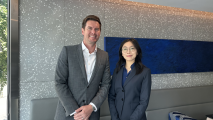
Interview with Niki Ariyasinghe, Chainlink VP for Asia-Pacific and Middle East
Korean financial firms building tokenization track record overseas
Room to improve settlement efficiency in won-euro corridor
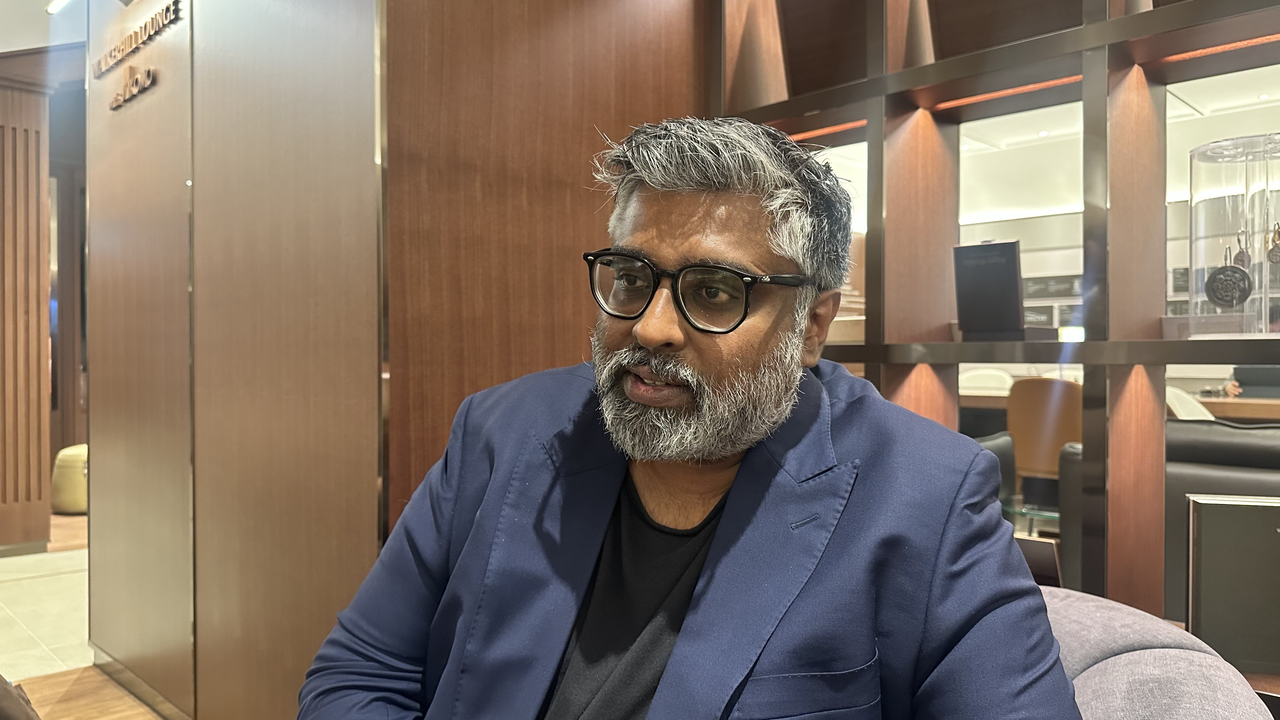
“Securities firms and asset managers are moving considerably faster than banks. What matters is that their tokenization projects have moved beyond the pilot stage — they are now in live deployment overseas.”
Niki Ariyasinghe, Chainlink‘s vice president for Asia-Pacific and the Middle East, made the remarks in a recent interview, describing the shifts he sees in the digital asset market. “This is a trend that has been building for years, but I think we are now at an inflection point where institutional deals and projects are starting to come in,” he said.
Ariyasinghe said the scope of services required grows significantly as more funds are tokenized. Bringing a fund‘s net asset value on-chain and connecting existing off-chain operations to smart contracts both become necessary, he explained, meaning demand for supporting infrastructure expands in step with tokenization moving into commercial deployment.
Chainlink recently unveiled Fulcrum, a solution designed to support financing backed by tokenized assets. Fulcrum links assets held on different blockchains so they can be used as collateral and automatically monitors collateral values and ratios.
Ariyasinghe also highlighted how South Korean financial investment firms are gaining tokenization experience abroad before bringing it home. Citing examples of major domestic asset managers — including Mirae Asset — pursuing related projects in Hong Kong and Singapore, he said, “Building real-world cases overseas is important because it gives you a basis for discussions with Korean regulators.”
Chainlink started as an oracle network connecting off-chain data to blockchains and has since expanded into cross-chain interoperability, tokenization and compliance, positioning itself as an on-chain financial infrastructure company. It is now working to build real-time settlement infrastructure between the Korean won and the euro through Project Pangea, an initiative involving financial institutions from South Korea and Europe.
Project Pangea brings together 10 South Korean banks and 37 European banks. Their goal is to implement payment-versus-payment settlement that exchanges won and euro transactions in real time. The focus is not simply on testing whether blockchain technology works, but on reducing the inefficiencies embedded in existing foreign exchange settlement processes.
Ariyasinghe said he sees particular room to improve settlement efficiency in the won-euro market. While major currency pairs such as the dollar and euro are traded relatively efficiently through established settlement networks like the Continuous Linked Settlement system, not every currency pair operates in the same environment.
“The foreign exchange market is a structure made up of different trading corridors between currencies,” he said. “The won-euro market is one where there is still room to improve efficiency.” He also noted that the trade corridor between South Korea and Europe ranks 12th in the world by size.
He cautioned, however, that applying the same on-chain transition approach to both Korean and European banks would be difficult. Conditions vary widely across markets and institutions — from the regulatory environment to experience with blockchain. Unlike Europe, where frameworks such as MiCA are already in place, South Korea has yet to see a won-based stablecoin emerge, and banks differ considerably in how far they have adopted blockchain technology.
Ariyasinghe pointed to 2027 to 2028 as the period when South Korea‘s institutional tokenization market would begin gaining serious momentum. “During this visit to Korea, I held a roundtable with representatives from domestic securities firms and asset managers,” he said. “There was broad agreement that 2027 will be the point at which the tokenization market really starts to accelerate.”
Chainlink is also running a separate tokenization project with South Korean financial firms — an offshore structure designed to give foreign qualified investors access to Korean fund strategies. “We are now beyond simply tokenizing a fund,” Ariyasinghe said. “We are at the stage of testing how to reach a broader and more diverse investor base through different structures. The actual structure will be a hybrid combining on-chain and off-chain elements.”
kyoung@heraldcorp.com