Transaction volume collapses amid long-term capital gains tax overhaul, lending curbs
Waitlisted demand exists for smaller units, but supply is scarce
Commercial property cash-settlement dispute adds internal risk
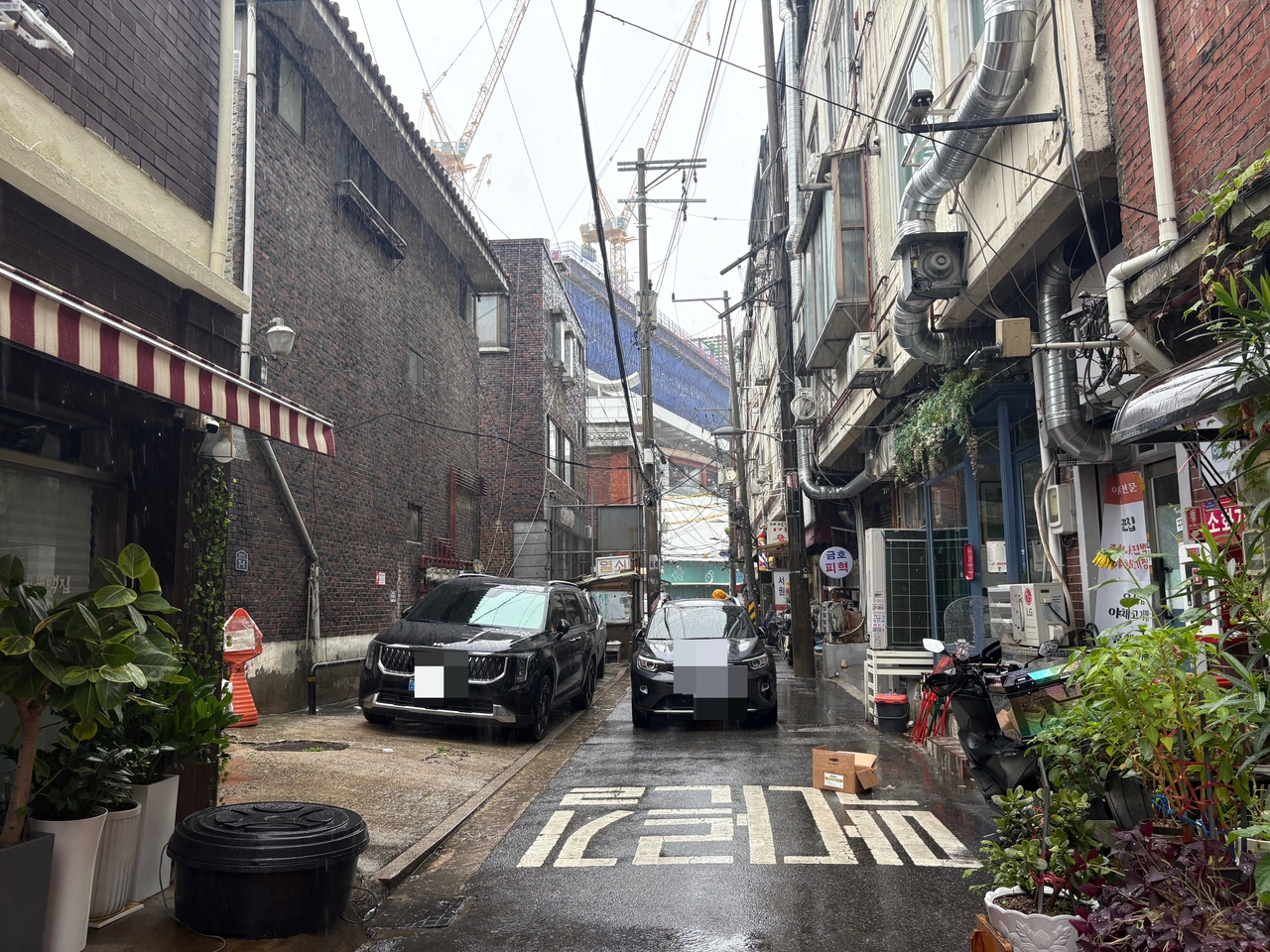
Transactions came to a complete stop after the tax reform proposal came out. Properties aren't selling even when you cut the price, so who in their right mind would raise their asking price?
Real estate transactions have effectively ground to a halt in Seongdong-gu's Seongsu Strategic Redevelopment Zone 2 — one of the most closely watched redevelopment sites along Seoul's Han River. Although the project is gaining momentum as contractor selection gets underway, buyers are hesitating to sign contracts amid high asking prices, financing constraints and uncertainty over proposed tax changes. Even deeply discounted listings that would once have sold immediately are sitting on the market.
Real estate agents near the zone said sales had nearly dried up over the past month or two. Inquiries picked up as the overall project accelerated, they said, but few have translated into actual contracts.
The head of Agency A in Seongsu-dong said that when Zone 4 selected Lotte Engineering & Construction as its contractor last month, purchase inquiries for Zone 2 rose about 30 percent, but not a single deal closed in the past month or two because buyers could not arrange the cash.
"The price range itself is simply too high for buyers to step in," the agent added.
Even distressed listings that would previously have sold quickly are finding no takers. The head of Agency B said a multi-family home with a land share of about 135 square meters came on the market last week as a distressed sale at 4.1 billion won ($2.98 million). The premium — typically valued at around 1.5 billion won — had been cut to just above 1 billion won, putting the price roughly 300 million to 400 million won below prevailing market levels, yet the property remained unsold.
"In the old days, a distressed listing like this would have had a deposit in by the weekend," the agent said. "These days, buyers don't move just because a price has come down."
Properties inside the zone tend to command high prices because single-family homes with large land shares make up a significant portion of the inventory, making it difficult for investors with limited financing capacity to enter the market. According to the Ministry of Land, Infrastructure and Transport's actual transaction price disclosure system, a single-family home with a land area of 210 square meters changed hands for 7 billion won on June 7, while a home with a 99-square-meter land area sold for 2.7 billion won on May 26.

What little trading is occurring involves neighborhood commercial properties and retail units with small land shares. The head of Agency C said actual housing transactions have been almost nonexistent recently, noting that a neighborhood commercial property with a land share of 17 to 23 square meters changed hands about two months ago at roughly 230 million won per 3.3 square meters.
"Every agency has dozens of customers on a waiting list asking to be notified the moment a smaller unit in the 2 billion won range comes up," the agent said, "but properties at that price point are almost never available, and when they do appear, they are often too dilapidated for anyone to actually live in."
"The redevelopment premium baked into prices is so high that buyers face a heavy burden," the agent added. "A property with an expected appraisal value of 800 million to 900 million won is listed at around 3 billion won."
The mood among property owners is also shifting. In the past, many would pull their listings off the market as the project progressed — expecting prices to rise further — but a growing number of owners are now weighing a sale out of concern over tax burdens and holding costs.
The head of Agency D, who also serves as a delegate on the Zone 2 redevelopment association, said older owners in particular are trying to sell quickly in response to the proposed overhaul of the long-term capital gains tax deduction, but a lack of genuine buyers means actual transactions remain stalled. "In a typical redevelopment area you would expect strong price-appreciation expectations before the management and disposal plan is approved, but I think Zone 2 will struggle to see a significant price rise for now," the agent said.
Internal variables also remain. A considerable number of small-share commercial property owners are concentrated around Ttukdo Market within the zone. When the association drew up its contractor bidding guidelines, it set the minimum pre-sale unit size at 29 square meters of dedicated area, dropping an earlier option for micro-units of 16 square meters. Some owners of small-share commercial properties are now pushing back, warning they could be excluded from apartment pre-sale eligibility and forced into cash settlement.
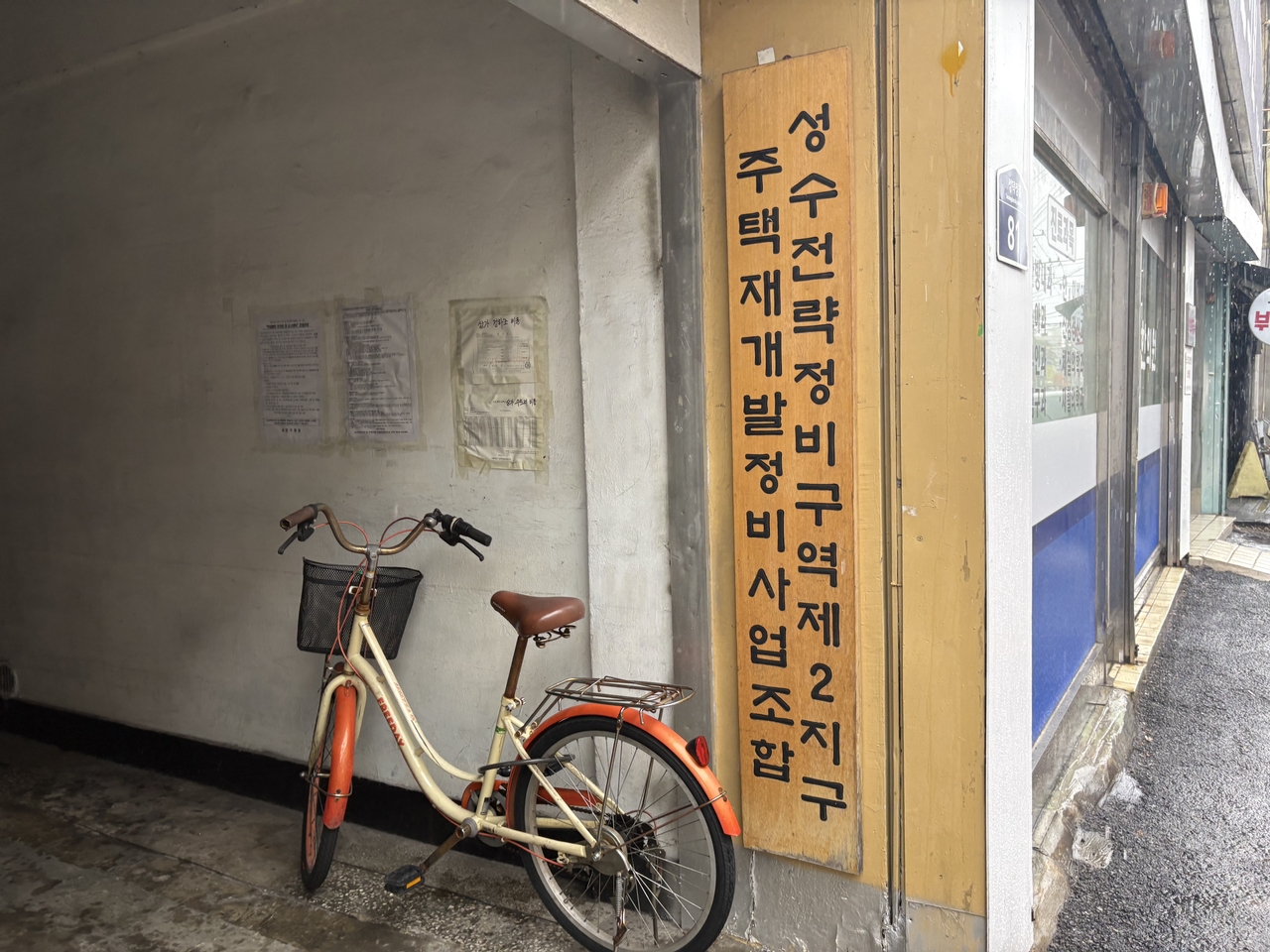
The Seongsu Strategic Redevelopment Zone covers roughly 530,000 square meters along the Han River waterfront in Seongsu-dong, divided into four districts. Designated a strategic redevelopment zone in 2009 and given an improvement plan in 2011, the project stalled for years over disputes about infrastructure cost-sharing and conflicting interests among the districts. Seoul Metropolitan Government's fast-track integrated planning process produced a revised plan, and a 2024 amendment locked in a development blueprint for up to 9,428 units in buildings no taller than 250 meters.
Individual districts have been picking up pace. Zone 1 selected GS Engineering & Construction as its contractor in April, and Zone 4 chose Lotte Engineering & Construction in July. Zone 3 has reached the stage where a negotiated contract is possible after Samsung C&T submitted sole bids on two separate occasions.
Zone 2 closed its contractor selection tender Monday, but the bid was voided after only DL E&C submitted an application. Both DL E&C and Hyundai Development Co attended the pre-bid site briefing, but Hyundai Development Co did not submit a final bid. The association plans to hold a re-tender and select a contractor before the end of the year. Zone 2 covers roughly 131,980 square meters around 506 Seongsu-dong 2-ga 1-dong and is planned for up to 65 floors and 2,381 units, with an estimated construction cost of about 2.01 trillion won.
Despite the transaction slump, expectations for the project's long-term value remain high. The site's proximity to Seoul Forest, the Han River and the Seongsu-dong commercial district — combined with the planned redevelopment of the former Sampyo Ready-Mixed Concrete site — has generated strong assessments of its potential for both residential and commercial uses.
Kim Je-gyeong, director of Toomi Real Estate Consulting, said the relocation and demolition of Ttukdo Market will be the key factor determining the project's pace. "In the past, Zones 2 and 3 were considered less desirable than Zones 1 and 4, but as the Yeonmujang-gil commercial strip has grown and the broader Seongsu area has transformed, the assessment has improved considerably," Kim said. He added that while commercial properties often complicate redevelopment projects, Zone 2 is unusual in that its established retail base has generated expectations that future commercial pre-sales will also go well.

shy@heraldcorp.com
quq@heraldcorp.com