Criminal Procedure Code amendment bill set for full Assembly vote Thursday
Police warn mandatory record submission would delay case handling
Agency submits objections to ruling-bloc lawmakers on Legislation and Judiciary Committee
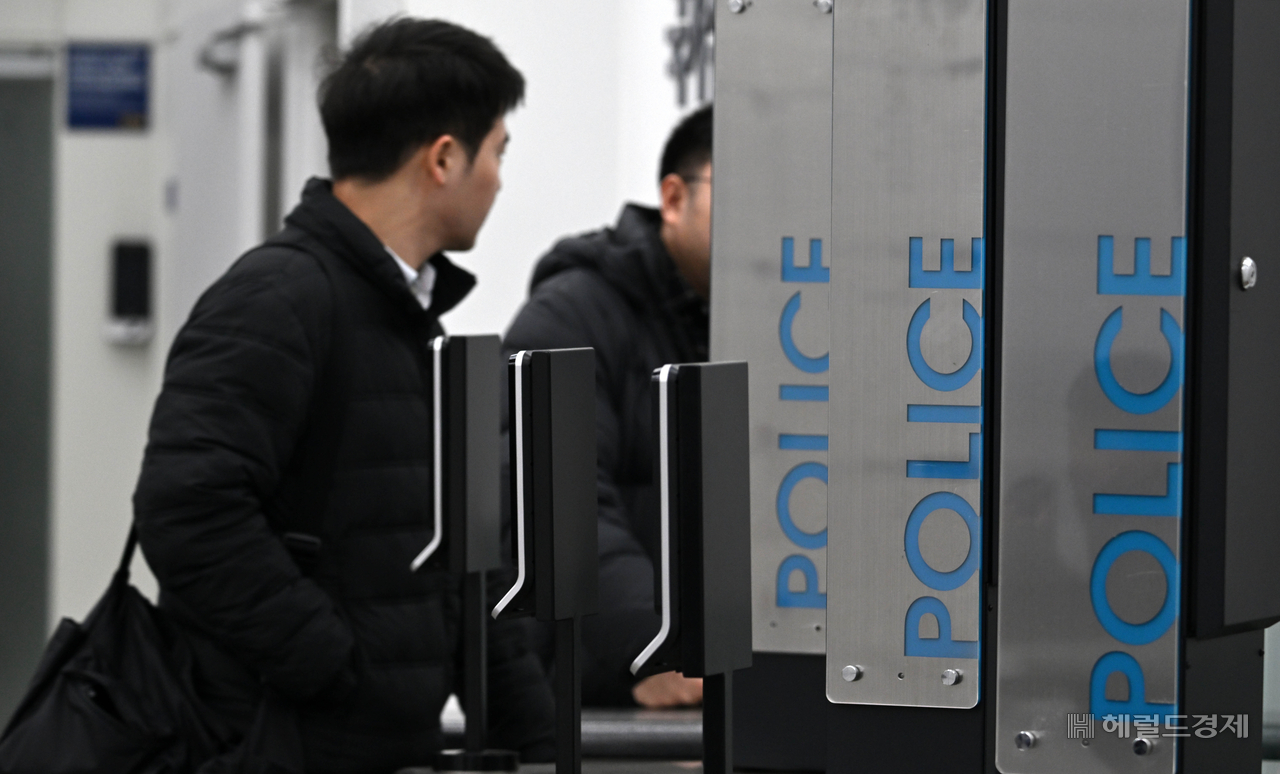
The Korean National Police Agency has conveyed its opposition to certain provisions of a Criminal Procedure Code amendment bill drafted by the National Assembly — including a clause that would require police to notify prosecutors of the results of supplementary investigations — to ruling-bloc lawmakers on the Legislation and Judiciary Committee, it has been learned.
The agency delivered its objections to some ruling-bloc members of the Legislation and Judiciary Committee ahead of the committee's plenary session on Wednesday, taking issue with certain clauses of Article 197-2, which governs procedures for supplementary investigation requests, and calling for revisions.
The disputed clause — paragraph 6 — states that "a judicial police officer shall send records of supplementary investigation compliance to the prosecutor, and the prosecutor may review those records to confirm whether the supplementary investigation was carried out and offer relevant opinions."
The agency told the committee the clause needed revision. It asked the committee to replace the mandatory submission requirement with a discretionary one, allowing police to send records at their own discretion. The agency argued that "making the submission of supplementary investigation records mandatory and then receiving prosecutors' opinions would only delay case processing," and added that "there is a strong likelihood that even minor cases will end up going through the supplementary investigation request procedure — with documents being exchanged back and forth."
The agency's requests are not expected to be reflected in the bill before its scheduled full Assembly vote Thursday. A Democratic Party lawmaker on the Legislation and Judiciary Committee said the record-submission clause "is designed to ensure that judicial police officers and prosecutors go through a prior coordination process," adding: "We heard the police's position, but the current situation is one in which public anxiety has grown because of police misconduct."
Police also unhappy with ruling-bloc-backed bill

A Criminal Procedure Code amendment bill that would abolish prosecutors' supplementary investigation authority and their independent warrant-request power cleared the Legislation and Judiciary Committee on Wednesday, driven by the ruling bloc. The bill would require police, upon receiving a prosecutor's supplementary investigation request, to carry out the supplementary investigation within a maximum of two months.
News of the bill's contents drew pushback within the police, with officers describing it as "legislation divorced from investigative reality."
The bill adds a new proviso to an existing clause requiring judicial police officers to comply with prosecutors' supplementary investigation requests "without delay unless there is a justifiable reason," setting a baseline deadline of one month from the date the request is received. Prosecutors may grant a one-month extension if they accept the officer's stated reasons. Prosecutors may also demand faster compliance depending on the urgency of a case.
One detective-division officer criticized the one-month baseline, saying it showed "a lack of understanding of actual practice." The officer said one month was "absolutely too tight when specific follow-up work is needed — such as seizing additional evidence or conducting a confrontation interview — even if simpler requests might be manageable."
Separately, legislation is also being pursued that would require police to forward all cases involving crimes against so-called "socially vulnerable victims" directly to prosecutors. The ruling bloc is also considering placing a dedicated unit within the planned Serious Crimes Investigation Agency — known by its Korean acronym Jungsucheong — to handle supplementary investigations exclusively for such cases. The Democratic Party developed these supplementary measures after concerns were raised that abolishing prosecutors' supplementary investigation authority could weaken victim protection. These provisions are not expected to be incorporated into the Criminal Procedure Code itself, but rather into individual laws such as the Serious Crimes Investigation Agency Act.
Critics argue this approach contradicts the founding purpose of the Serious Crimes Investigation Agency, which was designed to handle major crimes such as corruption, economic offenses and defense procurement irregularities. Police are also uncomfortable with the structure under which the agency — set to be granted the same primary investigative status as police — would receive cases transferred from police. One police official said: "If police hand over cases they have investigated to the Serious Crimes Investigation Agency, a hierarchical relationship between investigative agencies could take shape."
arin@heraldcorp.com