'Building a dedicated judo arena in Seoul, developing youth athletes are urgent priorities'
Athlete safety and fair competition environment are top concerns
'Expand self-defense education and school sports to broaden judo's reach'
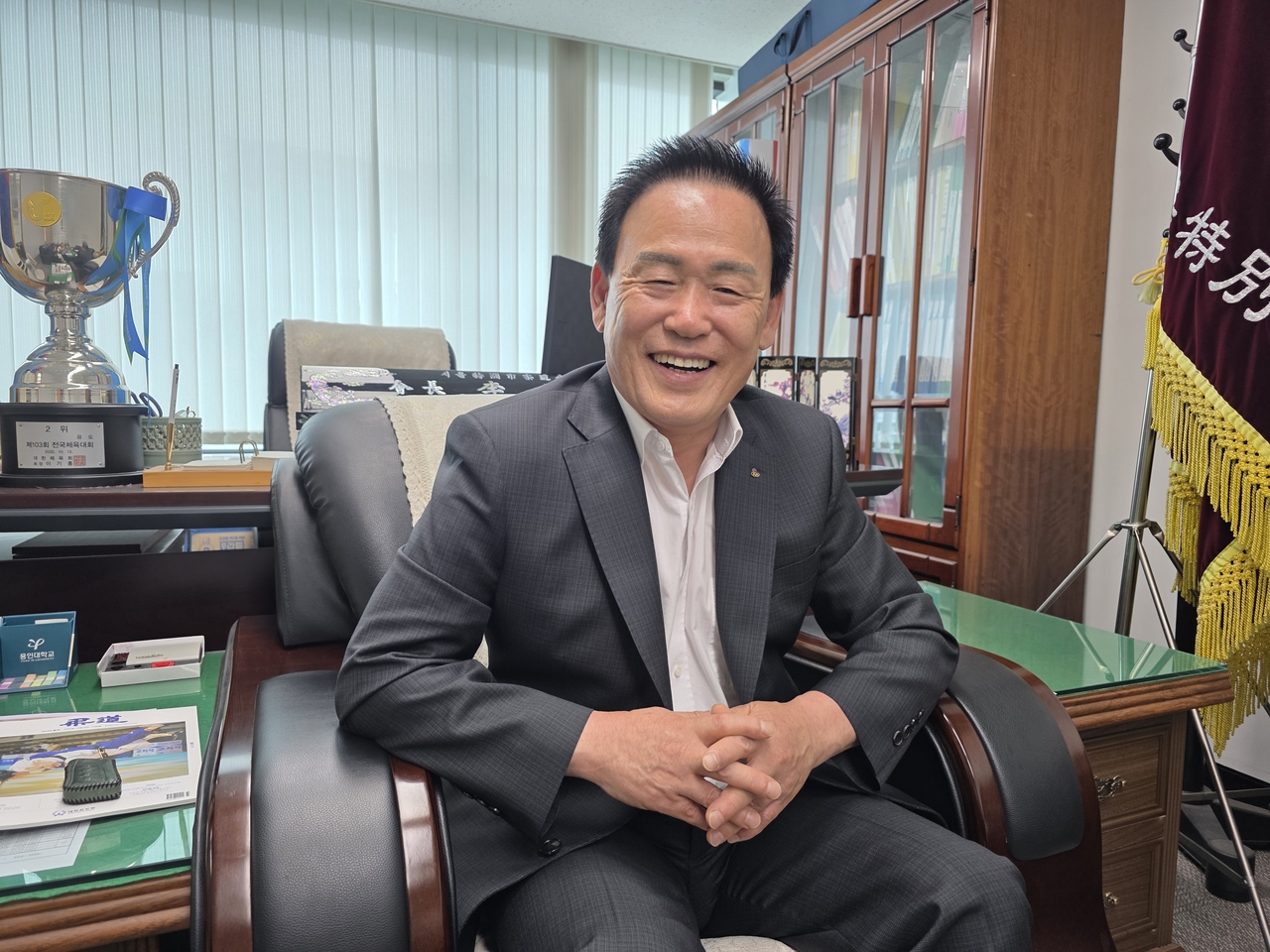
"Judo is not simply a sport about winning or losing. It is a place for character education — where you learn to respect and care for your opponent and develop a sense of community."
Lee Cheon-woo, president of the Seoul Judo Association, made the remarks in an interview on June 19, emphasizing the educational and social value of judo.
A graduate of the Korea Judo School — now Yongin University — Lee is currently serving his third consecutive term as president of the Seoul Judo Association. He also chairs the Seoul Metropolitan Sports Council's member-sport organization presidents' committee and serves as executive vice president of the Yongin University alumni association.
Lee said he sees his role as giving back to younger generations and society the experiences and passion he gained through judo. He said he finds deep fulfillment in serving not only the development of judo in Seoul but also the broader growth of Seoul sports and the mutual benefit of member-sport organizations.
Lee cited "courtesy and respect" as judo's greatest strength. Judo, he said, is grounded in the principle of beginning and ending with etiquette — athletes bow to their opponents and referees before and after a match, learning to respect their counterparts regardless of the outcome.
"Judo goes beyond learning techniques and winning medals — it is an education in understanding others and developing a sense of responsibility and community," Lee said. "If judo is actively incorporated into school physical education, after-school activities and recreational sports, it can make a significant contribution to students' character development."
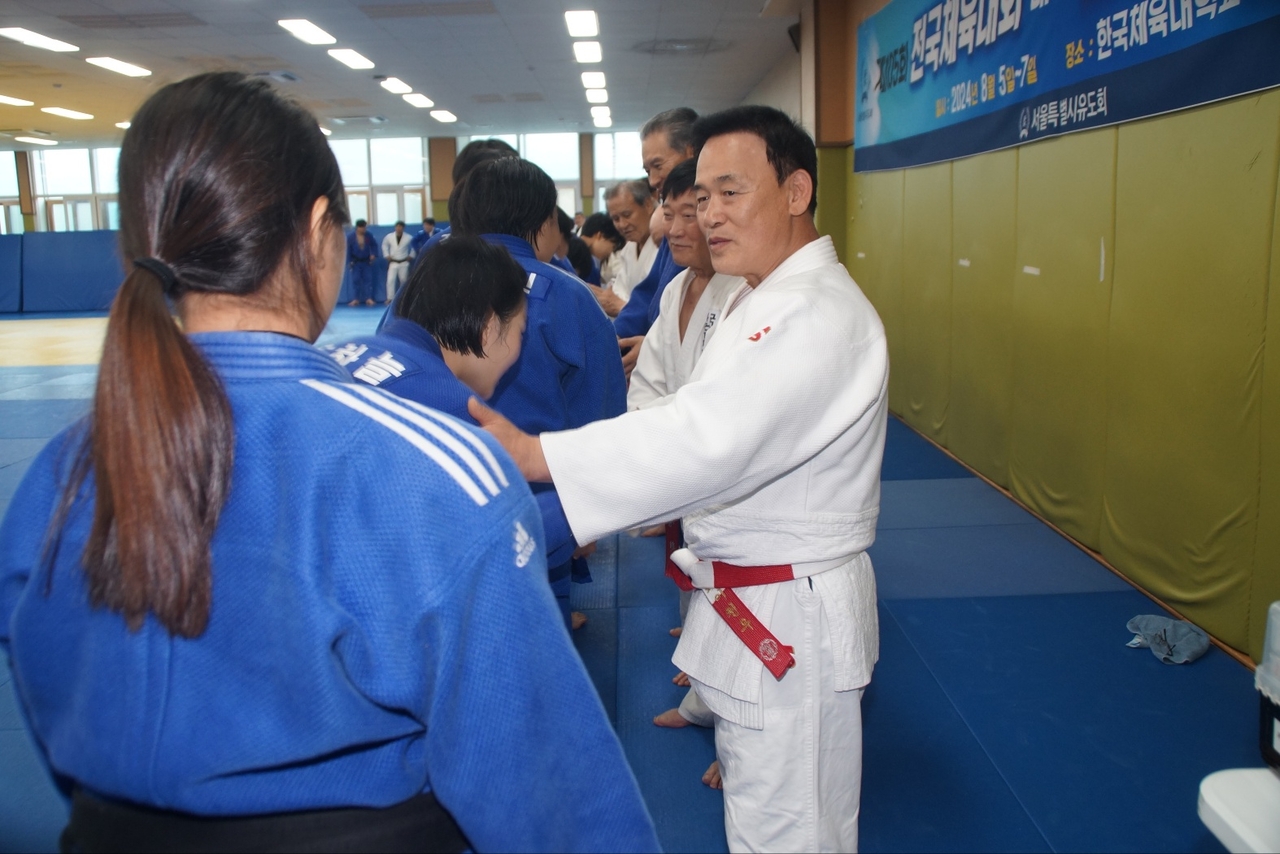
Expanding judo as a community sport that keeps citizens safe
The Seoul Judo Association has worked with local governments to run self-defense safety education programs for the public. In 2017, it signed an MOU with Yangcheon-gu in Seoul and offered self-defense classes for women at the Yangcheon Life Safety Experience Center.
Lee described self-defense training not as a set of techniques for attacking or harming others, but as education aimed at protecting oneself and others in emergency situations.
"Learning self-defense builds the judgment and confidence to respond calmly even in sudden dangerous situations," he said. "Through repeated training, people naturally develop the habit of reading their surroundings and recognizing potential hazards."
Lee particularly stressed the value of ukemi — the basic judo skill of falling safely — for ordinary citizens, including children, women and the elderly. By learning to protect the head and neck and distribute the impact of a fall, people can reduce the risk of everyday falls and injuries, he said.
The Seoul Judo Association plans to resume and expand self-defense education programs suspended after COVID-19, and to continue running safety education programs for women, youth and senior citizens in partnership with local governments. The goal is to develop judo into a community sport that protects the safety and health of all citizens.
'Athlete safety and a fair competition environment come first'
Lee named athlete safety as the most important principle in running competitions. "Judo involves a great deal of physical contact, which makes safety management paramount," he said. "Creating an environment where athletes can compete with confidence and peace of mind is the association's most fundamental role."
The Seoul Judo Association raises safety awareness through coach training and workshops, and shares competition procedures and safety guidelines with team representatives before each event. It also operates a referee committee, a competition committee and an athlete protection committee to strengthen the framework for protecting athletes.
The association continuously reviews venue facilities and improves its emergency medical support and on-site response systems. Ensuring a fair and comfortable competition environment is also a key priority. Above all, the association is committed to letting athletes focus entirely on competing, free from unnecessary concerns, while securing both fairness and safety.
Lee also identified giving athletes sufficient competitive experience as a major task. The Seoul Judo Association plans to expand age-group and skill-level competitions and create a wider range of events open to participants from youth through adult, building a foundation for athletes to grow continuously.
Alongside this, the association is working to raise awareness of judo's positive values and broaden its base through the appointment of goodwill ambassadors, social media and media outreach, and public participation events.
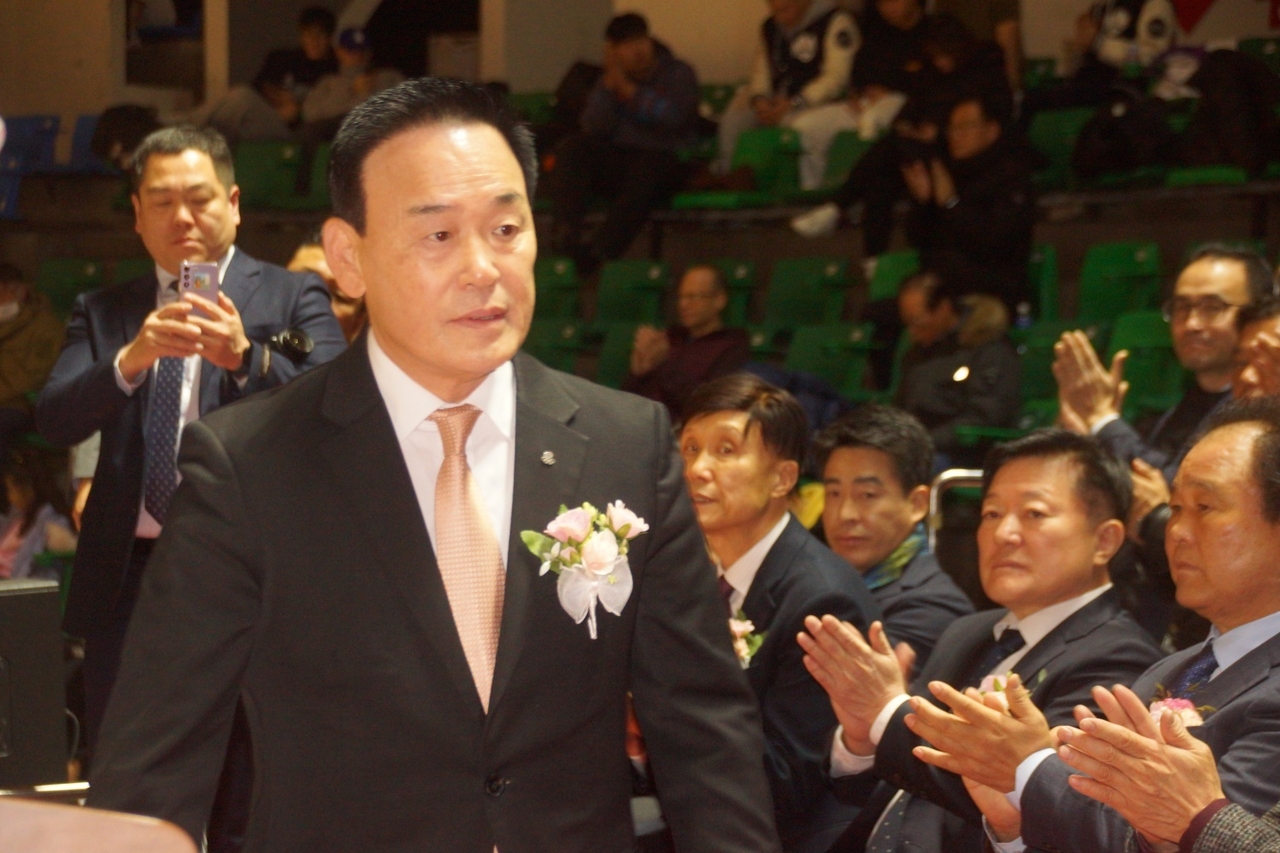
'A dedicated arena is directly tied to Seoul judo's future competitiveness'
Lee said the development of judo in Seoul is directly linked to strengthening the competitiveness of Korean judo as a whole.
The Seoul Judo Association has long served as the backbone of Korean judo, producing numerous national team athletes and Olympic medalists. Yet Seoul still lacks a dedicated judo arena, creating considerable difficulties in hosting and running national and international competitions, Lee said.
"Seoul is the capital of South Korea and the center of judo, yet there is no dedicated facility that judo practitioners can use on a regular basis," Lee said. "Every time a competition is held, we have to rent a general sports complex."
For that reason, he said, a dedicated judo arena that can accommodate athlete development, national and international competition hosting, recreational sports promotion and coach training is an absolute necessity. That need extends beyond Seoul judo alone — it is directly tied to the future competitiveness of Korean judo as a whole.
Lee also expressed concern about the weakening foundation for developing young athletes. In the past, many schools had entire student bodies learning judo, but in recent years school athletic clubs and judo programs have declined, shrinking the opportunities for young people to encounter the sport. The pipeline for developing athletes — from elementary through middle school, high school, university and professional teams — has also contracted compared with earlier years, he said.
That is why securing a dedicated judo arena, revitalizing school physical education, developing youth athletes, and expanding university and professional teams must all move forward together. "I will work to build an even stronger foundation for judo in Seoul so that the results can translate into greater competitiveness for Korean judo as a whole," Lee said.
7toy7@heraldcorp.com