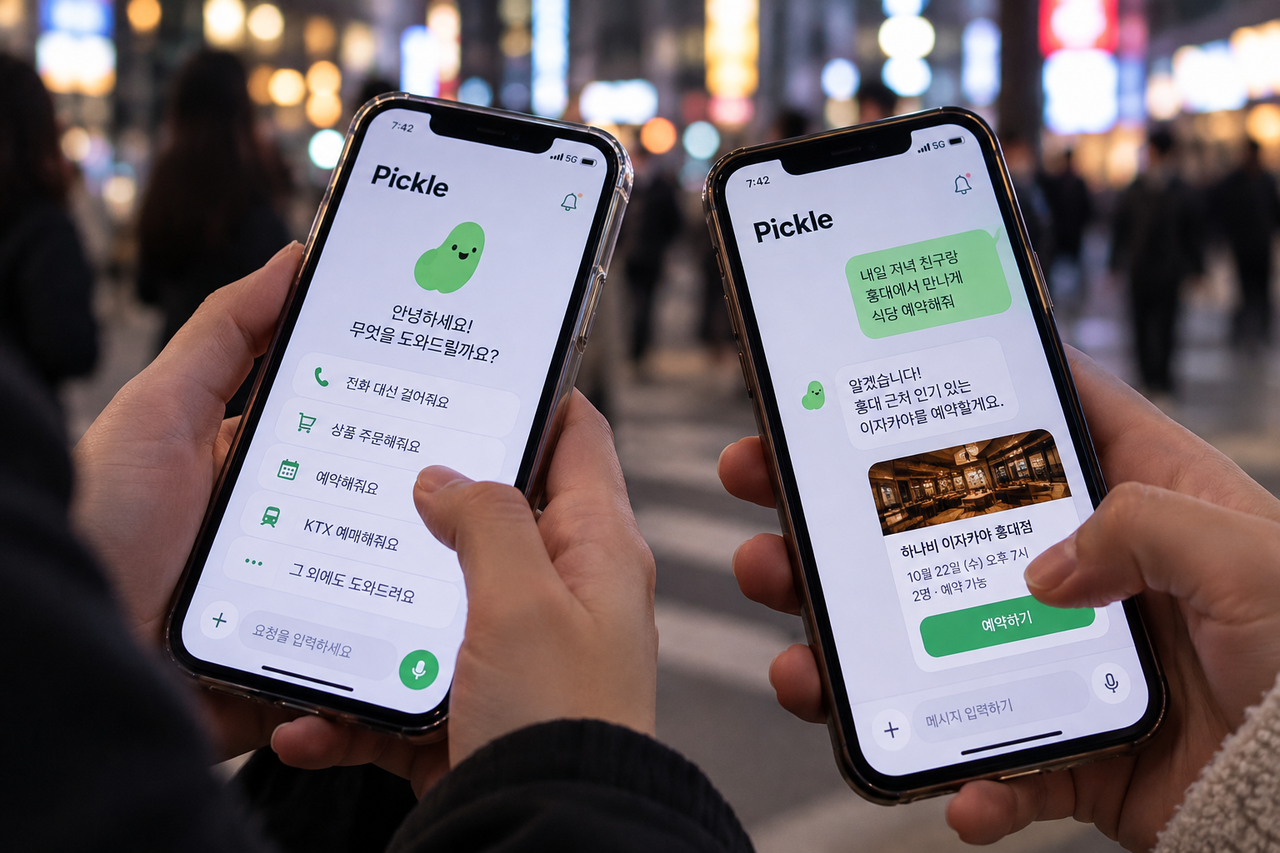
Pickle, a general-purpose AI agent app developed by a new startup, is gaining traction among users in South Korea.
The domestic AI agent race has long centered on Naver and Kakao, but with neither company having delivered a standout general-purpose service, global tech giants and new startups are now moving to claim the market.
Pickle ranked 17th in the free social networking category on Apple's App Store in South Korea as of Thursday, up seven places from 24th on Sunday — a climb made in just two days.
Pickle was founded by Korean entrepreneurs in Silicon Valley and is developing a lifestyle-oriented AI agent that goes beyond answering questions to carrying out tasks on behalf of users.
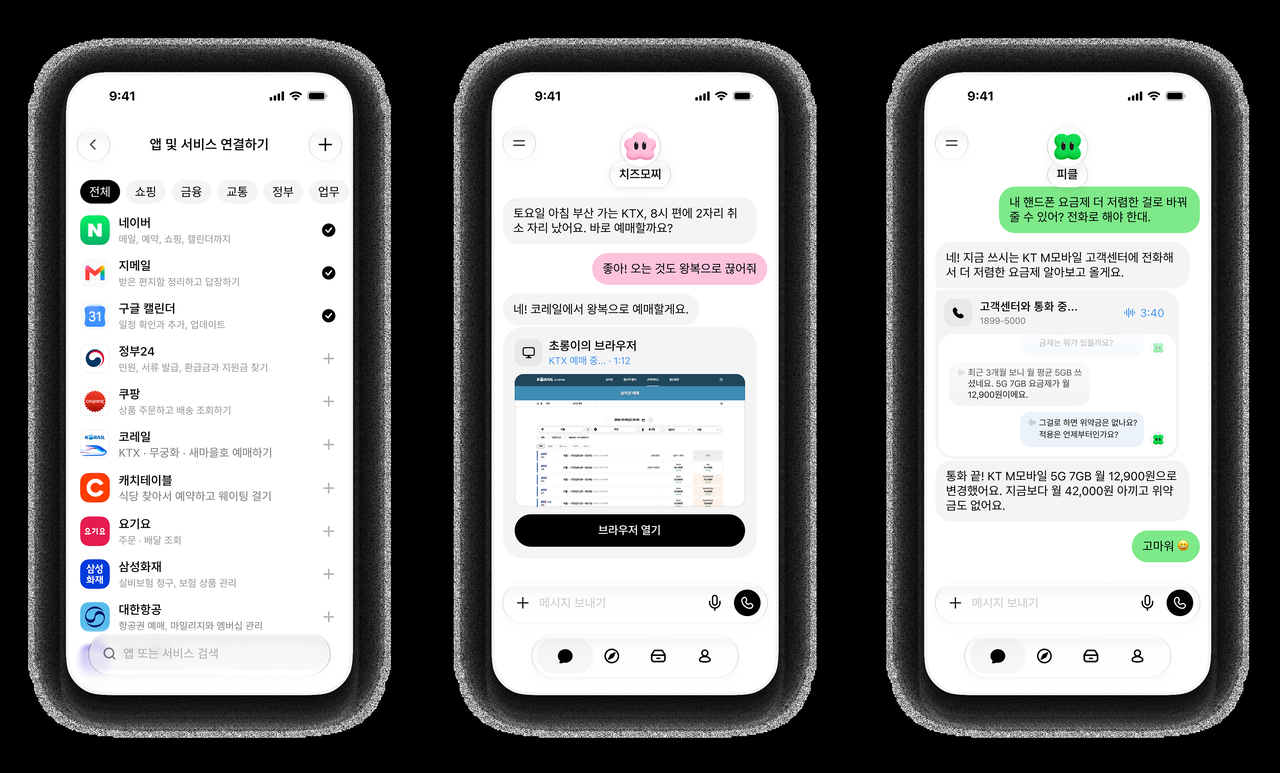
The app has drawn particular interest for its integration with services familiar to Korean users, including Naver, KakaoTalk and the government portal Gov24. Through Pickle's own cloud browser, the app accesses external websites and handles tasks using accounts that users have linked to the service.
Users can ask Pickle to request a plan change or refund from a mobile carrier without calling customer service directly. The app also supports searching for products, placing orders and processing payments on shopping platforms such as Coupang Inc and Daiso Mall. It can make restaurant and hospital reservations and book KTX train tickets — including monitoring cancellations on sold-out trains, alerting users and completing the booking upon request. For high-stakes actions such as payments and reservations, the app requires final approval from the user.
Pickle has also unveiled a feature that lets a user's AI agent communicate with a friend's AI agent to coordinate plans. If a user asks Pickle to arrange a dinner with a friend, for instance, the two agents exchange messages to check each other's availability and agree on a meeting place. Users can also review the conversation that took place between the two agents.
The buzz around lifestyle-oriented AI agents has been fueled in part by the success of Meta's personal AI agent Muse. Meta launched Muse last month as a service that sends emails, handles shopping and makes travel reservations on behalf of users. According to market research firm Sensor Tower, Muse surpassed 10.9 million cumulative downloads worldwide in roughly 40 days after its launch.
Muse has not officially launched in South Korea, but it generated significant online buzz as users shared workarounds using virtual private networks to access the service.
Industry observers say global tech companies and startups are moving to capture the market while Naver and Kakao have yet to release a compelling general-purpose AI agent service.
Naver and Kakao have focused their strategies on integrating AI agents into their existing search and messaging services. Naver's efforts include its AI search service AI Tab, a shopping AI agent and a Place Agent feature within Naver Maps.
Kakao plans to transform KakaoTalk into an AI agent platform through Kanana Space, which it unveiled Oct. 13. The company will begin a closed beta test in December and aims to expand the service into a unified platform connecting various AI agents in the first half of next year.
Industry watchers expect the AI agent competition to shift from services tailored to specific functions toward general-purpose AI agents capable of handling everyday tasks across multiple platforms. Analysts warn that if external AI agents like Pickle spread — operating Naver, Kakao and other services on users' behalf — domestic platform companies could face a battle for control over their direct relationships with users.
chami@heraldcorp.com