Resolution calls for independence in personnel, organization and budget; demands more policy support staff and stronger legislative capacity
"Structural limits remain despite personnel independence," council says; resolution to be sent to National Assembly and Ministry of Interior and Safety
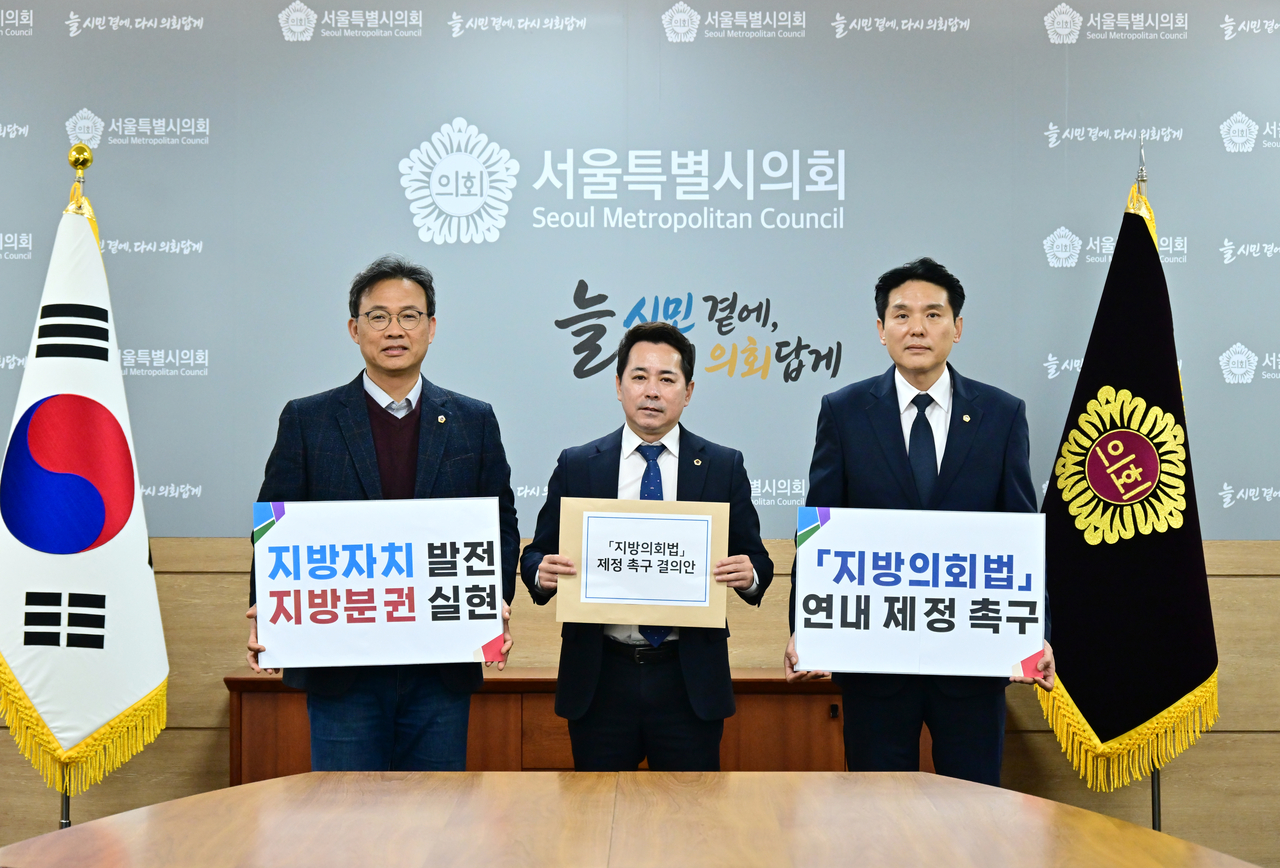
The Seoul Metropolitan Council has called on the National Assembly to pass a dedicated local assembly law by year's end, with ruling and opposition parties joining forces to push for legislation that would strengthen the independence and autonomy of local councils across the country. The move aims to address structural constraints that have left local assemblies dependent on executive bodies for organizational and budget decisions despite a 2022 reform that granted them independent personnel authority, and to establish a firmer institutional foundation for local councils to function as genuine legislative and oversight bodies.
Council Spokesperson Park Gyu-nam of the Democratic Party of Korea said the passage of a resolution urging enactment of a local assembly law — formally titled "A Resolution Urging Enactment of a Local Assembly Law for the Development of Local Autonomy and Realization of Decentralization" — at the first plenary session of the 340th regular session Monday marked a meaningful step toward strengthening the status and authority of local councils.
"This is a significant decision in which the ruling and opposition parties have spoken with one voice to elevate the standing of local assemblies," Park said. "Now that social consensus for enacting a local assembly law has fully matured, this is the golden moment to get it done."
The resolution centers on building an independent operational framework for local councils and enhancing the professionalism of their legislative activities. It specifically calls for the swift passage of a local assembly law through the National Assembly, guarantees of autonomy in personnel, organizational and budget management, and an expansion of policy support staff.
The resolution also calls for institutional reforms to give local councils genuine checks-and-balances power over executive bodies — including stronger autonomous legislative capacity and expanded confirmation hearing and audit functions. It further pledges that local assemblies will reinforce public-service ethics and carry out their legislative duties responsibly.
The need for a dedicated local assembly law has been consistently raised since the fully revised Local Autonomy Act took effect in 2022. That reform separated local assembly personnel authority from the heads of local governments and introduced a policy support staff system, laying the groundwork for greater autonomy and expertise in local councils.
Calls for further reform have continued, however, as the separation of personnel authority has not translated into genuine organizational or budgetary independence.
Local assembly secretariat structures and staffing levels remain constrained by presidential decree standards and the executive branch's organizational framework. Local councils review and approve local government budgets, yet the executive draws up their own operating budgets — a structural contradiction that advocates say must be resolved.
Securing sufficient professional staff to support legislative work also remains a challenge. Under the current system, policy support staff may be employed only up to half the number of council members, making it difficult to keep pace with increasingly complex administrative demands and specialized policy review.
Establishing and operating independent audit bodies within local councils is in effect nearly impossible, prompting calls for institutional mechanisms that would simultaneously strengthen councils' oversight authority over the executive and their own internal accountability.
Park said resolving these structural problems requires not piecemeal reforms but a standalone law that comprehensively defines the powers and responsibilities of local assemblies.
"Local assemblies are the channel through which residents' concerns and local issues are addressed, and the very heart of participatory democracy through which community self-governance is realized," Park said. "The institutional foundation must be in place to support the authority and responsibility of local assemblies in checking local governments for the greater welfare of residents."
The resolution is also notable for emphasizing accountability and transparency alongside the expansion of local assembly authority. It calls for creating an environment in which local councils can carry out independent legislative activities while reinforcing public-service ethics and responsible governance as representative bodies of residents.
The Seoul Metropolitan Council plans to use the resolution's adoption as a springboard for lobbying the National Assembly on the local assembly law. It will immediately transmit the resolution to the National Assembly and the Ministry of Interior and Safety and urge swift legislation.
"The National Assembly must enact the local assembly law within this year to meet the era's demand for local autonomy and decentralization," Park said. "Local assemblies, too, will reinvent themselves as councils that earn residents' trust through transparent and responsible legislative conduct."
7toy7@heraldcorp.com