Hyundai Motor Group's first overseas hydrogen fuel cell production base
220 cells stacked to complete a 50 kW stack — core processes fully automated
Chinese buses, trucks and street sweepers powered by Hyundai Motor hydrogen technology
Ranked third overall and first among foreign firms in China fuel cell sales last year
Expanding beyond finished vehicles into core powertrain supply
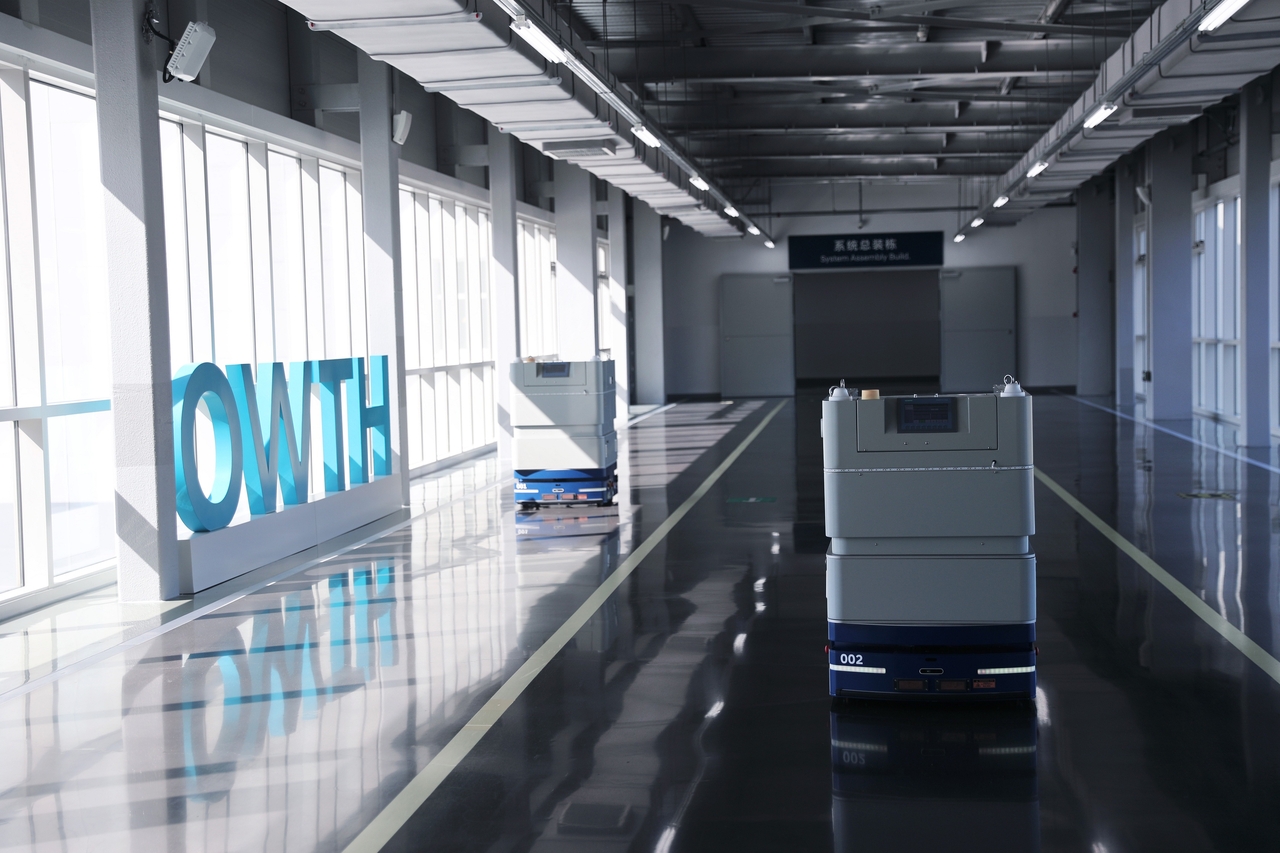
Robots stacked thin plates one by one. When 220 had been layered into a component too heavy for a person to carry easily, a floor-running transport robot took over. The stacking and the moving were both the robots' work. The parts made here go on to power hydrogen buses and trucks traveling across China.
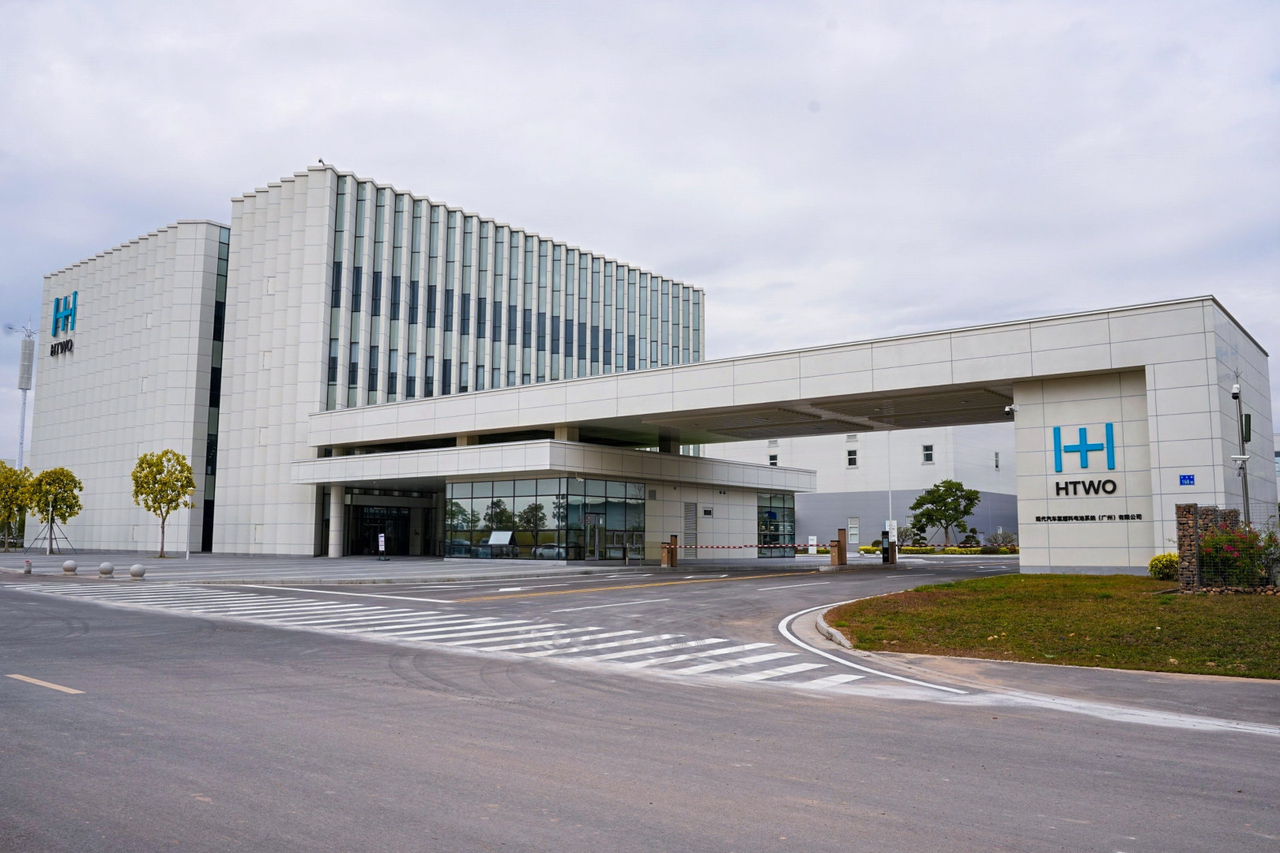
On Wednesday, this reporter visited HTWO Guangzhou, Hyundai Motor Group's first overseas hydrogen fuel cell production base, located in Huangpu District, Guangzhou, Guangdong Province. Spread across a 202,000-square-meter site, the facility produces not automobiles but hydrogen fuel cell systems — the functional equivalent of an engine for a hydrogen vehicle. The system reacts hydrogen with oxygen from the air to generate electricity, which then drives a motor to move the vehicle.
Hyundai Motor became the world's first automaker to mass-produce hydrogen electric vehicles in 2013 and has held the global top spot since, selling 5,304 hydrogen electric vehicles from January through September this year for a 70 percent market share. In China, the company ranked third overall and first among foreign firms by fuel cell system sales last year.
Chinese automakers that have been growing aggressively in global markets on the strength of electric vehicles are, at this facility, customers and partners of Hyundai Motor Group. The company is carving out a place in China's hydrogen vehicle market not by selling finished cars but by supplying the core powertrain.
From thin film to hydrogen powertrain — over 90% of processes automated
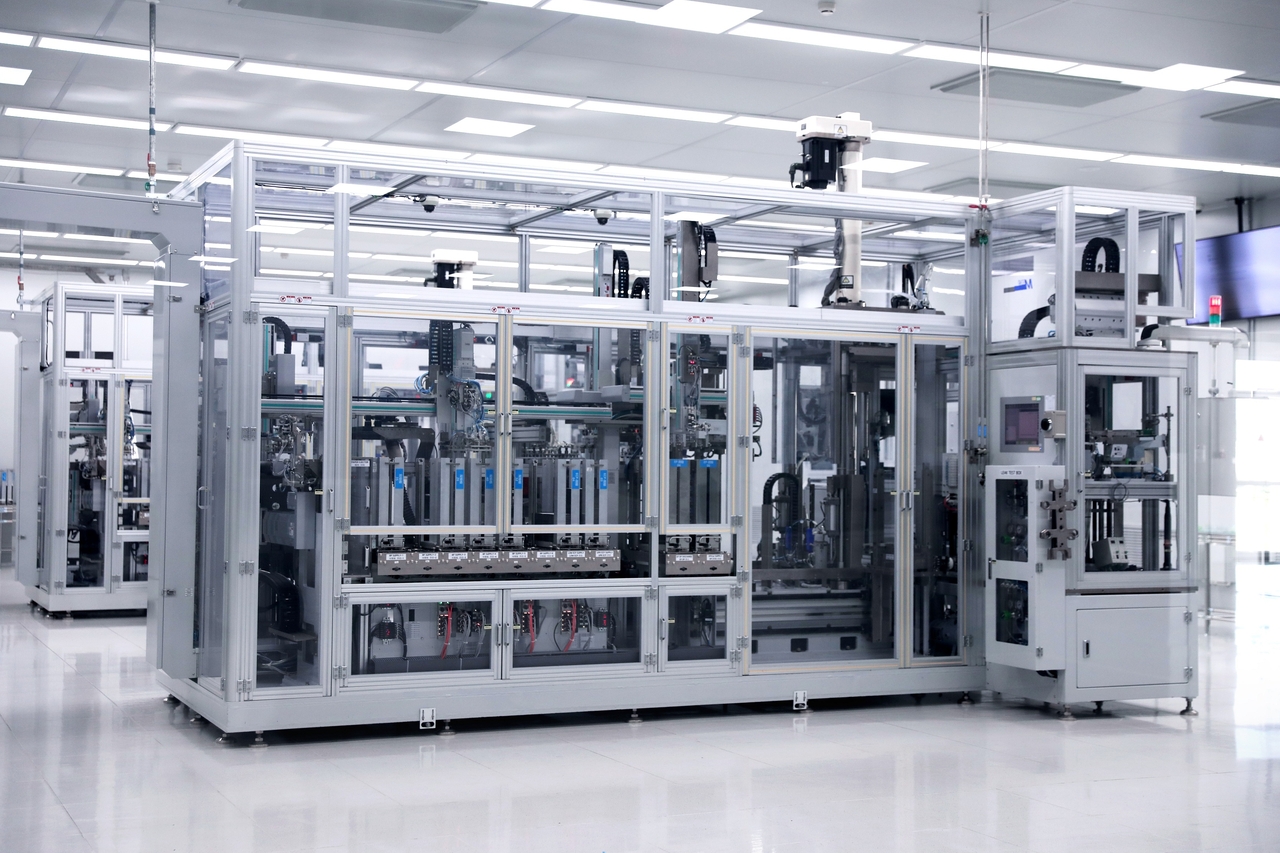
The stack building, the first stop on the tour, felt less like a car factory than a semiconductor plant. It is where the facility produces membrane electrode assemblies, the core component that reacts hydrogen and oxygen to generate electricity. Because the product is sensitive to dust and fluctuations in temperature and humidity, the interior is kept at 22 degrees Celsius and between 25 and 45 percent relative humidity.
On the production line, rolls of thin film were automatically processed and cut to precise dimensions. HTWO Guangzhou is the only foreign-invested company in China with its own membrane electrode assembly production line.
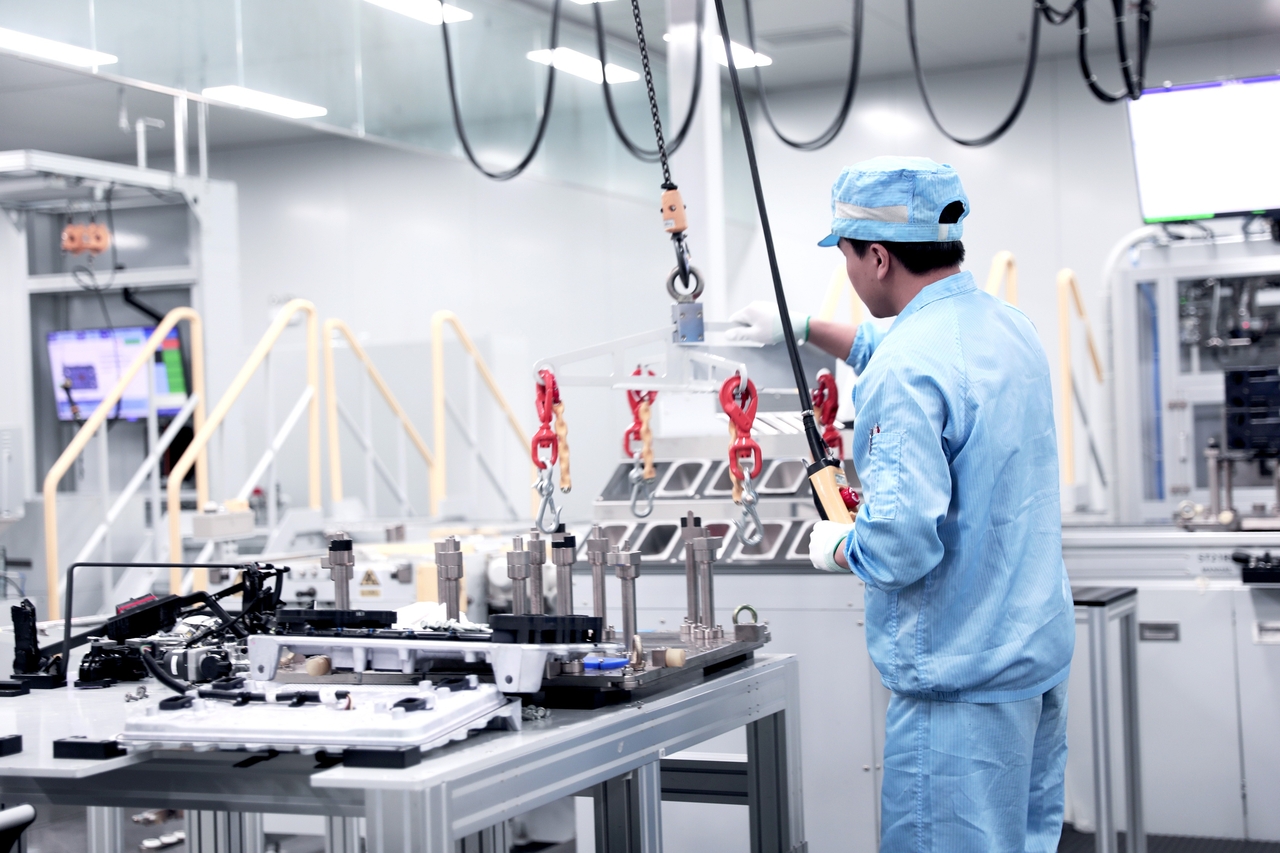
In the next stage, robots stacked fuel cell cells in neat layers. Every 220 cells complete one stack capable of producing 50 kilowatts. Combining two stacks with hydrogen and air supply units and other components yields a 100-kilowatt fuel cell system.
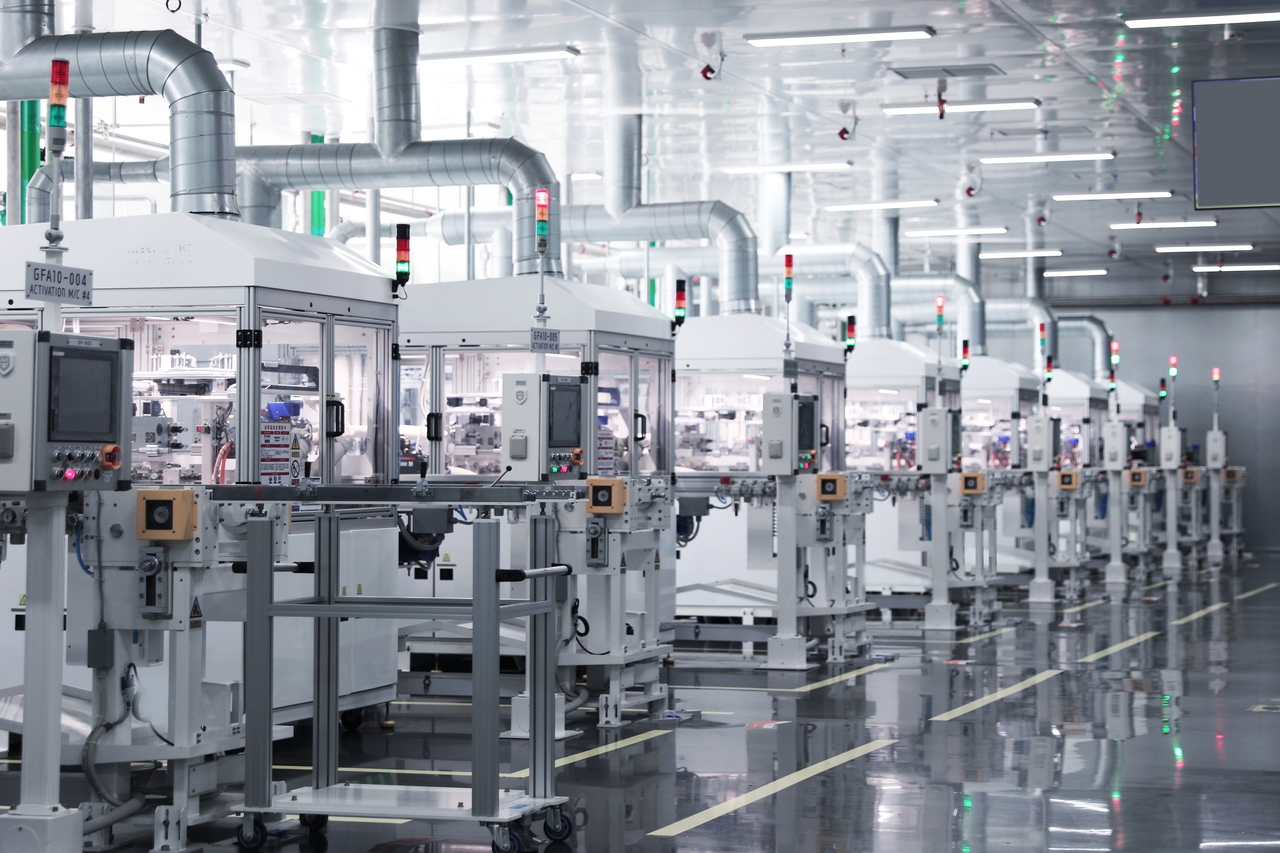
Few workers were visible anywhere along the production line. Kim Chang-su, a manager at HTWO Guangzhou, said more than 90 percent of the processes are automated — a design choice aimed at reducing variability from manual work and maintaining consistent product quality.
Zero safety incidents — three days from raw material to finished product
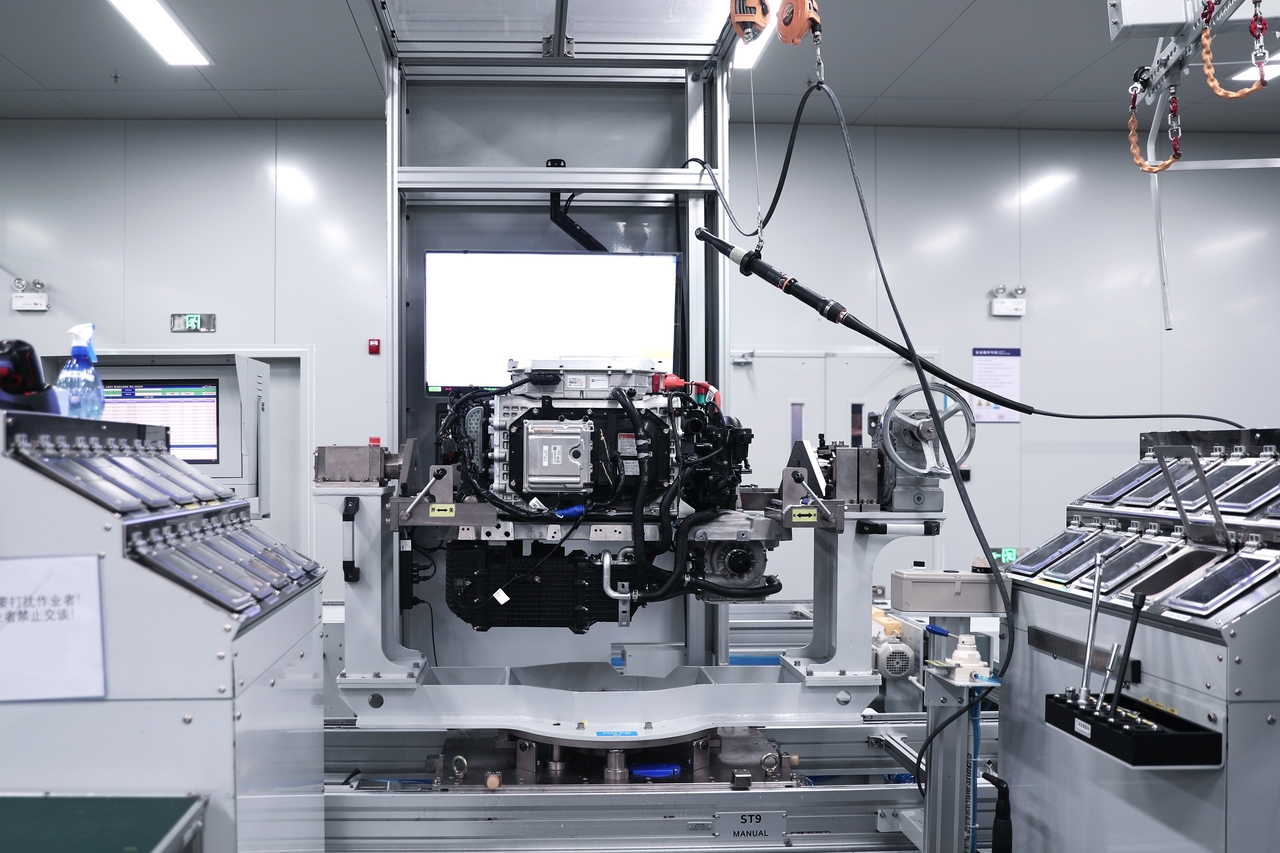
Stepping out of the stack building and crossing a connecting corridor, the atmosphere shifted. In this section, hydrogen is injected into the stacks produced in the earlier process to verify that electricity is being generated correctly.
Red hydrogen supply pipes ran along the ceiling to each piece of equipment. Yellow sensors installed throughout the space monitor hydrogen concentration in the air in real time.
HTWO Guangzhou separates hydrogen-using processes from non-hydrogen processes in distinct buildings, with fireproof and blast-resistant walls between them. If even a trace hydrogen leak is detected, ventilation systems activate and the hydrogen supply cuts off automatically. Since the company was incorporated in 2021, not a single safety incident has occurred.
Activating a stack and checking the condition of each of its 220 cells takes about three hours alone. The electricity generated during that process is not wasted — it is recovered and, combined with output from solar panels on the roof of the stack building, supplies about 45 percent of the entire factory's power needs.
On the assembly line, equipment verifies both the number of bolts a worker has fastened and the torque applied to each. After assembly, every unit undergoes more than 100 inspection checks. Each product is assigned a unique serial number so its production history can be traced even after it leaves the factory. From raw material input to finished product, the process takes about three days.
Hyundai Motor technology in Chinese buses and trucks — surpassing Toyota for the top spot
Chinese automakers are partners in Hyundai Motor Group's hydrogen business. HTWO Guangzhou co-develops hydrogen vehicles with local bus and truck manufacturers and supplies them with fuel cell systems as the core powertrain.
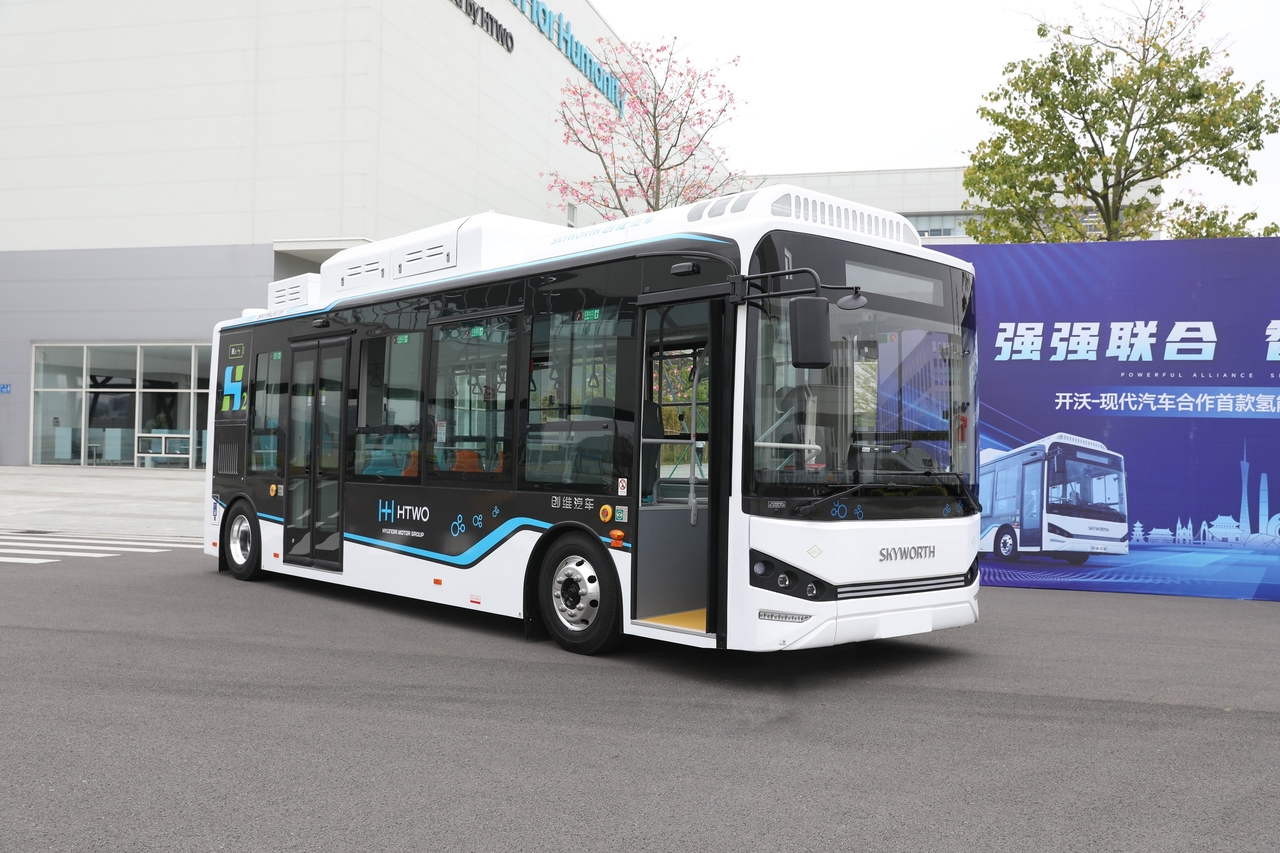
A 12-meter hydrogen bus built by Chinese bus manufacturer Suzhou Jinlong is equipped with a 200-kilowatt HTWO fuel cell system and can travel 550 kilometers on a single fill. The side of the bus carries the inscription "Powered by HTWO technology." The bus currently shuttles HTWO Guangzhou employees to and from work, and the company is also considering deploying it on routes connecting major tourism destinations such as the Guangzhou Tower.
While South Korea has built its hydrogen vehicle market around passenger cars such as the Nexo, China's market centers on commercial vehicles — buses and trucks. Hyundai Motor Group has adapted accordingly, co-developing vehicles with local commercial vehicle manufacturers.
Kim Min-gi, a senior manager at HTWO Guangzhou, said electric vehicles can cover most of the passenger car segment, but hydrogen vehicles can compensate for the shortcomings of electric vehicles as vehicle size increases.
Last year alone, HTWO Guangzhou supplied 249 hydrogen buses to Guangzhou. About 120 units of an 18-ton logistics truck co-developed with Chinese commercial vehicle maker Dongfeng Liuqi were also sold last year. The company has expanded its lineup to include refrigerated logistics trucks, street sweepers and garbage collection vehicles, and is now developing a 49-ton heavy-duty tractor.
Through the end of last year, the cumulative number of vehicles equipped with HTWO Guangzhou fuel cell systems reached 1,267, with more than 900 of those deployed last year alone. That track record allowed the company to surpass global rivals including Toyota, Bosch and Cummins to rank first in China among foreign firms by sales.
HTWO Guangzhou was also the only foreign-invested company named among the 96 leading enterprises in Guangzhou's strategically designated industrial clusters this year.
A foothold in China's automotive heartland — a springboard for global hydrogen ambitions
Hyundai Motor Group chose Guangzhou for its first overseas hydrogen fuel cell production base because of the city's strong automotive and advanced-industry foundation. BYD, Huawei and Tencent are all rooted in Guangdong Province, and Guangzhou is also home to production facilities operated by global automakers including Toyota and Honda.
Hydrogen electric vehicles and battery electric vehicles share a significant number of components — including drive motors and inverters — meaning the existing electric vehicle supply chain can be leveraged, another advantage of the location.
HTWO Guangzhou, completed in June 2023, currently employs 240 people: 31 Korean expatriates and 209 local staff. Its maximum annual production capacity is 6,500 units, though the market has not yet grown enough to fully utilize that capacity, and the facility currently operates at a scale of about 3,000 units.
Hyundai Motor Group launched a fuel cell technology research institute in Guangzhou in July last year. The institute is verifying the potential of fuel cells across a range of applications beyond commercial vehicles — including ships, trams and emergency power supply systems — and sharing the resulting data with research centers in South Korea.
Choi Du-ha, head of the HTWO Guangzhou corporation, said the company intends to refine its technology and business model by drawing on China's market scale and diverse commercial vehicle operating environments, and to translate that into outcomes that strengthen Hyundai Motor Group's global hydrogen competitiveness and expand the overseas prospects of South Korea's hydrogen industry.
kwater@heraldcorp.com