A couple in their 20s who had six children in succession to collect government subsidies abused the children and caused the death of one, a television investigation revealed Saturday, prompting questions about whether the government and local authorities had been dispensing birth incentive payments without adequate follow-up oversight.
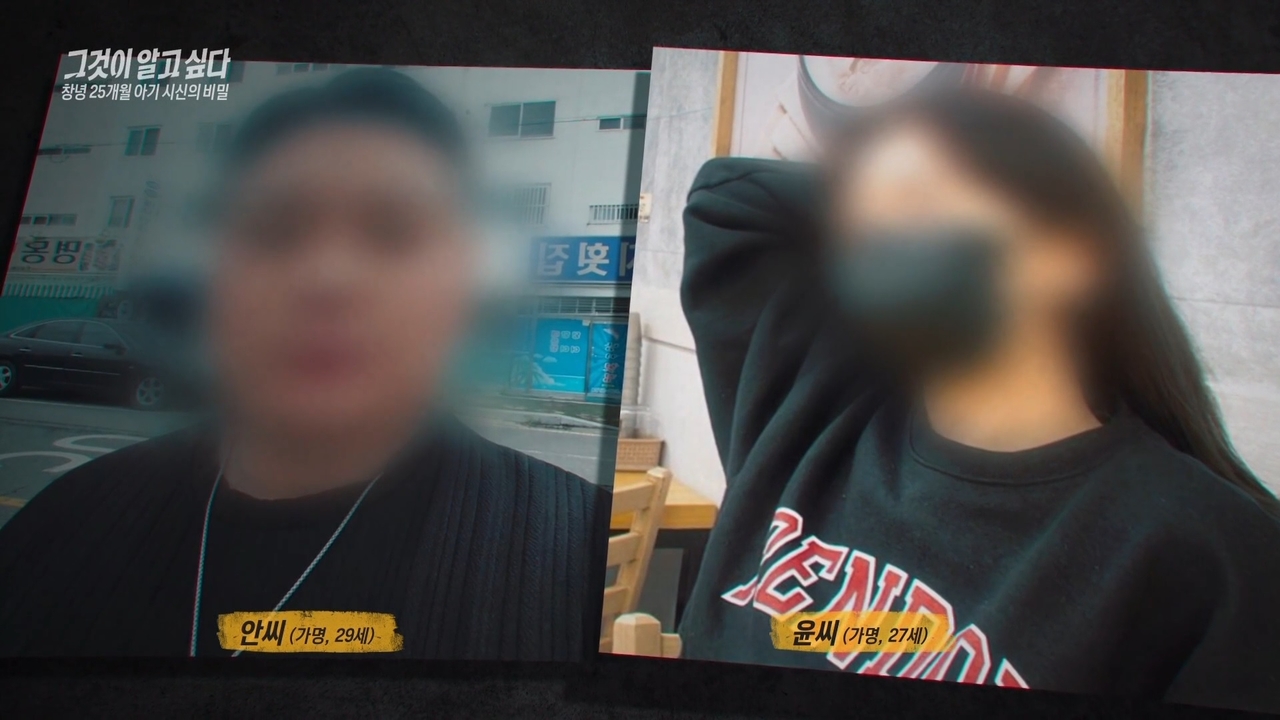
SBS's "That's What I Want to Know," broadcast Saturday, traced the case of an abandoned infant whose body was found at a derelict house in Changnyeong-gun, South Gyeongsang Province.
The case came to light in March, when the body of a 2-year-old was discovered stuffed in a burlap sack at the vacant property.
The child's parents were identified as A, 29, and B, 27. The two claimed the infant had died of a disease — lymphocytic myocarditis — but bruises and other signs of abuse were found across the body. The couple also told investigators that, shortly before the child's death, they had bound the infant in clothing for eight hours to stop the child from fussing at bedtime.
Charged with child abuse resulting in death and other offenses, the two were sentenced in the first trial to 17 years in prison for A and five years for B.
The deceased child was not the only victim. The couple had five other children. They had one child each in 2018, 2019, 2020, 2022, 2023 and 2026 — and all but the 2026 child were born in November.
The couple did not raise all the children themselves; the first and second were sent to an orphanage after they had grown somewhat. A staff member at the facility said the children arrived in a near-malnourished state. "They were extremely thin, pigeon-toed and could barely climb stairs. They had no decent clothes and not a single toy," the staff member said.
The third and fourth children were placed in a separate facility after the parents were taken into custody. A worker there said the children "had poor hygiene and were essentially uneducated — like Mowgli from 'The Jungle Book,' or a feral child."
Local residents suspected the couple had so many children to collect birth incentive payments. "Up to the child's first birthday, you receive 1 million won ($745) a month in subsidies," one resident said. "And from the third child onward, you get 10 million won in cash per child." Another resident used the term "baby-tech" — a portmanteau describing the practice of using children as a financial instrument.
A, who was registered as a basic livelihood security recipient, received 3.3 million won a month in government support and earned no independent income, relying entirely on child-related subsidies to get by. Most of the child-rearing payments were found to have been spent on personal entertainment.
One expert offered an assessment of why the couple sent the first and second children to an orphanage. "Older children are of no use for collecting subsidies," the expert said. "They calculated there was little benefit to be gained from raising those children themselves, so they sent them to a care facility."
It also emerged that the couple had assaulted and exploited a woman with an intellectual disability for several months. They were sentenced in a separate first-instance trial to two years and one year in prison, respectively, for those offenses, and as of early this year remained free pending trial in that case.
paq@heraldcorp.com