Dispute over 22nd Assembly's first-half organization
Court rules rights violation ended after 2 years, 5 months
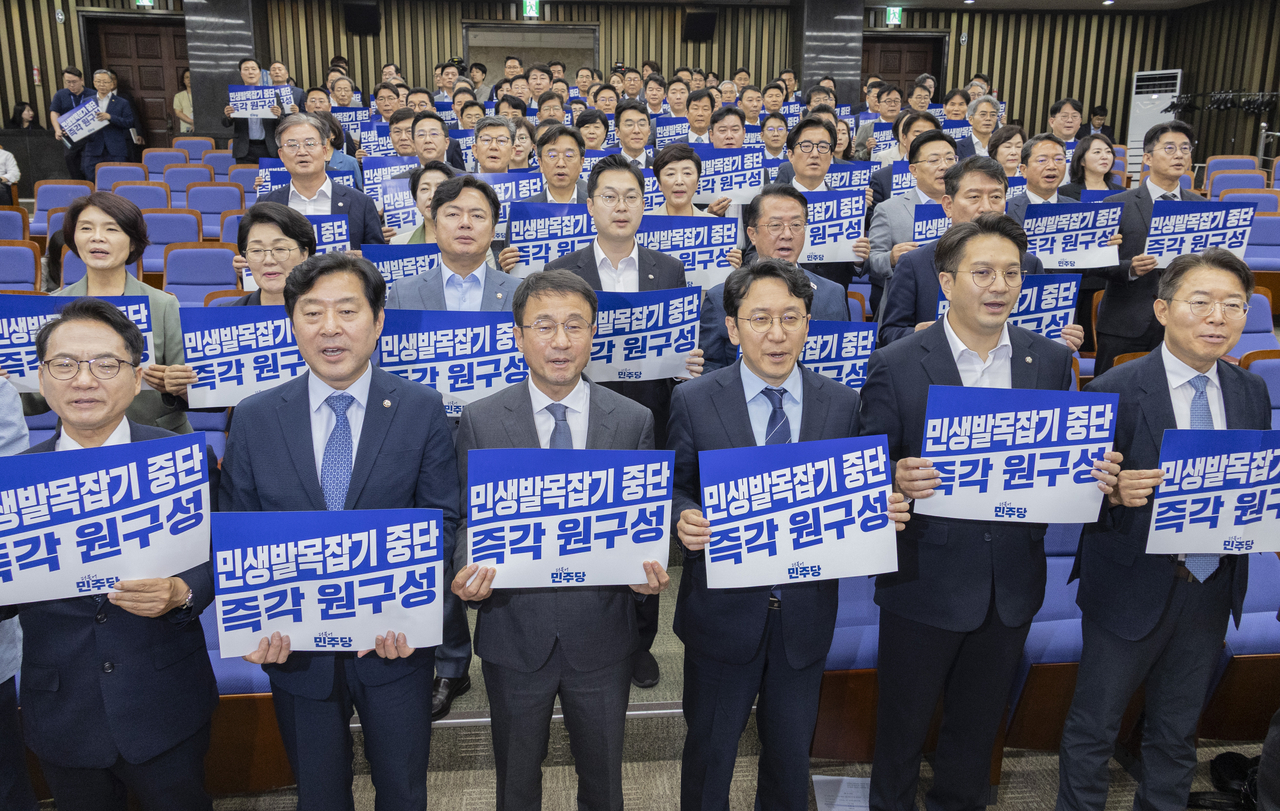
The Constitutional Court has dismissed a petition filed by the People Power Party over the Democratic Party of Korea's unilateral appointment of 11 standing committee chairs during the organization of the first half of the 22nd National Assembly, closing the case roughly two years and five months after it was filed.
The court dismissed the petition Thursday in a unanimous ruling by all justices. People Power Party lawmakers had filed the competence dispute petition in June 2024 against National Assembly Speaker Woo Won-shik and Assembly Secretary-General Baek Jae-hyun.
The court said the case no longer warranted adjudication because the rights violation had already ended: the remaining seven committee chairs allotted to the People Power Party had since been filled, and the terms of the first-half standing committee members had expired.
"The standing committee chairs and members who were appointed have already completed their terms, and new committee members and chairs were subsequently appointed and elected by July 30 this year, completing the organization of the second half of the 22nd National Assembly," the court said. "The state of rights infringement caused by Speaker Woo's acts of appointing committee members and declaring the election of committee chairs has ended."
The court also found that the case did not meet the exceptional standard requiring constitutional clarification. "Given the variable nature of political circumstances, even if a situation were to arise again in which the Assembly speaker appoints standing committee members by executive authority, the background and facts of each specific case would differ, and it cannot be assumed that the same judgment would apply," the court said.
The court added that the composition of standing committees is a prerequisite for the Assembly to carry out its functions in a democratic and efficient manner, and that disputes over such matters should, as much as possible, be resolved autonomously within the Assembly through dialogue, debate, persuasion and consensus.
newday@heraldcorp.com