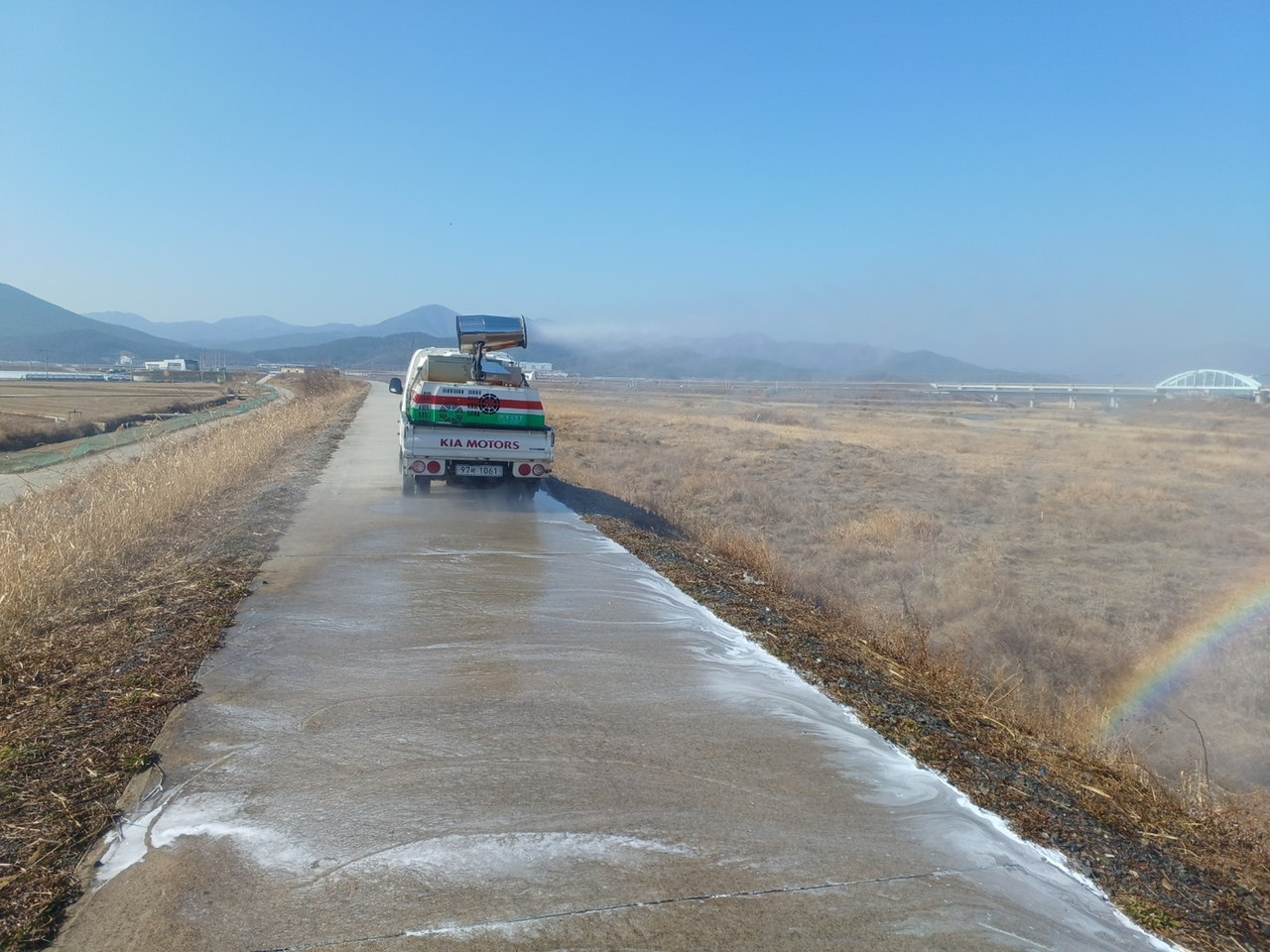
North Gyeongsang Province is stepping up biosecurity measures to prevent the spread of highly pathogenic avian influenza as migratory birds begin arriving in earnest for the winter season.
Highly pathogenic avian influenza (H5N9) was confirmed Nov. 15 in ornamental geese at a private bird education facility in Gyeongju. Four days later, H5-type antigens were detected in wild bird droppings collected along the Hyeongsan River in Gyeongju.
In response, the province installed barrier cordons and on-site information boards around the Hyeongsan River and deployed dedicated disinfection vehicles to the area.
The province also assigned 140 dedicated civil servants to poultry farms to carry out disease prevention outreach, on-site inspections and surveillance. A pre-registration system requiring farmers to notify authorities seven days before introducing new livestock has been put in place, and advance inspections of farm biosecurity and disinfection facilities have been strengthened.
All poultry farms are now required to undergo testing before shipment, along with checks on egg-laying and mortality rates and detailed inspections. Laying hens, breeding ducks, quail and breeding chickens will be subject to detailed inspections every two weeks.
North Gyeongsang Province is home to four large-scale laying hen complexes — the most of any province in the country — and authorities say biosecurity at each complex will receive focused attention.
Dedicated egg-transport vehicles have been designated and checkpoints established at the Sobaek and Dongwon complexes in Yeongju, the Dochon complex in Bonghwa and the Jicheon complex in Chilgok.
Access by livestock vehicles and the general public has been restricted at six migratory bird habitats: two sites along the Geumho River in Gyeongsan, two along the Hyeongsan River in Gyeongju, and two along the Haebyeong and Jisan streams in Gumi.
"Livestock farmers must not enter migratory bird habitats, and must strictly follow basic biosecurity rules — controlling outside vehicles and personnel, disinfecting their farms and wearing dedicated boots before entering livestock facilities," said Park Chan-guk, director of the province's Agriculture, Livestock and Retail Bureau.
kbj7653@heraldcorp.com