Samsung's board visits RX unit to verify development progress
Galaxy foldable hinge technology, flexible display incorporated into design
Precise hand manipulation prioritized for factory deployment
First milestone reached just six months after RX unit's launch
Humanoid developed entirely in-house, from components to AI
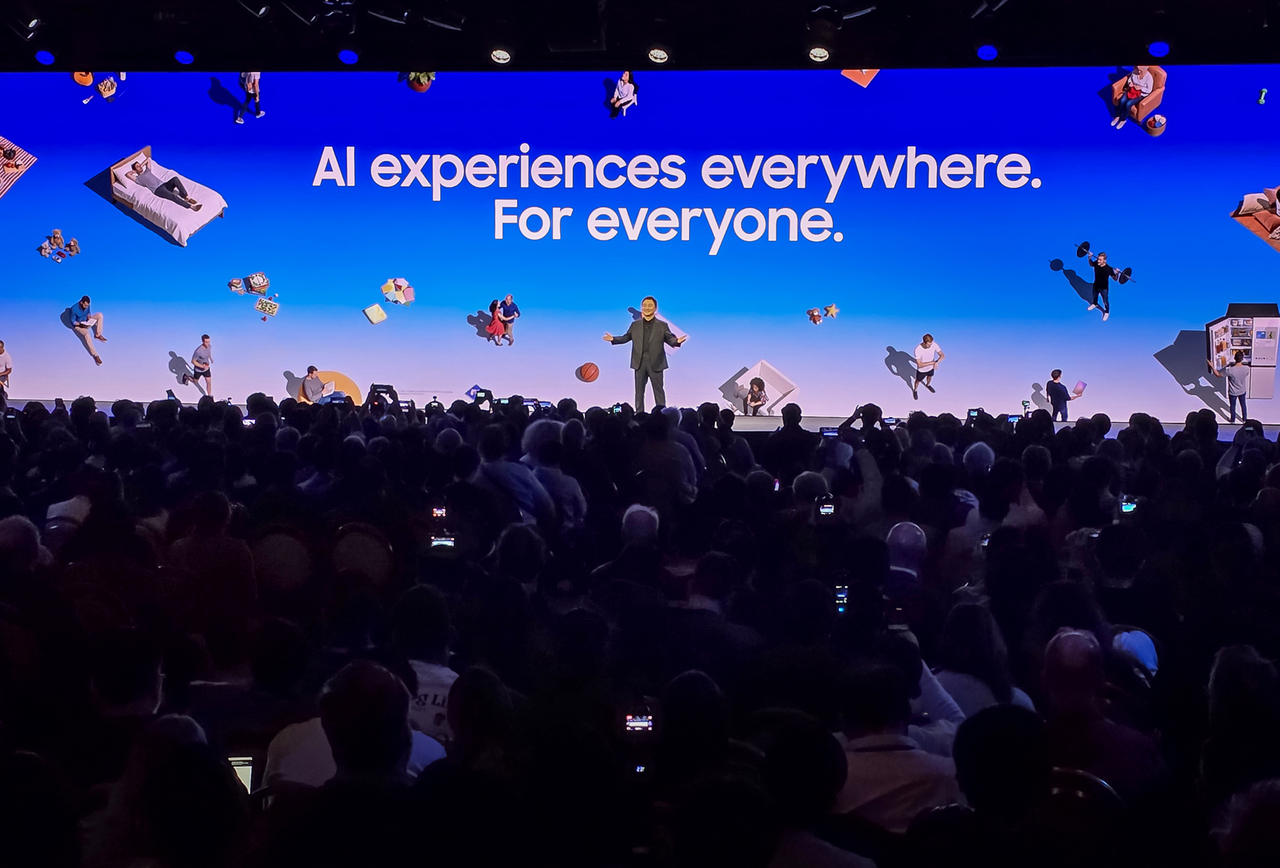
Samsung Electronics will unveil its in-house developed humanoid robot for the first time at CES 2027, set to be held in Las Vegas in January.
The debut marks the first public result from the Robotics Experience (RX) Business Unit, launched in July under the direct oversight of Device Experience (DX) Division President and CEO Roh Tae-moon. Industry observers say the milestone, reached just six months after the unit's formation, signals that Samsung's robotics push is set to accelerate.
According to industry sources, Samsung Electronics' board of directors visited the Seoul R&D Campus in Umyeon-dong, Seoul, on Thursday to observe a humanoid demonstration and review development progress at the RX unit. The CES 2027 unveiling was reportedly finalized following that board review.
Board Chairman Shin Je-yoon, along with directors Kim Jun-sung, Heo Eun-nyeong, Cho Hye-kyung and Lee Hyeok-jae, as well as Roh — who concurrently serves as head of the RX unit — and DX Division Chief Technology Officer Yoon Jang-hyun, attended the roughly 90-minute session, during which they received a briefing on the robotics business and watched the humanoid demonstration.
The demonstration focused on full-body control and precise manipulation — picking up and handling objects with the robot's arms and hands. Independent director Cho Hye-kyung, a professor in the AI Applications Department at Hansung University and a former president of the Korea Robotics Society, closely scrutinized Samsung's robotics strategy, asking at each stage of the demonstration what set Samsung's approach apart from competitors.
Samsung Electronics has placed greater emphasis on refining precise hand manipulation — the kind of dexterity actually needed on factory floors — over flashy movements. The company's robotics business is expected to remain focused on practical, work-ready capabilities that manufacturing environments demand.
The CES 2027 reveal is also expected to bring a more concrete timeline for deploying humanoid robots in Samsung's own production facilities.
Samsung Electronics had previously announced plans to convert its domestic and overseas production factories into "AI autonomous factories" by 2030 and to introduce humanoid manufacturing robots across all stages of production in a phased rollout.
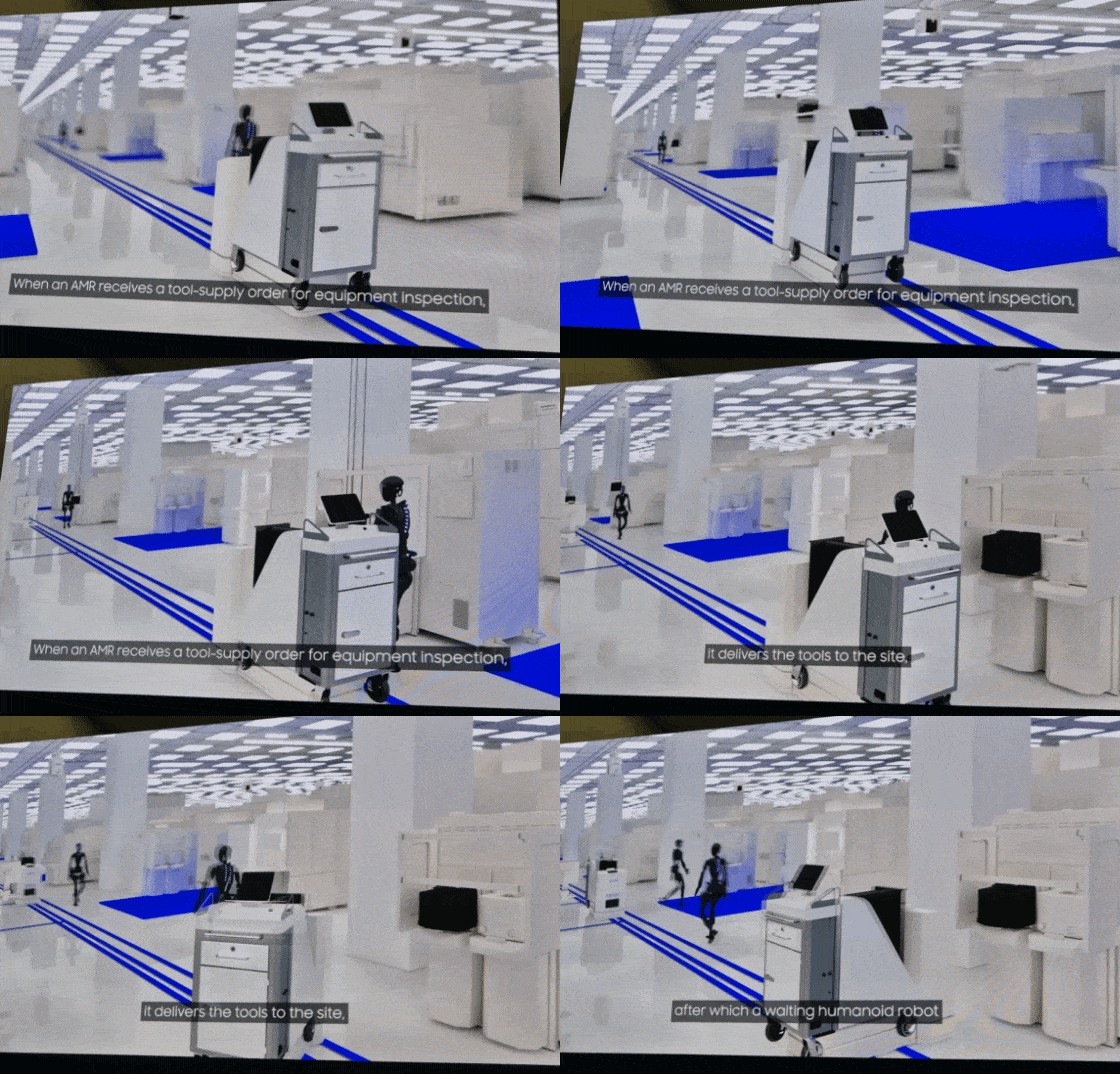
In March, Song Yong-ho, executive vice president and head of the AI Center within Samsung Electronics' Device Solutions (DS) Division, presented a vision of Samsung's next-generation autonomous semiconductor fabrication plant — featuring both autonomous mobile robots and humanoid robots — via video at Nvidia GTC 2026, held at the San Jose Convention Center in California.
Development of the robot's hands drew on ultra-precision technology accumulated through years of mass-producing hinges for Galaxy foldable smartphones. Each finger joint is directly connected to its own actuator, enabling hand movements as flexible as a human's — including in-hand rotation and re-gripping of objects.
The face incorporates a flexible display from Samsung Display — the same technology used in foldable phones — designed to convey the robot's status and facilitate interaction with people.
Securing training data and conducting on-site validation, both critical to commercializing the humanoid, will take place at Samsung Electronics' own production facilities around the world.
With the entire development pipeline — from component design and manufacturing to AI development, data collection and field deployment — handled within the group, the pace of development is expected to pick up further.
Specific specifications, performance details and the name of the humanoid to be shown at CES 2027 have not yet been disclosed, but the reveal is expected to accelerate Samsung Electronics' investment in research infrastructure and recruitment of specialists both at home and abroad.
In an executive reshuffle on Tuesday, Samsung Electronics also promoted Hyeong Seung-yong, head of the Robotics Systems Group under the RX unit, and Gu Dong-han, head of the Physical AI Lab, each to the rank of senior vice president, reinforcing the company's commitment to its robotics business. Hyeong is regarded as a hardware development specialist, while Gu is recognized as an expert in robotics AI and control systems.
The RX unit, which consolidated Samsung Electronics' robotics personnel and teams under one roof, is based primarily at the Seoul R&D Campus in Umyeon-dong and oversees everything from long- and medium-term strategy to core technology development and commercialization. In Gumi, North Gyeongsang Province, the company is building a data factory for acquiring robot training data and a manufacturing pilot line.
Samsung also maintains global research bases in the United States, China and Japan to tap into local technology ecosystems and attract talent.
joze@heraldcorp.com