
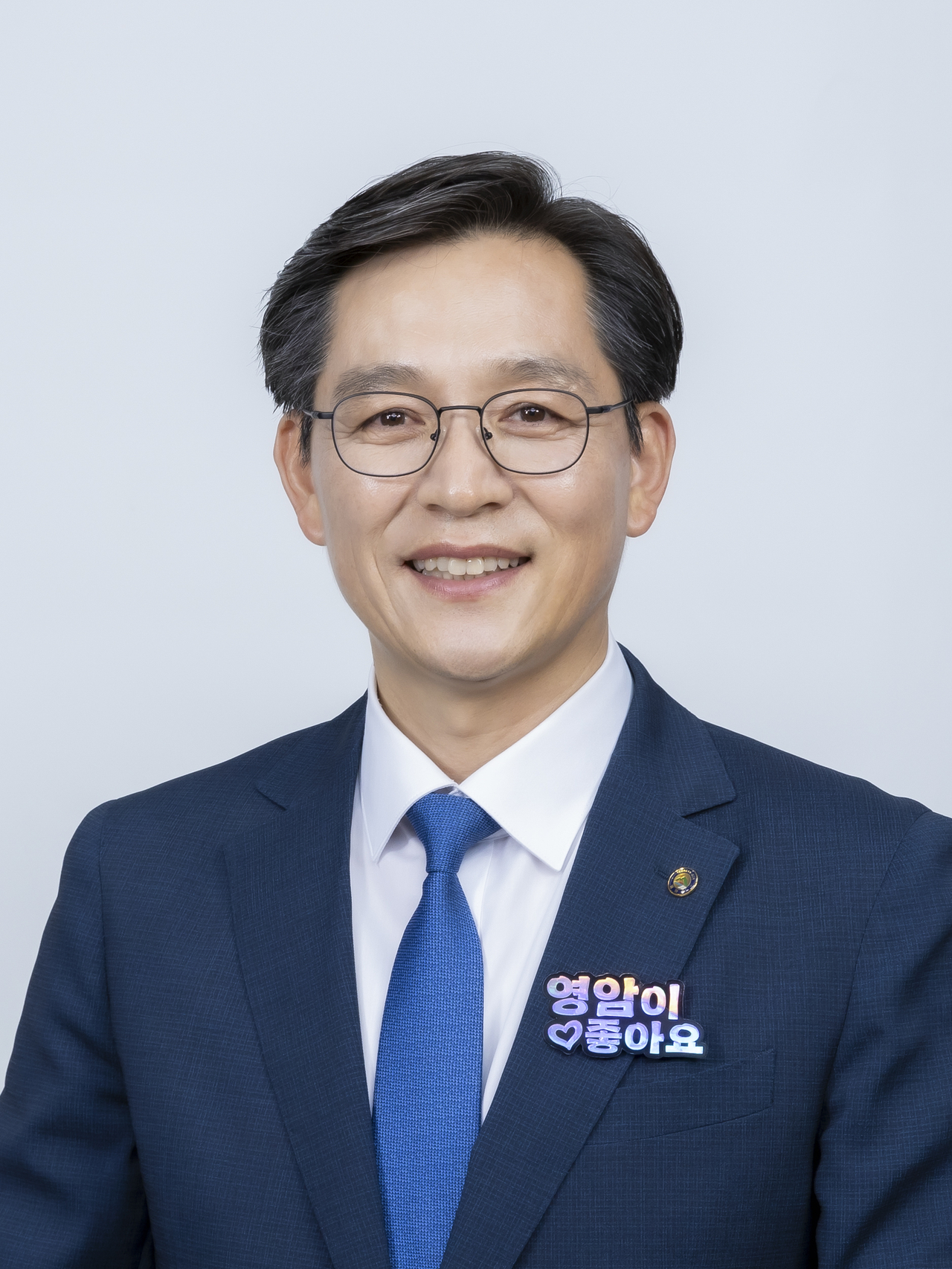
Woo Seung-hee, Yeongam-gun County Chief, Jeonnam-Gwangju Integrated Special City
The western region of the Jeonnam-Gwangju Integrated Special City is emerging as a new growth engine for South Korea's future energy industry. A vast industrial ecosystem linking renewable energy, AI data centers and eco-friendly shipbuilding is rapidly taking shape along the South Sea coastal belt connecting Yeongam, Haenam and Mokpo.
Yet the region still lacks a dedicated MICE (meetings, incentives, conventions and exhibitions) infrastructure hub capable of showcasing this dynamic industrial landscape to the world and bringing together companies, technology and talent in one place.
That is precisely why Nabul-do in Samho-eup, Yeongam-gun, is the right location for the Jeonnam-Gwangju K-Energy Park Curve — an energy park and job hub.
Three key competitive advantages set Yeongam apart.
First, Yeongam offers an irreplaceable locational edge: a convention venue and active industrial sites sit within a 10-minute radius of each other. The Daebul National Industrial Complex, HD Hyundai Samho and the Solaseado enterprise city are all clustered within 10 kilometers of the proposed site.
The layout allows a seamless same-day itinerary — a forum in a 2,000-seat international conference hall in the morning, followed by an afternoon tour of RE100 transition facilities and eco-friendly shipbuilding yards. As international events face mounting pressure to cut carbon emissions, this kind of integrated experience is something only Yeongam can offer.
Second, the project aims to create a year-round operational platform that breaks free from the chronic deficit-and-idle-space trap plaguing conventional regional convention centers. Rather than relying solely on rental income, the building itself is designed as a zero-energy demonstration space using building-integrated photovoltaics, as well as a permanent base for industry-academia-research collaboration and workforce development.
The education function — retraining skilled shipbuilding workers as offshore wind and other renewable energy specialists, and connecting them to jobs through partnerships with local universities — will be a core driver of long-term sustainability for the western region's industries.
Third, the K-Energy Park Curve will anchor a super-regional cooperative MICE belt through which nine cities and counties in the Jeonnam-Gwangju western region can share the benefits without duplicating efforts. Nabul-do is a site owned entirely by the Korea Rural Community Corporation, making a timely opening by 2030 feasible.
With Nabul-do serving as the hub for plenary sessions and industrial tours, a western-region MICE operations council led by the special city can channel accommodation and tourism demand across the entire area.
The structure envisions participants arriving through Muan Airport or Mokpo Port and attending meetings in Yeongam. They then fan out on one- or two-night itineraries taking in the southern cultural and culinary offerings of Gangjin and Haenam, the island and sea scenery of Jindo and Sinan, and the marine and forest wellness programs of Wando and Jangheung.
The K-Energy Park Curve is not simply about adding a convention center. It is about building a virtuous cycle of energy production, advanced manufacturing and talent development — and creating a future-oriented industrial platform through which nine cities and counties of Jeonnam-Gwangju can thrive together along a single connected corridor.
Building the Jeonnam-Gwangju K-Energy Park Curve is an imperative of our time — one that can no longer be deferred if the integrated special city is to achieve balanced development and a great leap forward for its western region.
sij@heraldcorp.com




