Computex 2026 closes Friday after four-day run; Taiwan cements its role as key AI-era supplier and deepens ties with Nvidia; Jensen Huang visits Korea to strengthen alliances with local firms
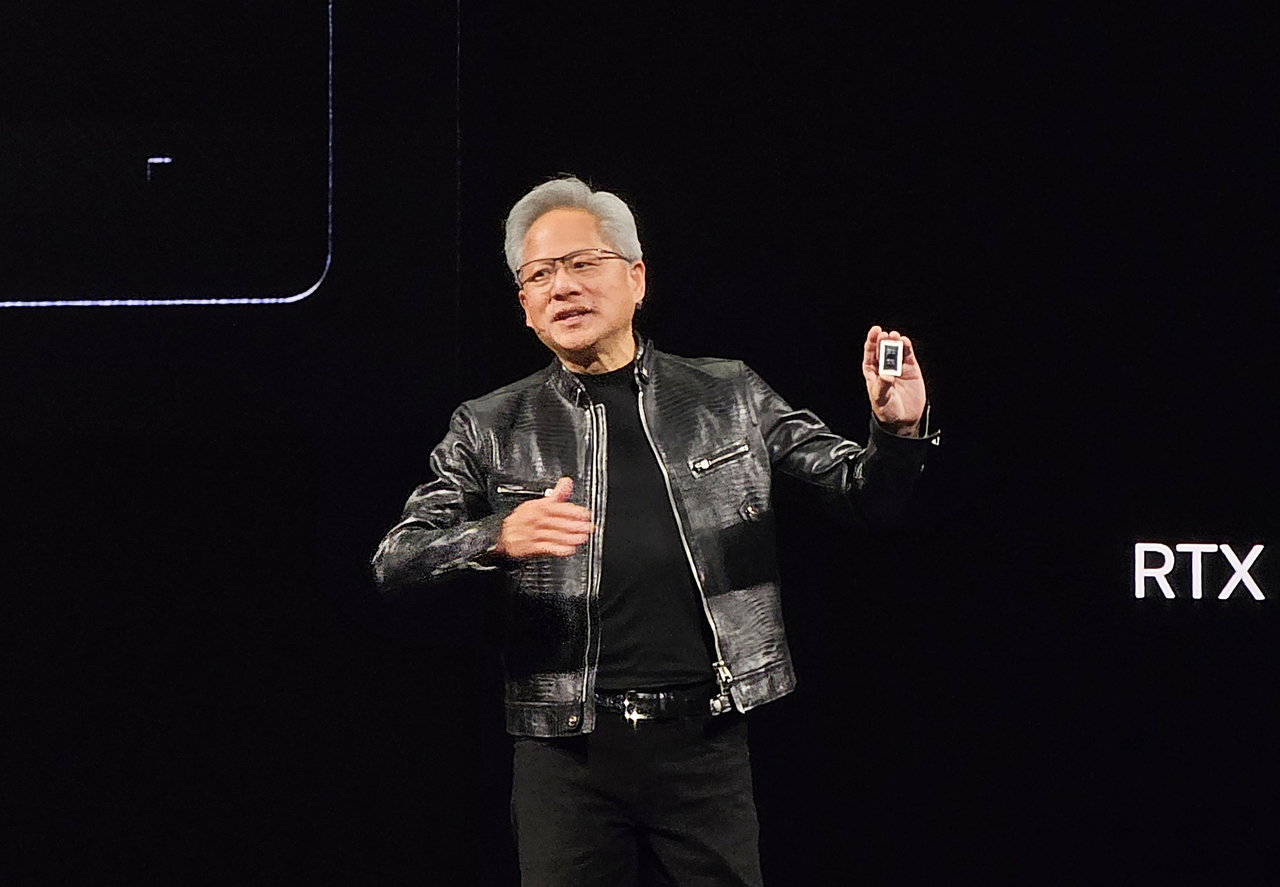
Computex 2026, Asia's largest information technology trade show, closed Friday after a four-day run, having opened Tuesday in Taipei.
This year's edition ran concurrently with GTC 2026 Taipei, Nvidia's showcase for its latest technologies. Together, the two events underscored Taiwan's growing stature as a critical supplier in the AI era and the deepening partnership between Nvidia and the island's technology industry.
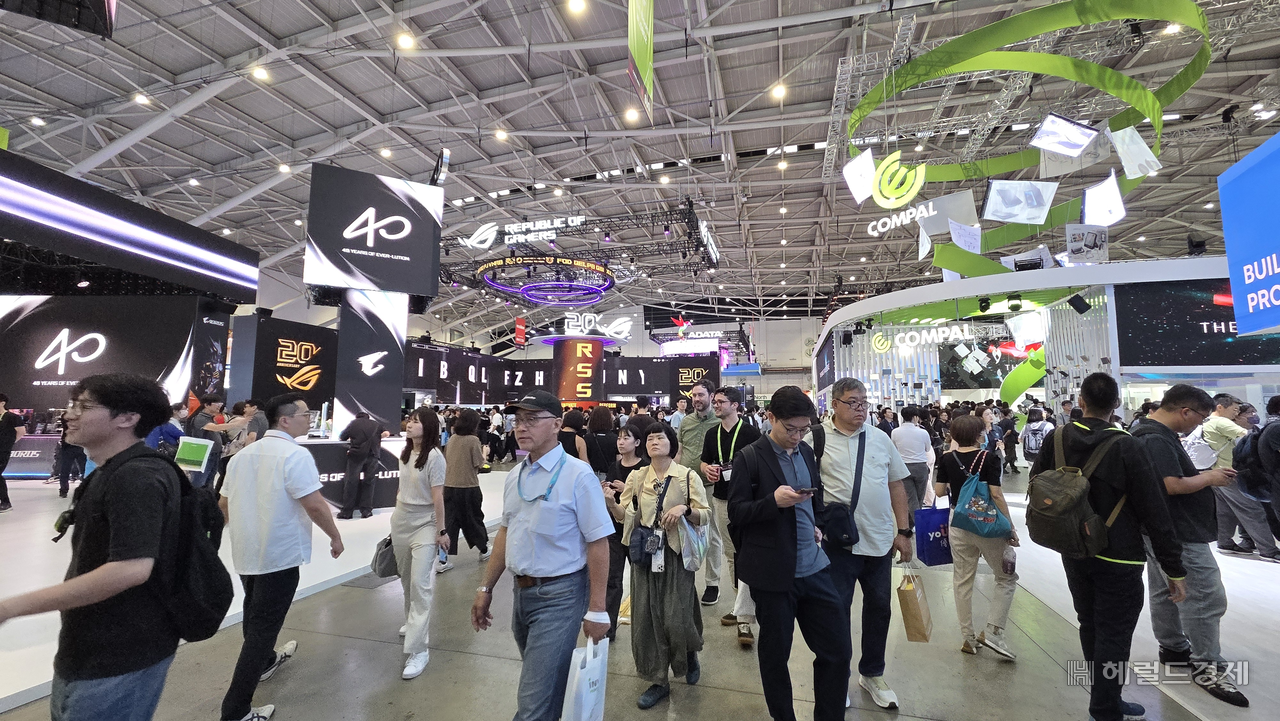
AI dominated every corner of Computex 2026, which ran Tuesday through Friday at the Taipei Nangang Exhibition Center. With Nvidia at the center, the show floor was packed with the core technologies powering the AI industry — from memory chips and AI servers to data centers, AI factories and robots. This year's event drew roughly 1,500 companies from more than 30 countries, filling over 6,000 booths, making it the largest edition in the show's history.
Computex began in 1981 as a platform for Taiwan's computer manufacturing and assembly companies to display components, but it has grown considerably in recent years on the strength of Nvidia CEO Jensen Huang, Nvidia itself and TSMC. "Taiwan is no longer just about consumer electronics — it is expanding its influence at the very frontier of the AI ecosystem," a Taiwanese IT industry official said on the show floor.
'Nvidia partner' signs fill the show floor
Jensen Huang was the undisputed star of Computex 2026. He kicked off proceedings before the show opened, delivering the GTC Taipei keynote on Monday, then invited MediaTek CEO Rick Tsai to join him at a global press conference on Tuesday to put their close partnership on full display.
On Monday and Tuesday, Huang toured the Nangang exhibition halls to visit booths of major companies participating in Computex, drawing chants of "Jensen! Jensen!" from fans. He stopped at the booths of key Taiwanese partners — fabless chip designer MediaTek, electronics manufacturers ASUS and Pegatron, and laptop and motherboard maker MSI — leaving his autograph at each.
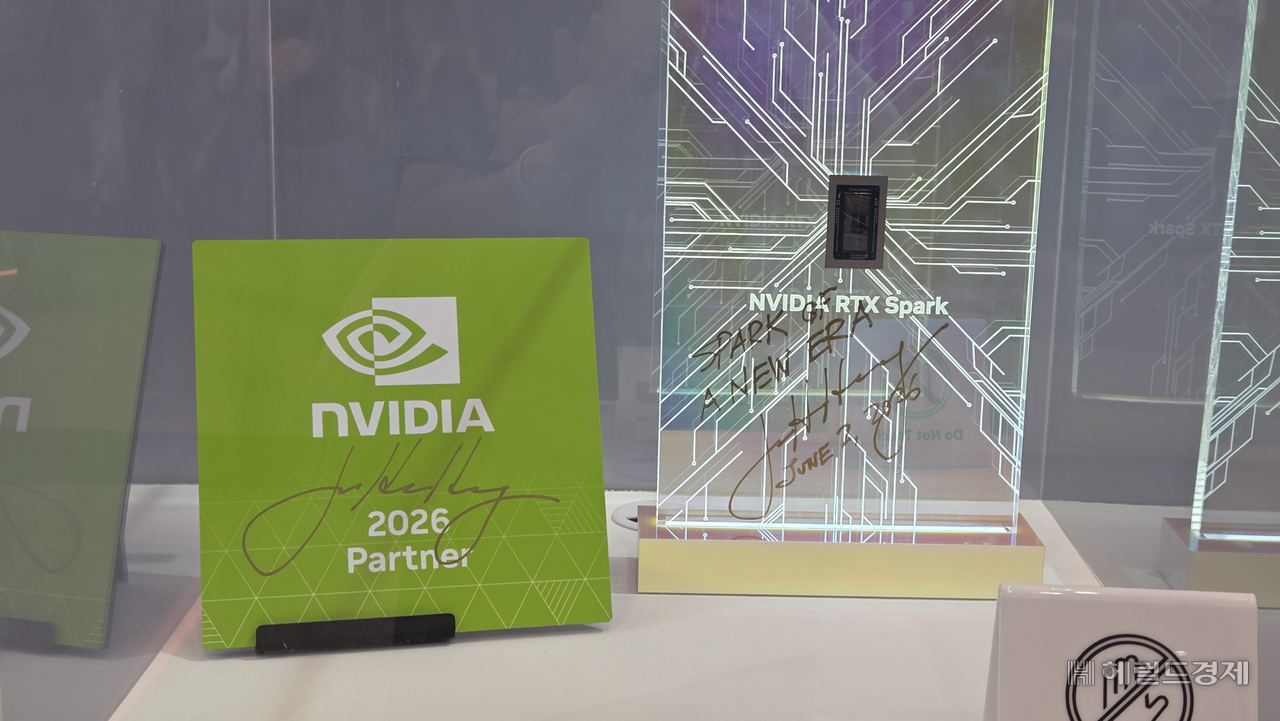
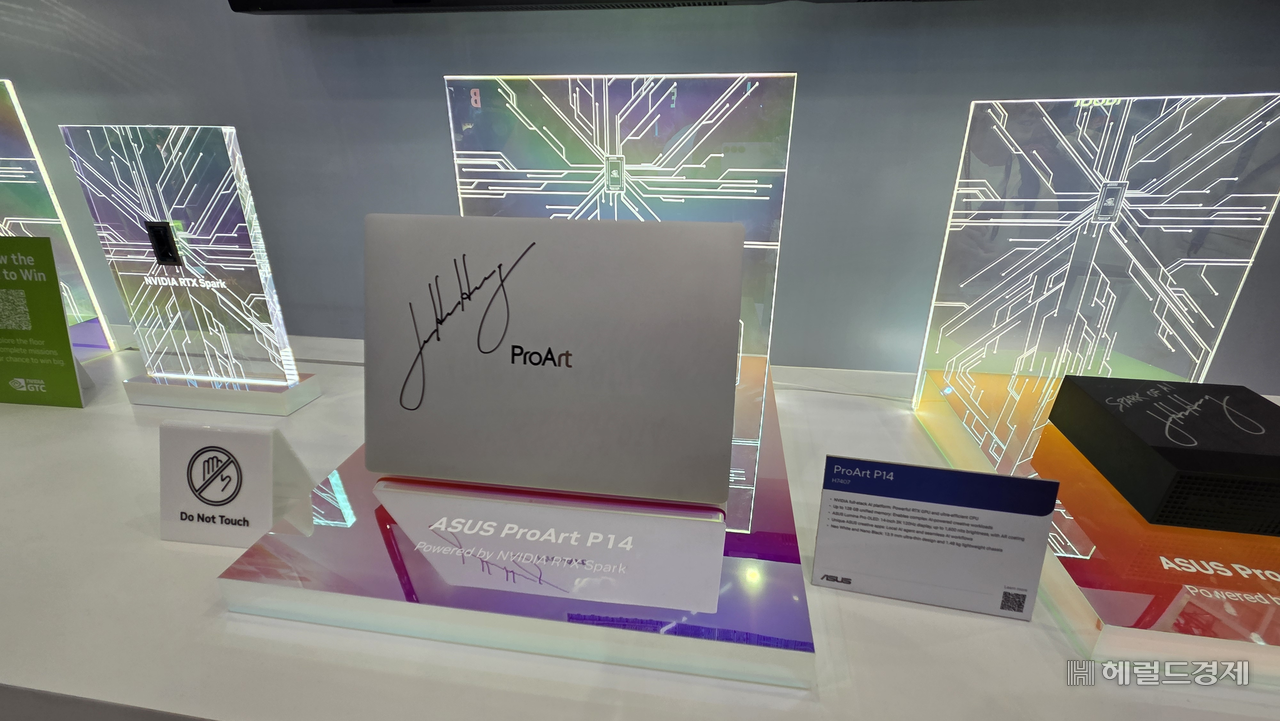
At the show, booths without a green "Nvidia Partner" sign were harder to find than those with one. Nvidia, which announced its entry into the AI PC market at GTC, unveiled the RTX Spark chip — a combined CPU and GPU. MediaTek, which co-designed the chip, placed a signed version bearing Huang's inscription "Spark of a new era" at the center of its booth. ASUS similarly displayed the chip inside its ProArt PC series alongside Huang's autograph reading "Spark of AI."
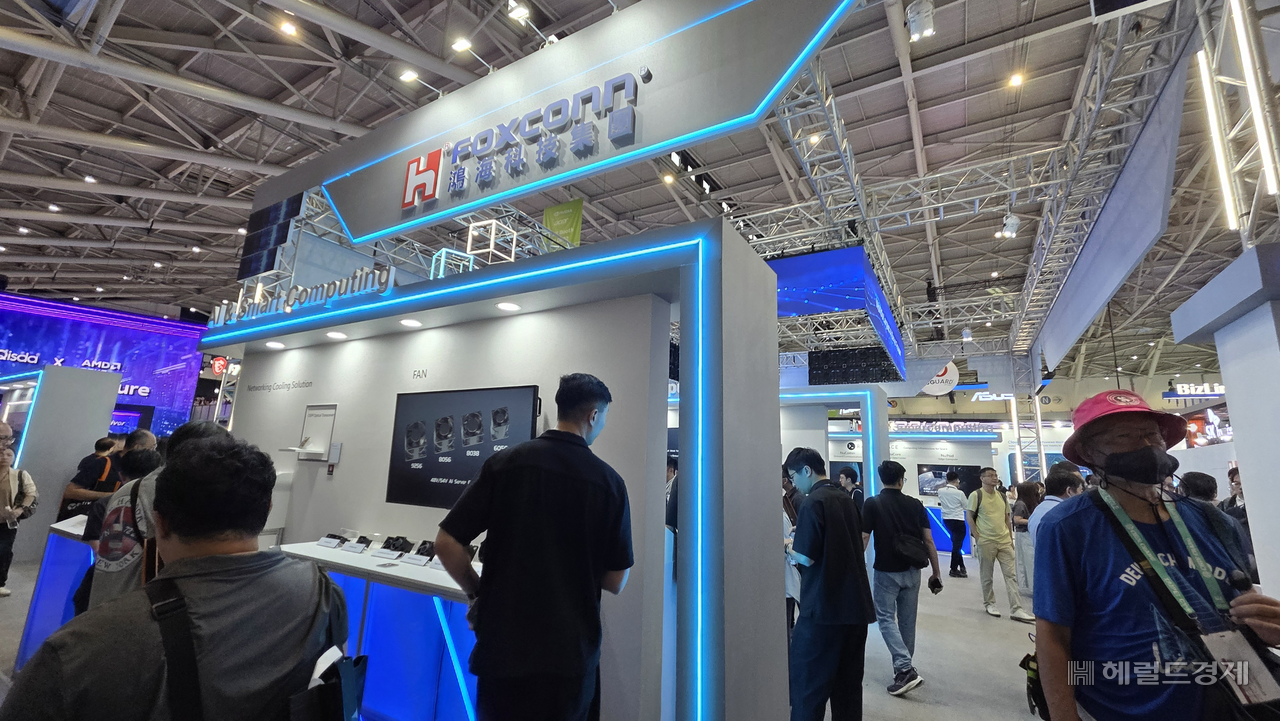
Taiwan's ambition to become a central pillar of the AI era — with Nvidia as its backer — was on full display. Foxconn, Taiwan's contract electronics manufacturing giant, exhibited the full range of equipment needed to build AI data centers: AI servers, power and communications cables, server racks and cooling systems. The display made clear the company's strategy to evolve from a simple manufacturer into a provider of AI factory infrastructure. Foxconn also unveiled an industrial humanoid robot under its "Embodied AI" initiative, signaling confidence in its ability to build fully automated "dark factories."
The backbone of Taiwan's semiconductor ecosystem is Huang himself. Born in Taipei, the CEO driving the AI era has effectively helped create a "silicon shield" by making Taiwan an indispensable partner for the United States. Since Chiang Kai-shek's Nationalist government retreated to Taiwan in the late 1940s following defeat in the Chinese Civil War, Beijing has kept a watchful eye on the island — making American support critical for Taipei.
"Without Jensen Huang, Taiwan could find itself in a very dangerous situation very quickly," one Computex attendee said. "He is an incredibly important figure for Taiwan — a legendary one." The phenomenon has even spawned a new word: "Jensanity," a portmanteau of Jensen and insanity describing the fervor surrounding him.
Samsung, SK Hynix hailed as true drivers of the AI age
![Nvidia CEO Jensen Huang visits the SK Hynix booth on Tuesday, the opening day of Computex 2026, and signs an HBM4E (seventh-generation high-bandwidth memory) wafer and a SOCAMM2 module. On the wafer, he wrote: "Please Make More." [Provided by SK Hynix]](https://wimg.heraldcorp.com/news/cms/2026/06/05/news-p.v1.20260605.b88361b5267146cc8045e7cec64545fc_P1.png)
The booths of Samsung Electronics and SK Hynix — widely regarded as the true driving forces of the AI era — also drew large crowds. On Tuesday, the opening day of Computex, Huang visited the SK Hynix booth and signed an HBM4E (seventh-generation high-bandwidth memory) wafer and a SOCAMM2 module. On the wafer, he wrote: "Please Make More."
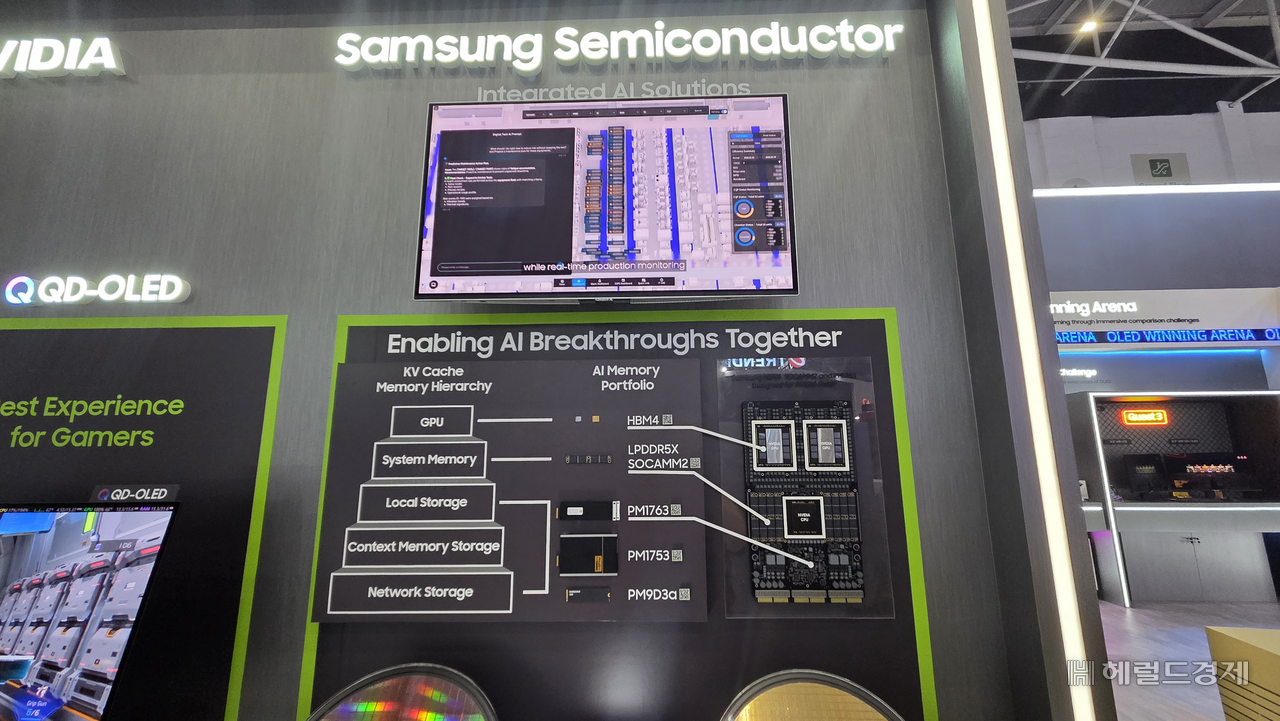
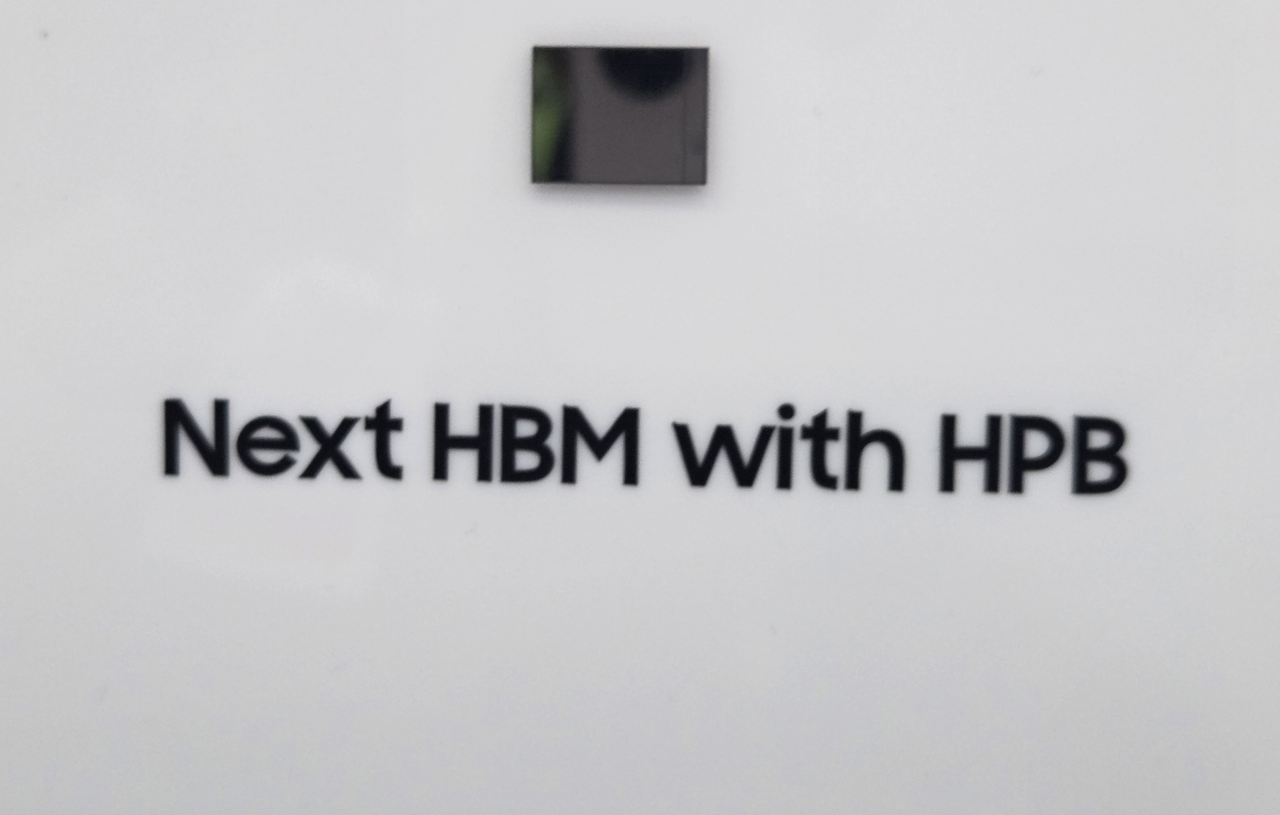
Samsung Electronics unveiled a physical mockup of its next-generation HBM5, the eighth-generation high-bandwidth memory. A mockup of Nvidia's Vera Rubin GPU — which is slated to use Samsung memory — was displayed alongside it. Samsung Electronics plans to supply the chip with HBM4 and a SOCAMM2 module based on LPDDR5X (low-power double data rate 5X) technology.
![Nvidia CEO Jensen Huang autographs a 14-inch OLED laptop panel at the Samsung Display booth at the Nangang Exhibition Center in Taipei, Taiwan. [Provided by Samsung Display]](https://wimg.heraldcorp.com/news/cms/2026/06/05/news-p.v1.20260605.09f62b1ecd48446f91b03a724ea1b549_P1.png)
The Samsung Display booth, which featured a joint exhibition space with Nvidia, drew visitors with a 14-inch OLED laptop panel bearing Huang's autograph. Attending Computex for the second consecutive year, Samsung Display had operated a private booth for clients last year, but this year it opened a public OLED and QD-OLED display experience zone together with Nvidia for the first time, drawing in general attendees.
Huang arrived in South Korea on Friday, meeting with the heads of major Korean conglomerates. He joined SK Corp Chairman Chey Tae-won, LG Corp Chairman Koo Kwang-mo and Naver Chairman Lee Hae-jin for an evening dinner of samgyeopsal, a Korean grilled pork belly dish, and soju.
On Sunday, he is scheduled to meet with NC Soft CEO Kim Taek-jin and throw the ceremonial first pitch at a Doosan Bears home game. On Monday, he will visit LG Group's headquarters in Yeouido, Seoul, for meetings with Chairman Koo and executives from LG Electronics, LG CNS and other affiliates. He also plans to visit Hyundai Motor's headquarters and Naver's second headquarters, "1784," as he continues to build alliances with Korean companies.
![[영상] 한국땅 밟은 젠슨 황 “韓 위해 많은 비즈니스 가져와…몇 가지 깜짝 발표 있을 것”](https://wimg.heraldcorp.com/news/cms/2026/06/05/news-p.v1.20260605.6d753f92097f45559e3d450c3d1b5dcc_T1.jpg)
go@heraldcorp.com