
Budget rises 8.12% from this year's base; social welfare spending up 77.1 billion won
District to focus investment on economy, jobs, urban infrastructure, education, culture and tailored care
Support for 58 reconstruction and redevelopment projects; new 1 billion won youth startup fund
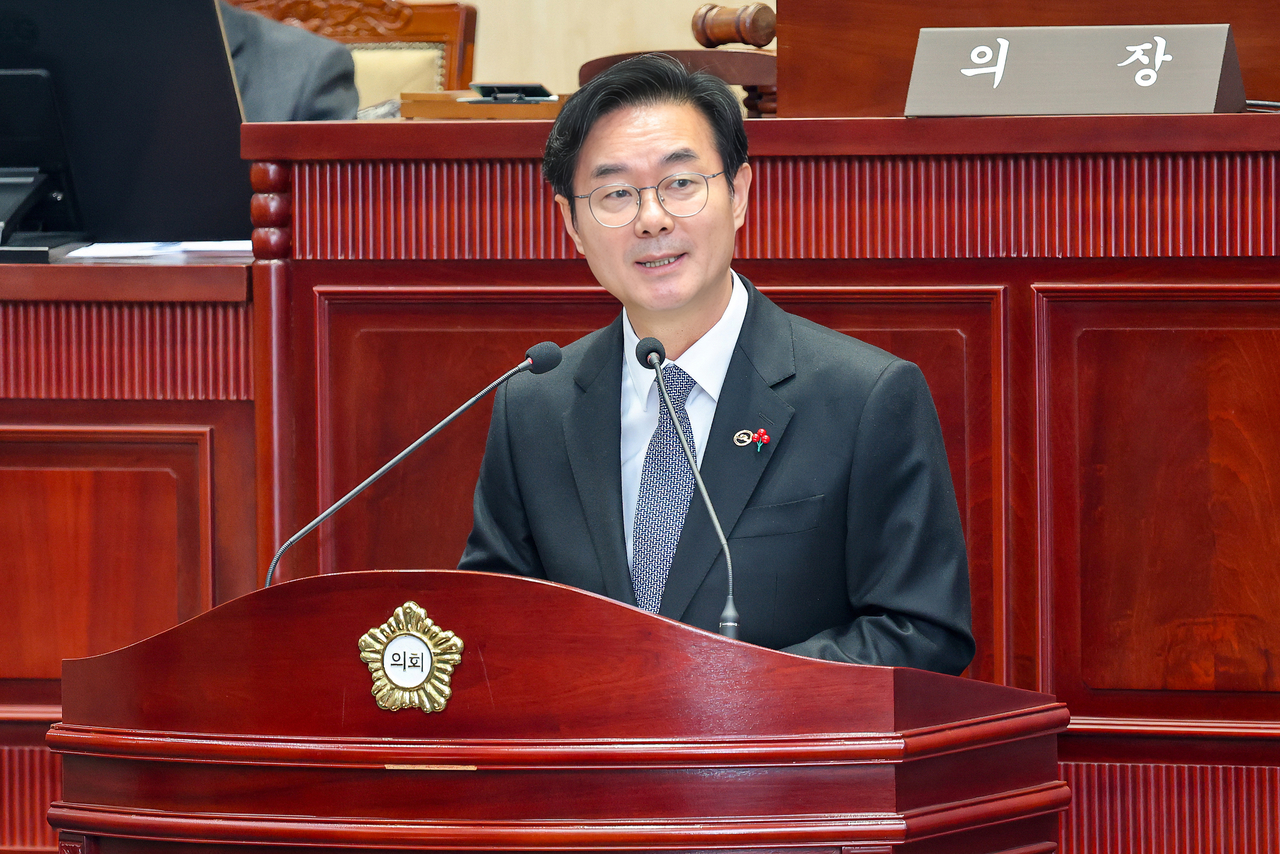
Dongdaemun-gu in Seoul has crossed the 1 trillion won ($745 million) threshold in its base budget for the first time.
The district submitted a 2027 budget proposal to the district council totaling 1.06 trillion won — comprising 1.04 trillion won in general accounts and 17.2 billion won in special accounts. The figure represents an 8.12 percent increase from this year's base budget.
General account spending rose 87.5 billion won from this year, while special account spending fell 7.7 billion won. The primary driver of the increase was social welfare expenditure, which grew by 77.1 billion won.
The district designated 2027 — the first full year under the ninth elected administration — as "the starting point of sweeping transformation and a great leap forward," concentrating spending on urban infrastructure, the economy and jobs, and tailored welfare services. Officials said the budget prioritizes campaign pledges and essential urban development infrastructure while cutting projects deemed unnecessary or non-urgent during the drafting process.
To stimulate the local economy, the district will establish a commercial district revitalization task force and step up support for neighborhood shopping streets and traditional markets. Plans include modernizing traditional market management, upgrading aging facilities, overhauling delivery systems and strengthening the operation of a small-business support center.
Some 50 million won has been set aside for creating a Korean herbal medicine street linking Cheongnyangni traditional market and Seoul Yangnyeongsi, along with research into revitalizing the herbal medicine industry. The district will allocate 1.64 billion won for fees and related costs tied to issuing 20 billion won worth of Dongdaemun-gu local gift certificates, operate a 10 billion won fund for small-business loans, and invest 420 million won in eco-friendly produce packages for pregnant residents.
In employment, the budget includes 80 million won to support locally tailored youth startup shops, 210 million won for a youth job-support package, 300 million won for youth internships and job-skills training, and 230 million won to operate a comprehensive workers' support center. A new 1 billion won youth startup fund will also be established.
The district is also accelerating residential environment improvements and urban renewal. It will form a rapid urban renewal task force to support 58 reconstruction and redevelopment projects across the district, reviewing causes of delays in each project and providing backing through consultations with relevant agencies and expert advice.
For green space and living environment improvements, the budget allocates 30 million won to draw up a master plan for a premium walking trail, 1.3 billion won for street tree and green belt maintenance, 1.9 billion won for green space upkeep along the Jungnangcheon, Jeongneungcheon and Seongbukcheon streams, and 500 million won to build a water play park at a children's park in Imun 1-dong. Another 3.8 billion won will go toward constructing underground parking facilities at Gandemae Park and behind the district office.
In education and culture, 17 billion won in education subsidies will support school space innovation and academic improvement. The district will also continue lifelong education and mid-career support programs through 640 million won for an education support center and 840 million won for the district-run 50-Plus Center, which helps middle-aged residents plan second careers and find reemployment.
The district will also pursue construction of the Seoul Metropolitan Dongdaemun Library and develop a cultural complex belt linking an antique art market and the Dapsimni Film and Media Center. Additional allocations include 50 million won for a traveling cultural event program, 230 million won for tourism promotion, and 660 million won to build a small library inside a multipurpose community building in Imun 2-dong.
In welfare, the district will restructure its organization to establish a loneliness care division and strengthen support for single-person households and elderly residents living alone. About 1.6 billion won has been earmarked for an integrated Dongdaemun-style care service linking healthcare, health management and daily living assistance.
Senior support programs include 2.5 billion won for meal supplies at senior centers, 50 million won for a minor home repair service, 80 million won to operate a senior campus, and 700 million won to improve facilities at the Dongbaekkkot Senior Welfare Center.
New programs in the childbirth and child-rearing category include 1.8 billion won in marriage support grants, 600 million won in basic child allowances and 4.5 billion won in newborn welcome grants. Another 3.5 billion won will be invested in expanding childcare center facilities in Imun 1-dong and Imun 2-dong.
In public health and safety, the budget covers 80 million won to operate the Imun public health clinic, 150 million won to purchase smart equipment for a smart healthcare center, 70 million won to subsidize vaccinations for premature infants, and 100 million won to cover pertussis vaccination costs for pregnant residents and their spouses.
Participatory budgeting will also be expanded. Eighteen resident-proposed projects — including a community laundry service — have been incorporated into the budget proposal. Some 950 million won has been set aside to support resident autonomy councils in all 15 dongs, funding their activities and the development and implementation of self-governance plans.
"2027 is the first year the ninth elected administration takes full responsibility for district governance, and it is a pivotal year that marks the starting point of sweeping transformation and a great leap forward for Dongdaemun-gu," District Mayor Choi Dong-min said. "We have prioritized spending on campaign pledges made to residents and essential projects such as urban development infrastructure, and we will do our utmost to ensure the 2027 budget becomes the engine of growth that opens a new future for Dongdaemun-gu."
seouldream01@heraldcorp.com




