
At least 4 perfect scorers identified in preliminary results, all declining to be named
Shift from past tradition of public interviews and school celebrations
AI cheating scandal fuels suspicion toward high scorers
Official perfect-scorer count to be announced Dec. 11
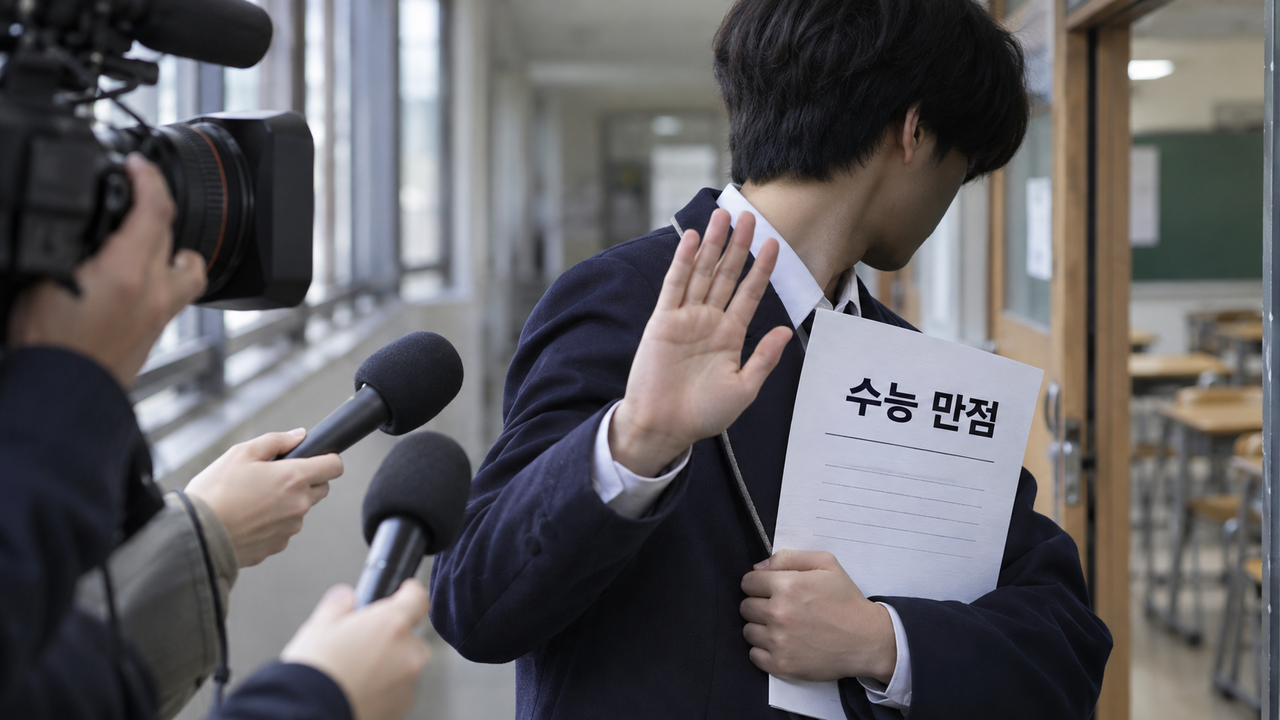
Achieving a perfect score on South Korea's college entrance exam, the College Scholastic Ability Test, has long been a cause for celebration. Students would reveal their names and faces, proudly sharing their study methods and future ambitions, while schools announced the achievement and joined in the congratulations. This year, however, a markedly different atmosphere has taken hold: even those who recorded perfect scores in preliminary grading are reluctant to come forward. As a cheating scandal involving AI-enabled smart devices has spread, high scorers fear being subjected to baseless suspicion.
According to education circles, at least four students — three current high school students and one repeat test-taker — have been identified as preliminary perfect scorers on the 2027 academic year CSAT. Perfect scorers are typically few in number and are not officially disclosed by the Korea Institute for Curriculum and Evaluation, but their identities have historically emerged through schools and the private education industry. Official perfect-scorer counts in recent years were three for the 2023 academic year, one for 2024, 11 for 2025, and five for 2026 — four current students and one graduate. The four identified this year are based on preliminary grading, and the number could change when official scores are released Dec. 11.
Perfect scorers who stepped before microphones in past years faced a wide range of questions. Standard topics included study hours, subject-by-subject learning strategies, and tips for managing health and stress. Interviewers also asked how school classes and academic support programs had helped. Seoul's Gwangnam High School produced perfect scorers two years in a row, and interviews with those students brought the school's self-directed study rooms and career-exploration program into the spotlight.
Wang Jeong-geon of Gwangnam High School, who achieved a perfect score on last year's CSAT, sat down with The Herald Business on the day scores were released and talked about study methods and future plans. Friends who met Wang that day said they had known all along the score was coming, and offered their congratulations.
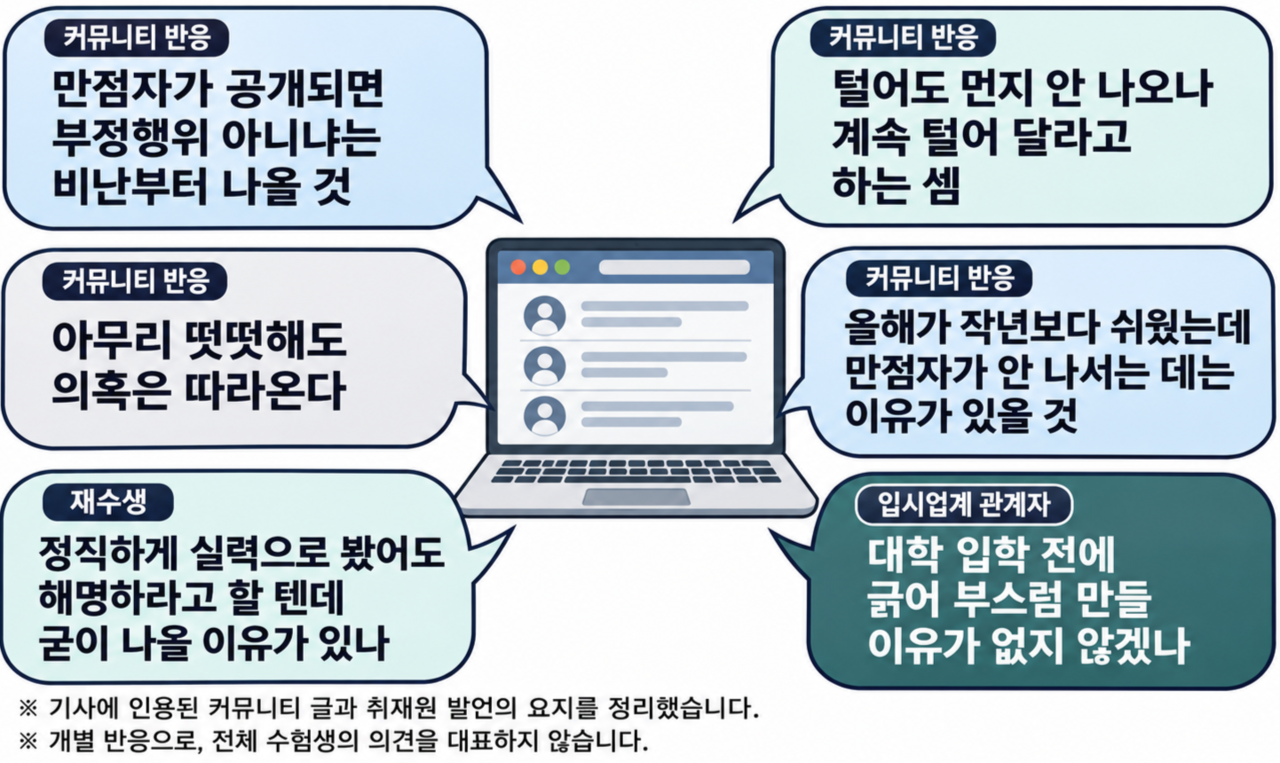
This year, however, both the perfect scorers themselves and the public's attitude toward them have changed. An AI cheating scandal that first erupted in national licensing exams — including the certified tax accountant exam — has bred widespread distrust of high scorers in general, prompting those who aced the CSAT to refuse interviews and decline to be identified.
"This year there is a pervasive sense that a perfect scorer could be suspected of cheating," a private education industry official told The Herald Business by phone. "Why would anyone want to stir up trouble before they even start university?"
A repeat test-taker who sat this year's CSAT also weighed in. "I don't think a perfect scorer has any reason to go out of their way to appear in the media or on YouTube and invite being called a 'suneung-nyangi,'" the student said. "Even if the score is completely honest, people will demand proof of that — so why bother?" The term "nyangi," loosely meaning "cat," is commonly applied to those suspected of cheating on national licensing exams.
Online communities for test-takers have been filled with similar sentiments about why there is no reason to publicize a perfect score. Posts have included comments such as "If a perfect scorer goes public, people will accuse them of cheating without any context," "It's basically declaring that you want people to keep digging until they find something," and "No matter how clean you are, the allegations will come."
The atmosphere of suspicion tied to cheating has also surfaced in a recently released video featuring incoming Seoul National University medical school students. Three SNU medical students posted a video in which they solved this year's CSAT Korean-language questions themselves, under a title framing it as a test of whether they had passed with the help of AI glasses.
According to the office of People Power Party lawmaker Kim Hee-jeong, 474 students were caught cheating on this year's CSAT — 195 more, or 69.9 percent, than the 279 caught last year. The number caught using smart devices reached 112, roughly four times the figure from the previous year.
Meanwhile, the Ministry of Education plans to extend the retention period for CSAT exam papers from the current one year to five years in order to track cheating. The ministry will also launch a pan-government task force to address cheating and plans to analyze Wi-Fi and Bluetooth signal records captured during the exam, along with tips from the public, to identify additional violations.
brunch@heraldcorp.com




