
Upgrading vaccines for those 75 and older could deny free inoculation to up to 1 million new recipients; flu rates among children aged 7–12 run nearly 8 times higher than among the elderly, yet school-age groups remain largely outside the national program; full reliance on imports raises supply concerns
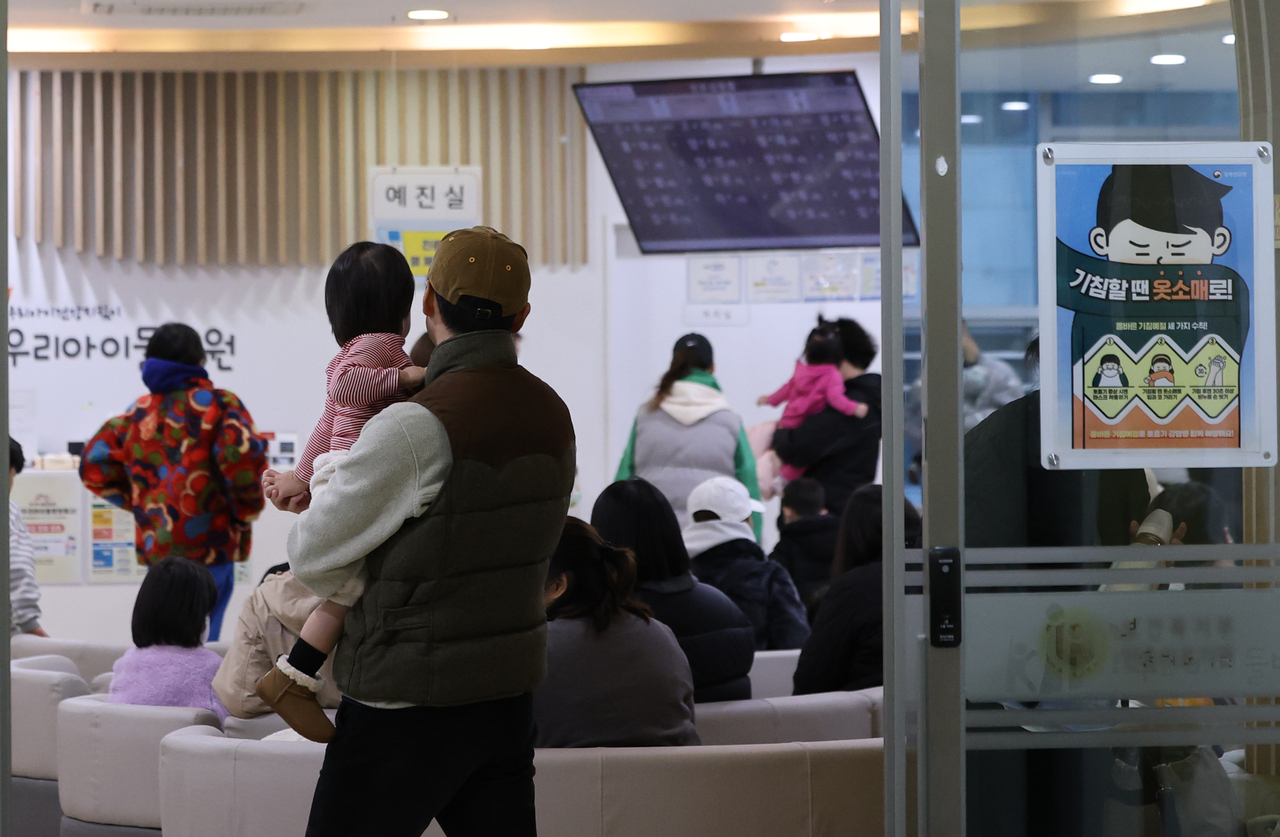
Questions are mounting over whether South Korea's limited public health budget is being directed at the right priorities, as debate intensifies over next year's national influenza immunization program, or NIP, spending plan.
Analysts argue that rather than spending an additional 19.8 billion won ($14.7 million) to upgrade vaccines for elderly recipients who already receive free inoculations, the government would achieve greater public health impact and fiscal efficiency by using existing standard vaccines to close coverage gaps and broaden the immunization base.
The opportunity cost of 19.8 billion won: upgrade shots for existing recipients or add new ones?
The National Assembly's Health and Welfare Committee recently approved a 19.8 billion won budget increase during its review of the 2027 spending plan, earmarking the funds to introduce high-immunogenicity influenza vaccines for people aged 75 and older. The increase, adopted at the standing committee stage, still faces review by the Special Committee on Budget and Accounts and a full floor vote.
High-immunogenicity influenza vaccines are formulations that contain higher antigen concentrations or adjuvants designed to boost protection in older adults whose immune systems have weakened with age.
The core concern is that people aged 65 and older already receive fully subsidized flu shots through the NIP. The proposed budget would not expand the pool of eligible recipients — it would spend an additional 19.8 billion won simply to upgrade the vaccine formulation for those already covered.
By contrast, directing the same 19.8 billion won toward expanding standard vaccine coverage is estimated to provide free inoculations to roughly 800,000 to 1 million additional people. Given that the government's 2027 budget proposal allocates only 12.5 billion won for the entire adolescent NIP — covering an expanded group of those 15 and under — the 19.8 billion won figure is large enough to absorb a substantial share of currently unserved age groups, such as middle and high school students or adults aged 60 to 64 who have already retired.
The debate has prompted calls for an objective cost-effectiveness analysis to determine which approach — upgrading vaccines for existing beneficiaries or extending coverage to new ones — delivers greater value for money.
Flu rates among children aged 7–12 run up to 7.9 times higher than among the elderly, yet school-age groups remain underserved
Recent flu surveillance data reinforce the urgency of expanding coverage to younger age groups.
According to the Korea Disease Control and Prevention Agency's influenza sentinel surveillance results for week 46 of 2026 (Nov. 8–14), the rate of influenza-like illness among outpatients at primary care clinics stood at 98.9 per 1,000 for children aged 7 to 12 — the highest of any group — followed by 64.5 per 1,000 for those aged 13 to 18 and 46.6 per 1,000 for children aged 1 to 6.
Among people aged 65 and older, the rate was just 12.5 per 1,000 — meaning the 7-to-12 age group recorded a rate roughly 7.9 times higher, and the 13-to-18 group about 5.2 times higher.
Despite the outbreak being concentrated among school-age children and adolescents who live and study in close-contact settings, those aged 15 and older are excluded from government support under the current system and must pay out of pocket — roughly 30,000 to 35,000 won per shot.
Lowering the cost barrier for the age groups driving transmission could expand the overall vaccination base, cutting community spread and ultimately reducing infection risk among the elderly as well — an indirect protection effect.
From a public perception standpoint, observers also note that converting a family member's paid vaccination to a free one would resonate far more with the general public than a formulation change for recipients who are already covered.
Supply disruption trimmed 500,000 standard vaccine doses — making import dependence a critical risk
Supply chain stability is another key reason experts urge caution before rushing high-immunogenicity vaccines into the NIP.
The NIP requires large volumes of vaccine to be secured on a fixed annual schedule without interruption, yet every high-immunogenicity influenza vaccine currently available in South Korea is an imported product from multinational pharmaceutical companies such as Sanofi and CSL Seqirus, creating heavy dependence on a small number of foreign suppliers.
GC Biopharma has received approval to begin Phase 2/3 clinical trials for its high-dose candidate GC3114B, and SK Bioscience is developing an adjuvanted vaccine, but commercialization of domestically produced alternatives is still expected to take several more years.
Supply vulnerabilities are not hypothetical. During procurement for the 2026–2027 flu season — a contract covering 12.33 million doses across six companies — a global strain change and delays in reference standard supply forced a reduction of roughly 500,000 doses from Sanofi's initial contracted volume. The KDCA arranged an emergency substitution with products from domestic pharmaceutical companies to prevent disruption to the inoculation schedule.
The government has characterized the adjustment as a proactive supply-stabilization measure taken through advance consultations before the delivery deadline. Even so, the episode illustrates a broader risk: if even standard vaccines are vulnerable to foreign supply disruptions requiring emergency substitution, incorporating imported high-immunogenicity vaccines — for which no domestic alternative exists — into the NIP could expose the program to annual supply uncertainty and weaker bargaining power on unit prices.
"The need for high-immunogenicity vaccines to prevent severe illness in the elderly cannot be denied, but right now the priority must be giving as many people as possible access to vaccination with the limited resources available," a medical community official said. "The rational path is to first close the coverage gaps by expanding the NIP to additional age groups, and then pursue a phased transition to high-immunogenicity vaccines once domestic and international supply capacity and fiscal headroom have been sufficiently verified."
silverpaper@heraldcorp.com




