
Korea Labor Institute analyzes young farmer support project across 155 cities and counties
98.5% of 2018 cohort still farming in their seventh year
78% of 2024 cohort still in pre-farming stage; report calls for stronger land and training support
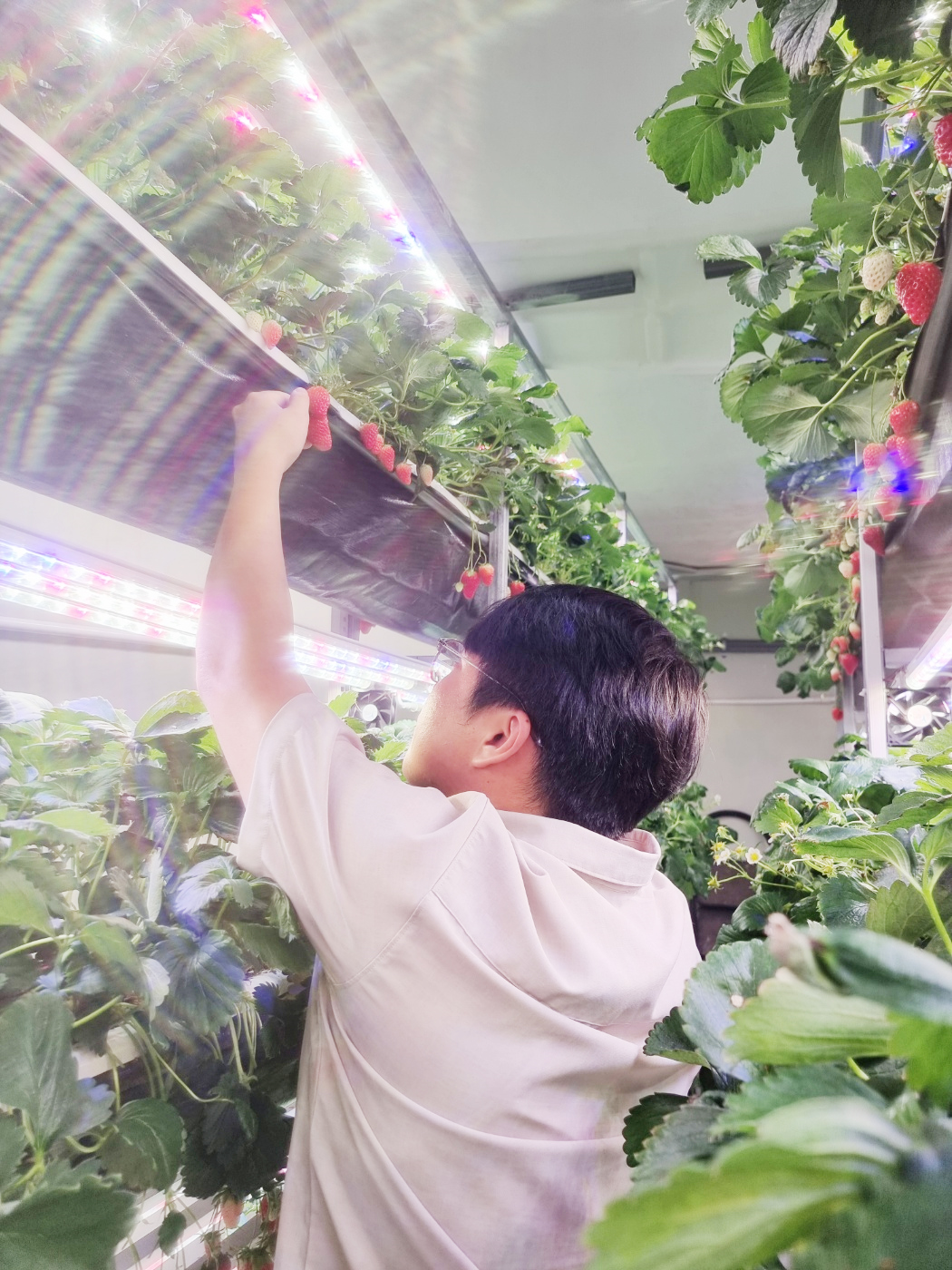
Regions that selected one additional participant in the young farmer settlement support project saw agricultural employment grow by roughly three people over the long term, a new analysis shows. Of that increase, about 1.2 workers were foreign nationals — suggesting that policies designed to bring young people into farming may also drive up demand for foreign labor during peak agricultural seasons.
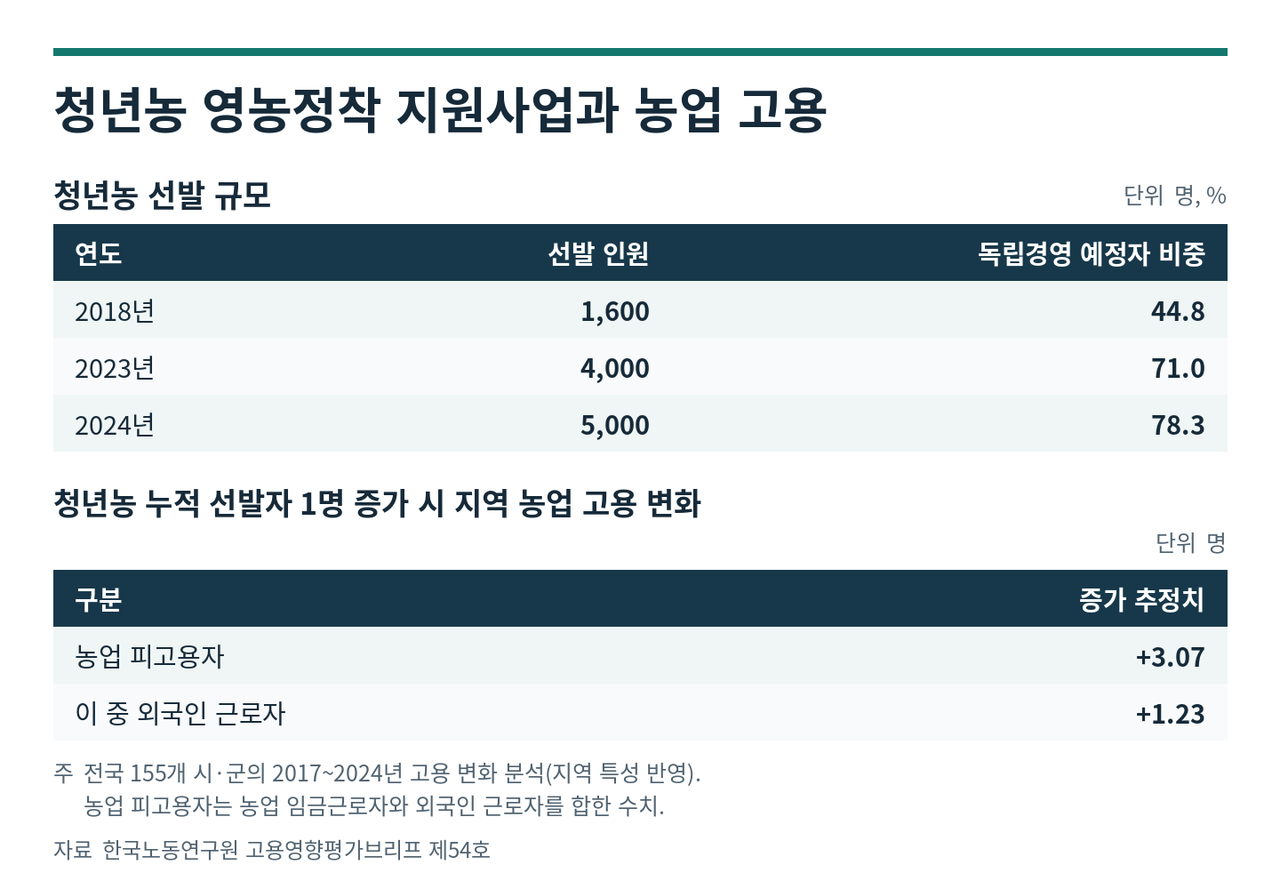
According to a Korea Labor Institute report on the employment effects of the young farmer settlement support project, released Friday, an analysis of agricultural employment changes across 155 cities and counties nationwide — excluding metropolitan cities — from 2017 to 2024 found that one additional cumulative young farmer selectee was associated with an estimated 3.07 more agricultural employees. The employee count combines agricultural wage workers recorded in regional employment surveys with foreign workers employed through seasonal and employment permit programs. In a model controlling for regional agricultural share and elderly population ratio, foreign workers accounted for an estimated 1.23 of that increase.
When the same model was applied to the periods 2017–2019 and 2017–2022, the increase in employees was not statistically significant.
In-depth interviews with 16 young farmers revealed a common pattern: most farm alone or with family but hire one to five workers on a short-term basis during labor-intensive periods. Foreign workers were typically assigned to physically demanding tasks, while domestic workers handled skilled work such as pruning and artificial pollination, or indoor sorting. The report recommended expanding "public seasonal employment" — a system that deploys workers on a daily basis so multiple farms can share labor as needed — to more local governments.
The young farmer settlement support project targets independent farmers under 40 who have been operating for three years or less, as well as those preparing to start farming. Participants who receive support from their first year of independent operation receive monthly payments of 1.1 million won ($819), 1 million won and 900,000 won in successive years, for up to three years. Recipients are required to continue farming for as long as they received support after the payments end.
Of the 654 members of the 2018 cohort included in the survey, 644 — or 98.5 percent — were still farming in 2024, their seventh year since selection. Their average agricultural income rose from 23.87 million won at the time of selection to 80.3 million won in 2023. The report noted that because the mandatory farming obligation for the 2018 cohort ended in 2023 — assuming they received the maximum three years of support — follow-up surveys are needed to assess long-term settlement rates.
The number of participants selected annually grew from 1,600 in 2018 to 5,000 in 2024. Over the same period, the share of selectees who had not yet begun independent farming at the time of selection rose from 44.8 percent to 78.3 percent. Interviews revealed cases in which participants lost their eligibility after being selected because they were unable to secure farmland.
Kang Dong-woo, a senior research fellow at the Korea Labor Institute, called for practical training opportunities through rental farms and smart farm incubation centers during the pre-farming stage, as well as post-program support covering market access, disaster response and farmland expansion once the payments end.
fact0514@heraldcorp.com




