
Trap uses crop-derived volatile compounds to attract females
Field trials at 12 strawberry farms show 1.9x higher catch rate
Early pest control tool targets commercialization next year
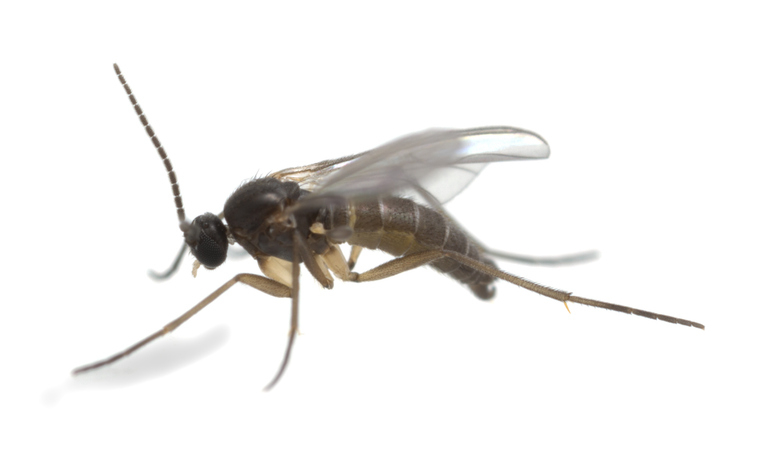
Researchers have developed a trap that selectively captures dark-winged fungus gnats — a pest whose females each lay more than 100 eggs and damage more than 50 crops, including strawberries and tomatoes. The trap lures females with specific volatile compounds emitted by crops. Field trials at strawberry farms showed it caught about 1.9 times more pests than conventional traps without an attractant.
The Korea Agency of Education, Research and Technology in Agriculture said Friday it is verifying the effectiveness and field applicability of the female-luring technology, developed by research teams at Gyeongsang National University and Seoul National University.
Dark-winged fungus gnats are pests that damage crops grown in protected cultivation facilities, including strawberries, watermelons and tomatoes. Their larvae chew on roots and the lower parts of stems, stunting plant growth and reducing crop quality. Because the insects reproduce rapidly, early-stage management is critical.
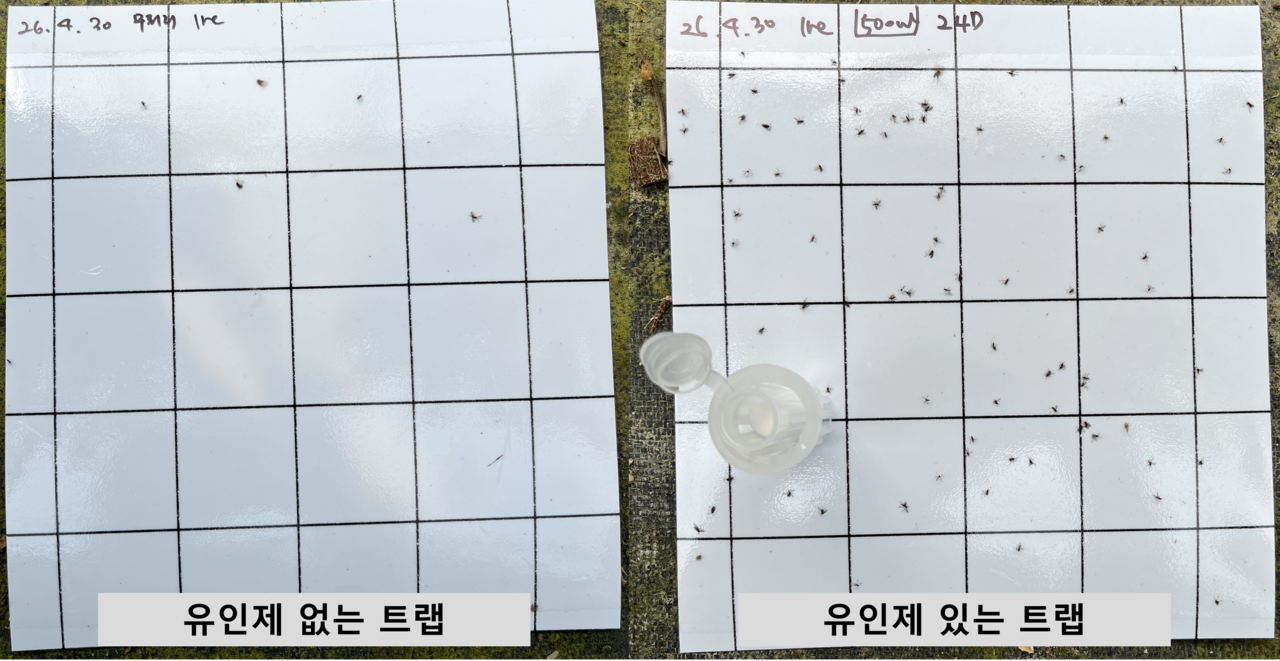
Farmers have traditionally controlled dark-winged fungus gnats by spraying pesticides or setting sticky traps. Repeated pesticide use, however, can lead to a buildup of resistant pests. Ordinary sticky traps also catch beneficial insects such as honeybees.
To address these shortcomings, a research team led by Professor Noh Gwang-hyeon at Gyeongsang National University developed a technology combining specific volatile compounds released by crops with a triangular trap. The system draws females — the key to reproduction — toward the trap by following the scent.
The attractant effect lasts about two weeks. By monitoring the number of pests caught, farmers can determine whether dark-winged fungus gnats are present, track population trends and decide when to apply control measures.
Research teams led by Professors Noh Gwang-hyeon and Lee Won-hun at Gyeongsang National University and Professor Park Il-kwon at Seoul National University conducted field trials at 12 strawberry farms across Gyeonggi Province and the Jeolla and Gyeongsang regions. Traps with the attractant caught about 1.9 times more dark-winged fungus gnats than those without.
Additional trial requests from nearby farms led the researchers to secure three more trial sites. The team is now verifying catch performance across different growing environments while refining the trap's color, installation method and maintenance procedures.
The researchers plan to expand the technology from the Gyeongsang region to major protected-cultivation farms in the Chungcheong and Jeolla regions. Targeting commercialization next year, the team is improving the trap's performance and ease of use while pursuing technology transfer and commercialization partnerships with relevant companies.
Lee Seok-hyeong, head of the agency, said the technology is significant because it demonstrated new possibilities for pest management by applying university research directly on farms. "We will actively support collaboration between universities and farming communities so that outstanding agricultural technologies can be developed into practical products and reach more farms," Lee said.
adastra@heraldcorp.com




