
- Copper ion migration pathways in copper sulfide identified
- Findings expected to advance high-efficiency thermoelectric materials and next-generation energy devices
Korean researchers have uncovered the key operating principle behind an energy material capable of converting waste heat — from car exhaust pipes or factory equipment — into electricity.
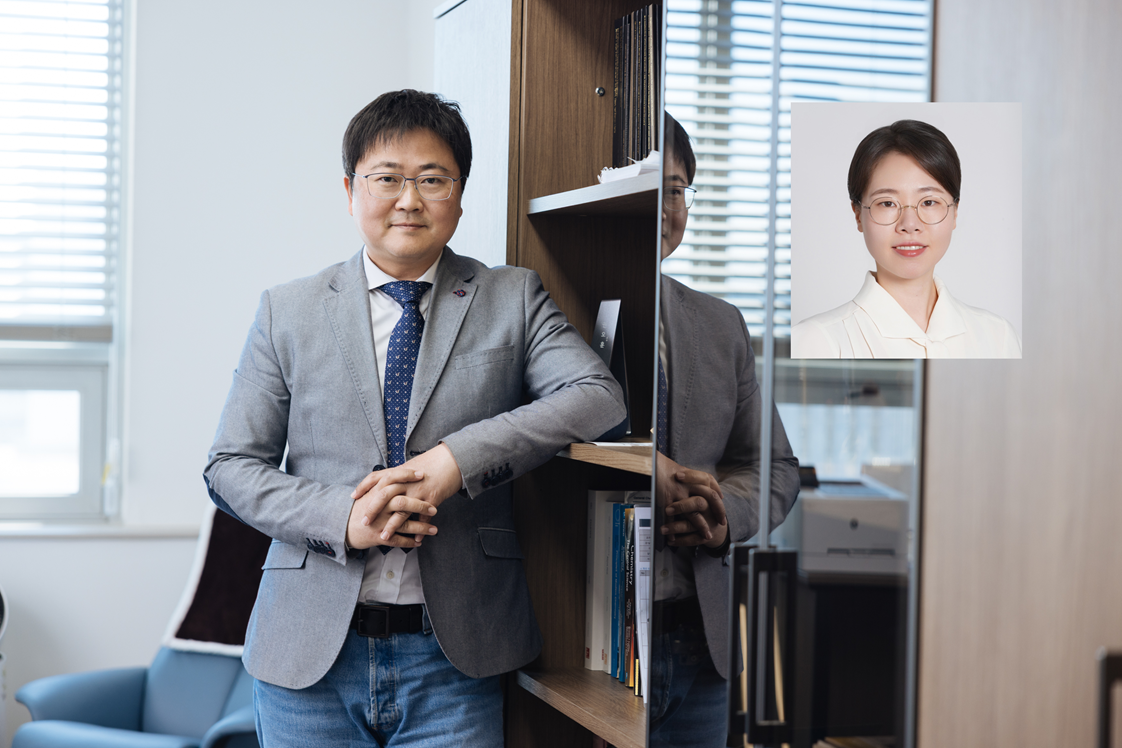
KAIST announced Friday that a research team led by Kwon Oh-hoon, a professor in the university's Department of Chemistry, working jointly with a team led by Kim Ye-jin, a professor in Seoul National University's Department of Chemistry, used an ultrafast electron microscope to map the structural changes in copper sulfide (Cu₂S) and trace the migration pathways of copper ions within the material.
Copper sulfide has drawn attention as a thermoelectric material that generates electricity by exploiting temperature differences. When heated to around 100 degrees Celsius, it exhibits the properties of a "superionic conductor" — maintaining its solid form while allowing copper ions to move freely through the gaps between sulfur atoms.
Ion movement and structural change are critical factors that determine a material's thermal and electrical conductivity. Because these processes occur over extremely short timescales and at the nanoscale, existing technology has made precise observation difficult.
The research team heated copper sulfide instantaneously with a laser, then used an ultrafast electron beam to track changes in the material's internal atomic arrangement.
The analysis showed that copper sulfide exposed to light reorganized its atomic arrangement into a symmetrical structure in about 17 picoseconds — 17 trillionths of a second — and then expanded gradually over hundreds of nanoseconds. The team also captured an intermediate state in which the atomic arrangement had changed but expansion had not yet completed.
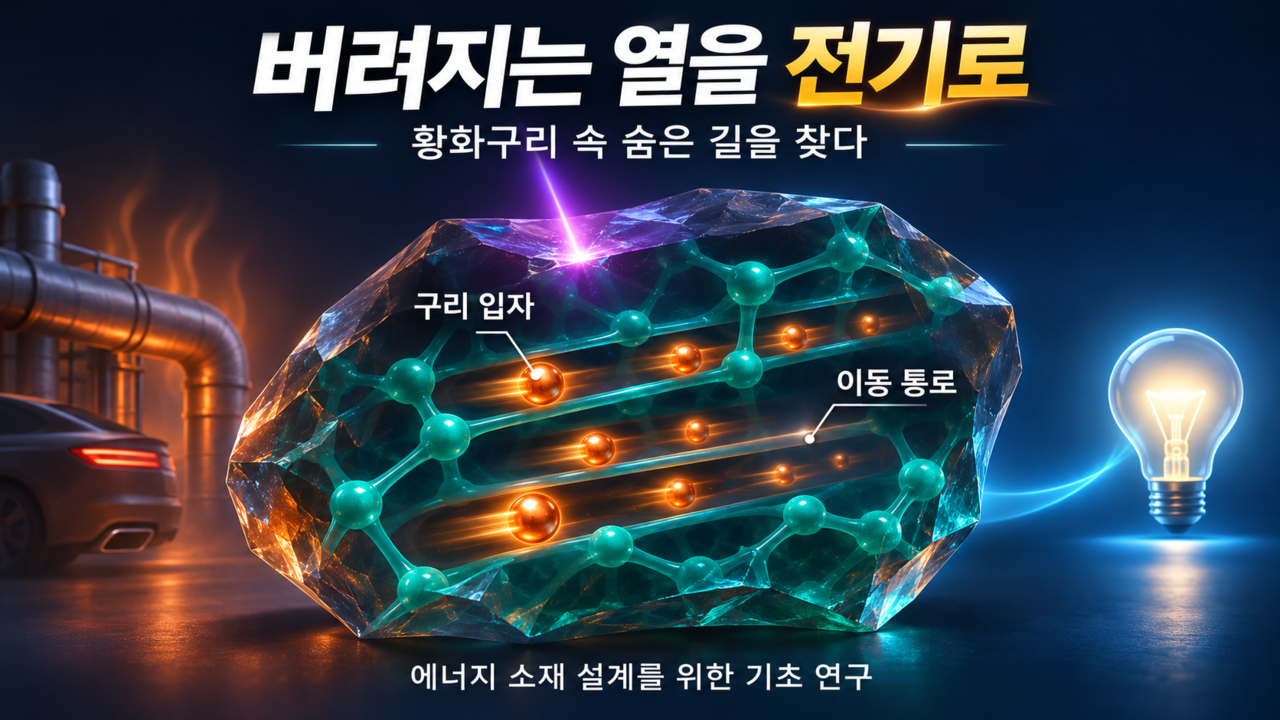
The team also confirmed the pathways along which copper ions travel. Rather than moving randomly, the ions migrated in specific directions through narrow channels roughly 1 nanometer — one billionth of a meter — wide. The light-induced structural changes persisted for several microseconds.
The study is significant because it identified not only the structural changes in the energy material but also the directionality of ion migration. The findings are expected to inform the development of next-generation energy devices that can control a material's thermal and electrical conductivity by adjusting the intensity and timing of light exposure.
However, additional verification of conductivity, energy conversion efficiency and operational stability under repeated use will be needed before the findings can be applied to actual devices.
"This research examined which pathways copper ions travel inside the material and in what sequence the atomic arrangement changes," Kwon said. "We expect it will provide clues for designing energy materials whose thermal and electrical properties can be tuned — and whose characteristics can be altered using light."
The findings were published in ACS Nano, an international journal in the field of nanoscience.
nbgkoo@heraldcorp.com




