- MOU signed for 'Our Neighborhood Science Room' program
- Science and technology programs to expand in public rental housing
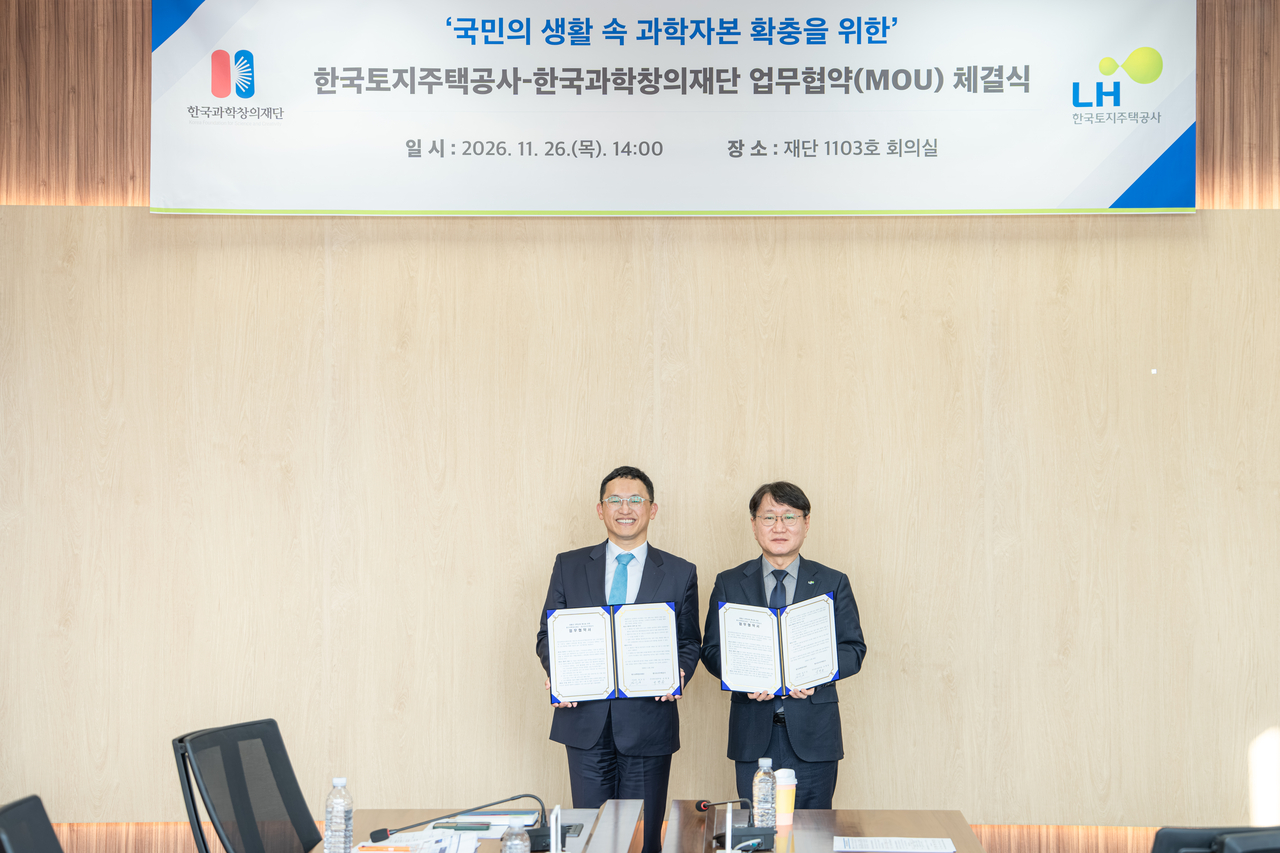
Residents of public rental apartment complexes will have greater access to science and technology programs close to home.
The Korea Foundation for the Advancement of Science and Creativity announced Thursday that it has signed an MOU with the Korea Land and Housing Corporation to jointly operate the "Our Neighborhood Science Room" program, aimed at spreading science culture in everyday living spaces.
The agreement is intended to improve access to science and technology programs for residents of public rental housing and to narrow the gap in science culture between regions.
"Our Neighborhood Science Room" is a project launched this year by the Ministry of Science and ICT and the foundation to let residents experience science and technology in the communal spaces they use daily, such as apartment community centers.
The foundation plans to run a total of 90 science programs on a pilot basis across 77 public rental apartment complexes operated by the Korea Land and Housing Corporation by the end of this year.
The two organizations will cooperate on providing science and technology programs in shared resident facilities at public rental housing complexes, recruiting and promoting participating facilities and target beneficiaries, and securing venues for program operations.
The Ministry of Science and ICT and the foundation plan to overhaul the program's operational framework starting next year and significantly expand its scale, focusing on public rental housing complexes nationwide.
The foundation will directly identify and develop science programs and, over the longer term, introduce a matching system through a platform that connects programs with on-site demand. The strategy is to build residents' "science capital" — their knowledge of science and technology, hands-on experience and community networks — as part of everyday life.
"This agreement is a meaningful starting point for extending science culture beyond dedicated venues such as science museums and into the living spaces of residents," foundation President Jung Woo-sung said. "We will work to spread a science culture in everyday life where anyone living in a public rental complex can enjoy science close to home, learn alongside neighbors and connect with one another."
nbgkoo@heraldcorp.com