
9th blockchain promotion week spotlights AI and digital assets
Nine banks showcase deposit-token wallets; NH NongHyup, IBK offer live sign-ups
53 exhibition booths draw more than 1,000 visitors on opening day
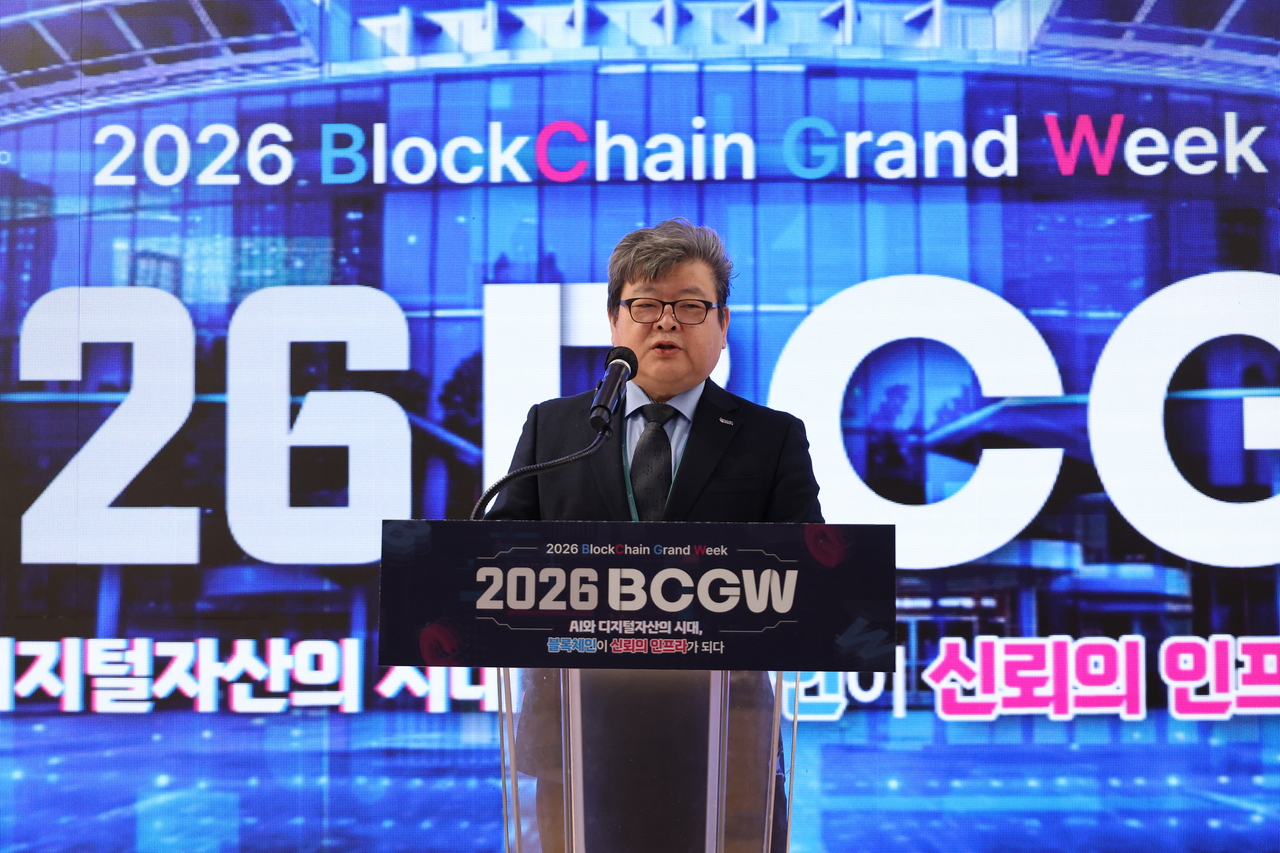
"Since 2018, the Ministry of Science and ICT and the Korea Internet & Security Agency have identified 125 blockchain services and commercialized 78 of them, developing services that the public can experience in their daily lives. This year in particular, we have launched a deposit-token payment pilot project to ease the payment-fee burden on small business owners."
Korea Internet & Security Agency Division Head Shin Dae-gyu made the remarks Wednesday at the opening ceremony of the 2026 Blockchain Promotion Week at COEX in Seoul. Shin said blockchain is "a means of guaranteeing trust in digital transactions," adding that as AI agents purchase goods and the use of digital assets grows, the industry must turn rising demand for trusted digital transactions into a growth opportunity.
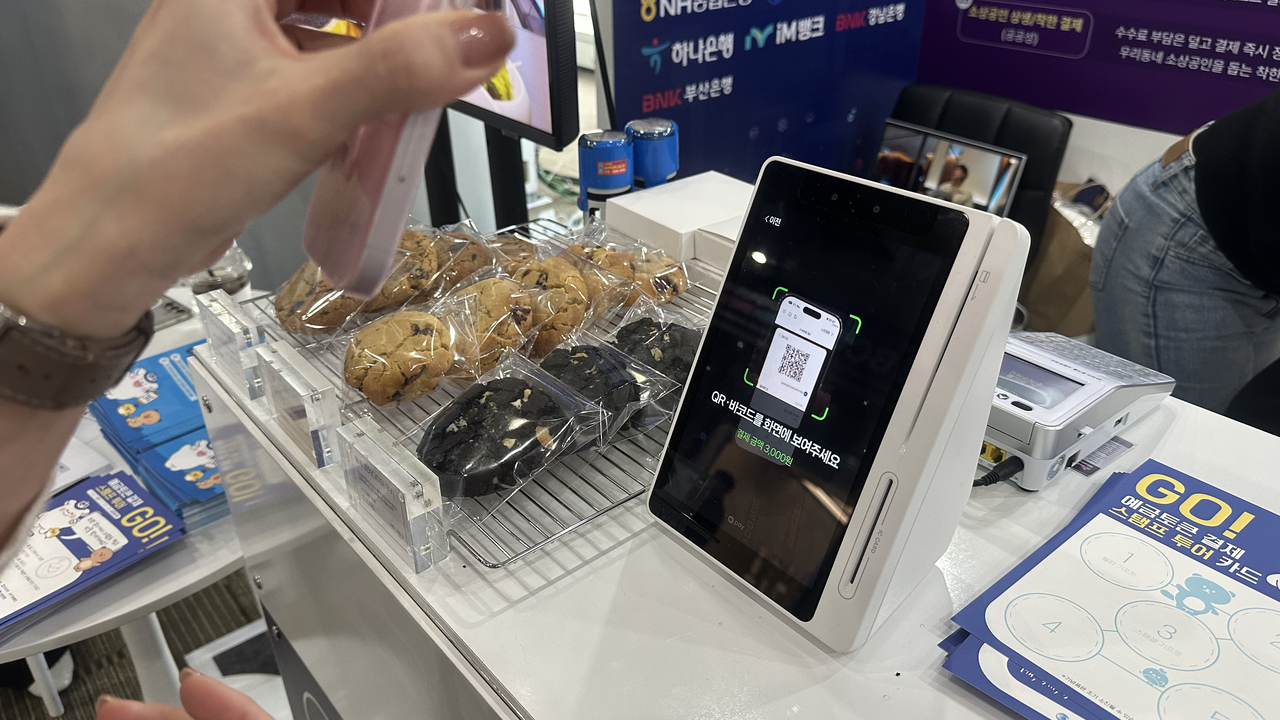
The busiest spot on the floor was the deposit-token experience booth set up by the Korea Financial Telecommunications and Clearings Institute and participating banks. Nine banks taking part in the Bank of Korea's Project Han River — NH NongHyup Bank, Industrial Bank of Korea, KB Kookmin, Woori, Shinhan, Hana, BNK Busan, BNK Gyeongnam and iM Bank — showcased their digital wallets and payment services. It marked the first time QR-based deposit-token retail payments had been demonstrated publicly as part of the project.
A deposit token is a digital asset that converts bank deposits into blockchain-based tokens for use in payments and remittances. It is pegged one-to-one to a bank deposit, and deposit protection applies under a special exemption for this pilot. Because development stages differ across banks, some offered only simulated experiences, while NH NongHyup Bank and Industrial Bank of Korea supported actual wallet sign-ups on site.
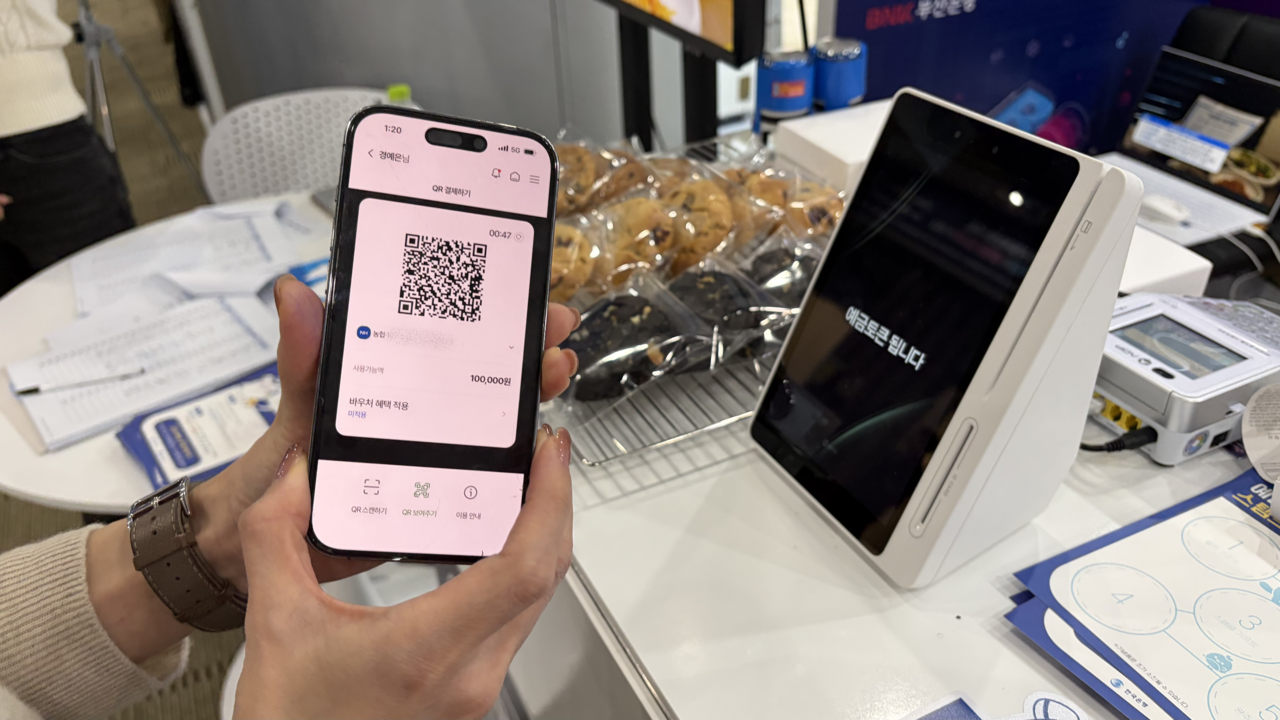
A reporter opened a digital wallet through NH NongHyup Bank's mobile banking app. After verifying identity with an account password and agreeing to the terms, setting up auto-conversion took just over a minute. The auto-conversion feature converts funds from a linked account into tokens when the deposit-token balance runs low. The wallet screen displayed the balance and a QR payment menu.
After opening the wallet, the reporter also tried buying 3,000-won worth of snacks at the Korea Financial Telecommunications and Clearings Institute booth. Tapping "show QR" on the smartphone and holding it up to the payment terminal, the transaction completed in under a second. The receipt listed the payment method as "deposit token." The experience felt little different from existing QR-based simple payment services. "The payment speed is faster and more convenient than I expected," one visitor said after trying it.
Organized by the Ministry of Science and ICT and co-hosted by the Korea Internet & Security Agency and the Institute for Information & Communications Technology Planning & Evaluation, the two-day event ran from Wednesday under the theme "In the age of AI and digital assets, blockchain becomes the infrastructure of trust." Now in its ninth year, the event featured 53 exhibition booths from domestic companies and institutions. On opening day, 1,014 people attended in person while about 1,200 watched via live stream.
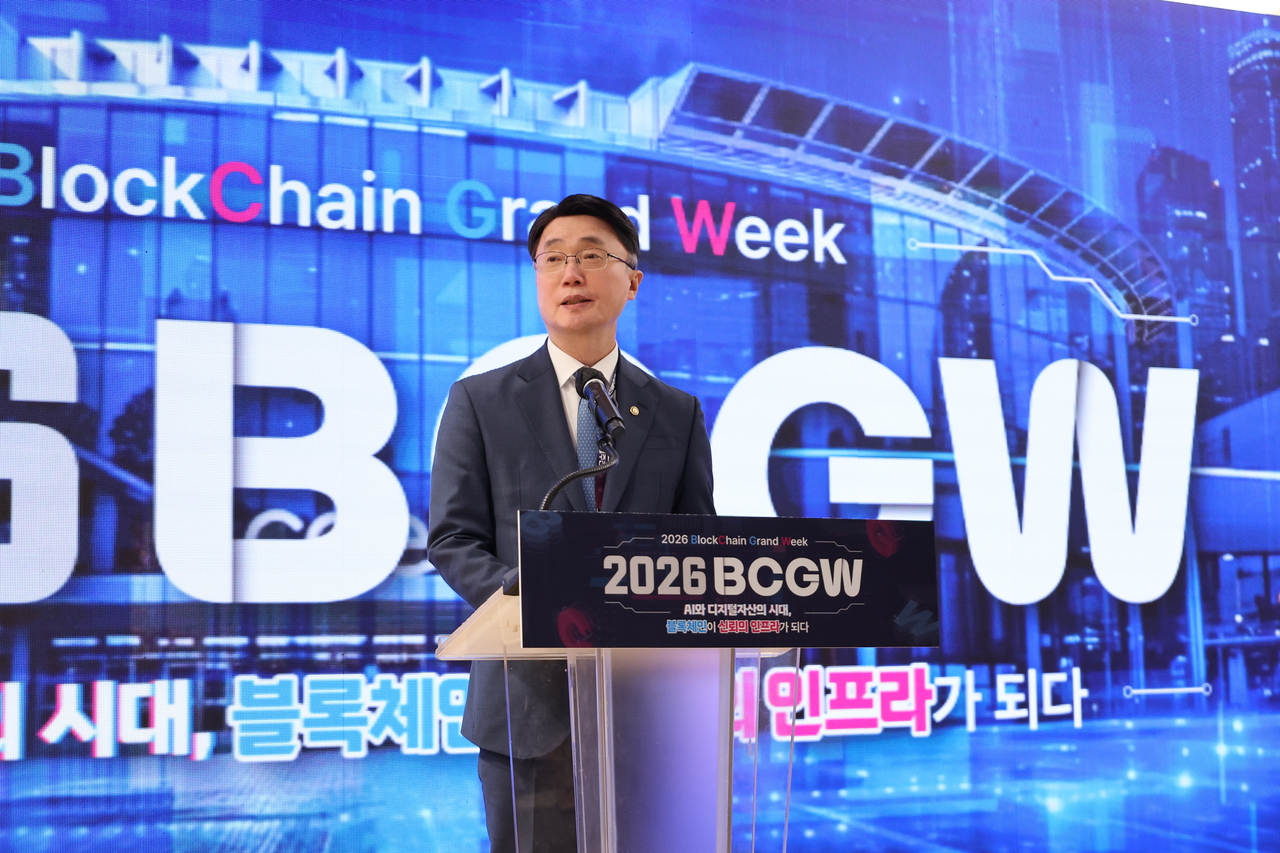
Discussions at the day's conference centered on expanding blockchain's role in an era of AI agents and digital assets, as well as building a won-denominated stablecoin ecosystem.
Second Vice Minister Ryu Je-myeong of the Ministry of Science and ICT said blockchain is "a core technology that verifies identity and authority, validates transaction histories, and underpins trust in digital society." Ryu said the ministry would expand large-scale pilot projects aimed at developing next-generation digital asset infrastructure and driving innovation in public services, and said blockchain's value must translate into greater convenience for citizens and stronger industrial competitiveness.
Calls also emerged for a legal framework to support broader private-sector adoption of blockchain technology. Kim Dong-hwan, an attorney at law firm DLG, argued that if only financial laws govern the space, every industry using blockchain risks being treated as falling under financial regulators' jurisdiction, and called for the enactment of a basic blockchain law.
Kim said the spread of AI agents would also increase the potential for blockchain use in identity verification and transaction processes. To prevent legal problems from arising as blockchain-based credentials are adopted, Kim recommended establishing relevant standards and supporting standardization efforts.
With the Financial Services Commission having released a draft government bill on digital asset legislation Tuesday, the conference also addressed future market challenges. Ryu Chang-bo, chairman of the Open Blockchain AI Association, said "issuance is just the beginning," and that the won stablecoin market "must be built together by multiple sectors rather than monopolized by a single operator."
"The common foundation should be built together, while services compete," Ryu said, adding that distribution, payments, regulatory compliance and global connectivity must all be considered after issuance. Ryu also said global technologies should be actively embraced while domestic capacity to operate and respond to them must be built up, stressing that "it is important for domestic technology companies to grow well."
kyoung@heraldcorp.com




