Domestic exchanges limited to spot trading while global rivals offer futures, leverage
Dunamu vice chairman calls for allowing foreigners to trade in won markets
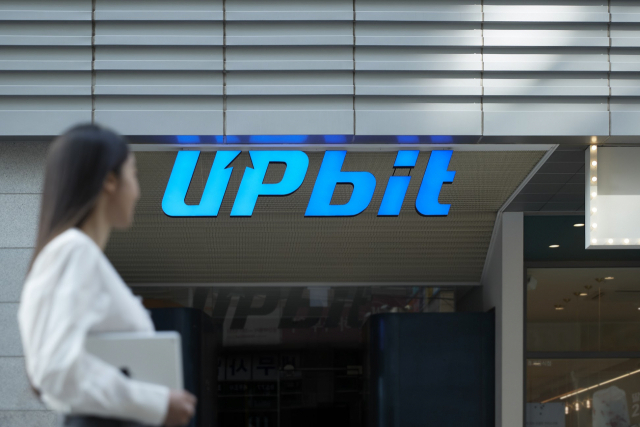
Hundreds of billions of won in digital assets flowed out of Upbit, South Korea's largest won-denominated exchange, to global exchange Binance over the past six months, data showed. Industry observers point to the gap in available products — domestic exchanges are limited to spot trading, while overseas platforms offer futures, leverage and a wider range of investment strategies.
Data submitted by Dunamu, the operator of Upbit, to People Power Party lawmaker Park Sung-hoon of the National Assembly's Political Affairs Committee showed that digital assets worth a net 413.1 billion won ($307 million) moved from Upbit to Binance between May and October this year.
The trend marks a reversal from earlier this year. Upbit recorded net inflows from Binance every month from January through April, but turned to net outflows in May. For six consecutive months through October, more assets left for Binance than arrived from it. September saw the largest single-month net outflow, at 122.3 billion won.
Industry insiders attribute the shift to the stark difference in trading environments between domestic and overseas exchanges. South Korean digital asset exchanges operate primarily around spot trading, while global platforms such as Binance offer a broad suite of products including futures, margin and leveraged trading.
The revenue structure of domestic exchanges — heavily concentrated on spot trading by retail investors — is also seen as a structural weakness, as earnings volatility tends to rise and fall sharply with trading volumes and market conditions.
In the third quarter of this year, sales at Dunamu and Bithumb fell 60.7 percent and 69.7 percent, respectively, from a year earlier. By contrast, US-based digital asset exchange Coinbase posted a comparatively modest sales decline of around 35 percent over the same period.
There are also growing calls in the market to ease restrictions that prevent foreign non-residents from accessing won-denominated markets on domestic exchanges. Critics argue the current rules limit the inflow of overseas capital and constrain market expansion.
Kim Hyong-nyeon, vice chairman of Dunamu, made the case for opening the market at D-CON 2026, a policy conference held Nov. 10. "Product diversity matters, but fundamentally, if we can create a market where foreign non-residents can trade freely — bringing in dollars, converting them to won and buying Korean shares, just as they do in the stock market — that would open the door to a whole new level of growth," Kim said.

kyoung@heraldcorp.com