
Financial sector scrambles for partners ahead of won stablecoin launch
Banks need at least four members to hold combined majority stake
Naver, Kakao, Toss and Samsung draw most attention; stake size a key variable
Eased 'finance-crypto separation' rules open custody business as new revenue stream
Exchange ownership reshuffle expected as bank investment appetite grows
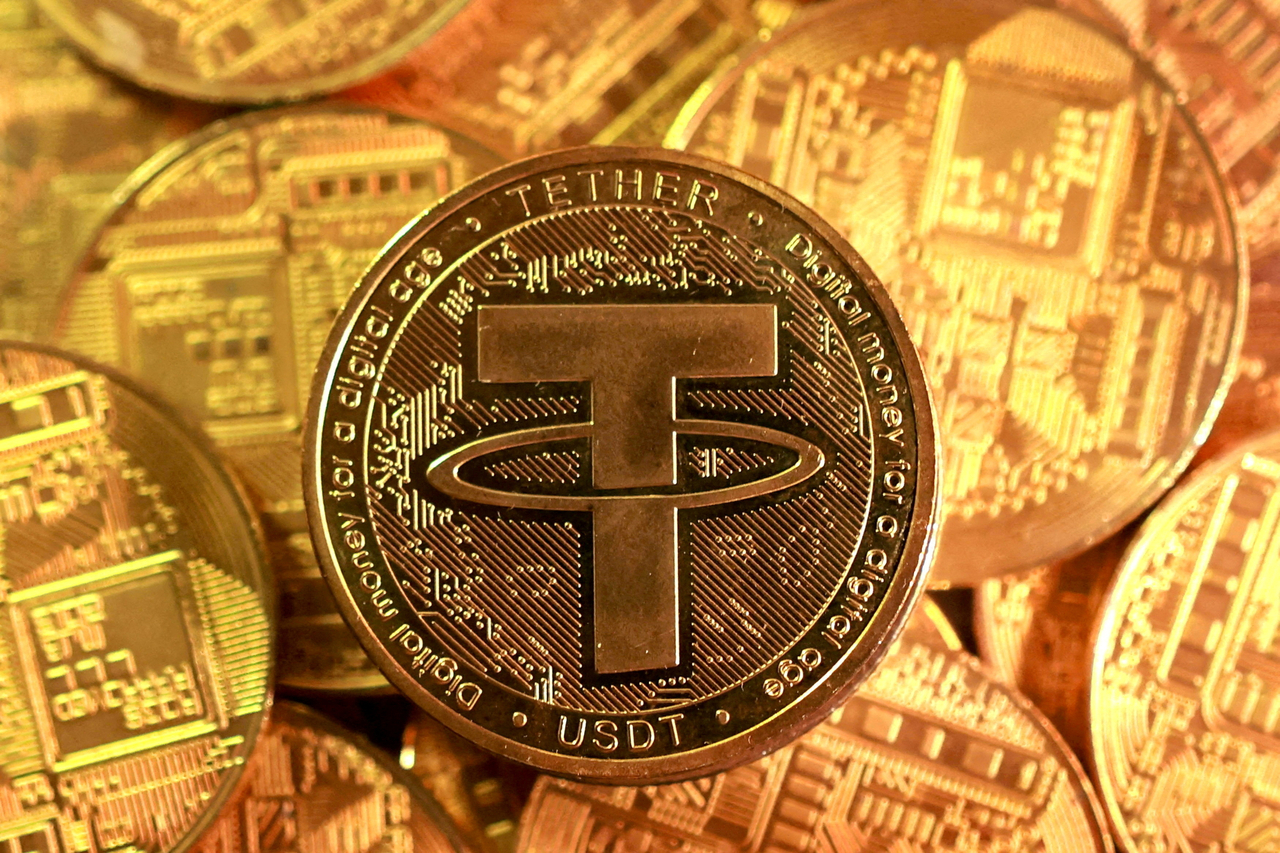
A plan to allow won-denominated stablecoin issuance first through consortiums in which banks hold a combined majority stake is set to intensify competition among financial firms to lock in partners. With fintech and technology companies now permitted to participate as the single largest shareholder, the market is closely watching which of Naver, Kakao, Toss and Samsung will join which consortium. Analysts also say that if a proposed exemption to the 15 percent bank investment cap is extended to cryptocurrency exchange stakes, competition to acquire exchange ownership — quiet for some time — could reignite.
Under the Digital Asset Act bill the Financial Services Commission announced Wednesday, won stablecoins may initially be issued only by consortiums in which banks collectively hold more than half the equity. Fintech and technology companies are permitted to participate as the single largest shareholder. However, given the 15 percent non-financial subsidiary investment cap under the Banking Act, banks would need at least four members to reach a combined majority.
One possible structure would have four banks each holding 15 percent for a combined 60 percent, with a single fintech or technology company holding 30 percent and remaining investors holding 10 percent. This would allow a fintech or technology firm to become the largest individual shareholder while banks collectively retain majority control. The intent in the early stage of the regime is to leverage banks' anti-money-laundering capabilities to ensure issuance stability while also drawing on the innovation capacity of technology companies. Specific shareholder composition requirements are to be set in a future presidential decree.
Financial institutions preparing to issue won stablecoins are closely tracking the moves of Naver, Kakao and Toss. Those platforms had been in broad contact with multiple financial firms exploring issuance and distribution cooperation even before the government bill was released. Once the lineup of banks in each consortium takes shape, firms are expected to begin seriously mapping out the possible combinations — which platform to partner with and how to divide equity and issuance and distribution roles.
KB Financial Group has been conducting technical verification for won stablecoin issuance while exploring issuance and distribution cooperation with Toss. Viva Republica, the operator of Toss, recently put a proposal to add virtual asset business to its corporate charter on the agenda, signaling its push into new digital asset ventures. Bithumb, the virtual asset exchange that has a linked deposit account partnership with KB Kookmin Bank, is also cited as a potential collaborator. KB Financial Group is also reported to have been in contact with NH NongHyup Bank, Industrial Bank of Korea, BNK Financial Group and iM Bank to discuss forming an issuance consortium.
The financial sector is also watching the connection between KB Financial Group and Kakao Group. The two sides co-hosted "Next Finance Korea" in September. At the event, Kakao Group proposed an open roundtable bringing together banks, securities firms, fintech and platform companies, virtual asset operators and e-commerce companies.
Kakao had earlier been reported to be scouting banking partners including Woori Bank and NH NongHyup Bank, and there is interest in whether the joint event will lead the two sides to begin concrete discussions on won stablecoin issuance and distribution.
Naver is mentioned as a cooperation candidate for both Hana Financial Group and Shinhan Financial Group. Hana Financial Group has been in contact with BNK Financial Group, iM Financial Group, SC First Bank and OK Savings Bank to assemble a won stablecoin issuance consortium. It has also been expanding digital asset business cooperation after committing 1 trillion won ($744 million) in equity investment in Dunamu, the operator of Upbit. That is the backdrop for speculation that Naver Financial, which is pursuing a business combination with Dunamu, could join the Hana Financial side by leveraging the Naver Pay payment network.
Shinhan Financial Group is also keeping the door open to cooperation with Naver Financial. Shinhan Bank has reportedly been in discussions with Industrial Bank of Korea, NH NongHyup Bank and K bank since early this year on forming a won stablecoin issuance consortium. Among non-bank partners, it has been putting particular effort into cooperation with Samsung — exploring stablecoin business collaboration with Samsung Card and examining use cases such as cross-border trade payment remittance and settlement between companies.
Woori Bank, which jointly launched Samsung Wallet Money with Samsung, has also entered the race to secure Samsung as a consortium partner. Samsung Electronics recently introduced a feature allowing Galaxy users in the United States to store and transfer USDC, a dollar-denominated stablecoin, through Samsung Wallet. Users can send USDC directly to compatible virtual asset wallets or bank accounts in more than 60 countries within seconds and with no transfer fee. For Woori Bank, there is room to extend its existing payment cooperation with Samsung into won stablecoin distribution.
However, some in the banking sector warn that decision-making could become complicated when multiple banks are involved. "To reach a combined majority, at least four banks need to come together, but it will be hard to align interests when the concrete benefits for each bank are not clear," a financial firm executive said. "How each consortium draws in a platform and divides equity and decision-making authority will be the crux of the negotiations." The executive also noted that even after a consortium is launched, it could take time to coordinate who takes responsibility for the business and decides on key matters.
The government's move to prioritize bank-led won stablecoin issuance and consider lowering the threshold for bank investment in virtual asset businesses has also been read as a signal that the longstanding principle of separating finance from crypto is beginning to ease. Banks are particularly eyeing the custody of stablecoin reserve assets as a new revenue stream. "Beyond exploring participation in an issuance consortium, managing the reserve assets that issuers set aside against redemptions is also a new business opportunity worth examining for its profitability and operations," a banking industry official said.
There is also growing speculation that the market for virtual asset exchange mergers and acquisitions — dormant for some time — could come back to life. The government bill in principle caps the stake of a major exchange shareholder at 20 percent, meaning exchanges with shareholders above that threshold will likely face ownership restructuring. "Since Hana Financial's equity investment in Dunamu, interest in exchange infrastructure among banks has grown considerably," a financial holding company official said. "If the 15 percent bank investment cap exemption is extended to exchange investments, the ownership reshuffle could become a new investment opportunity."

forest@heraldcorp.com
kyoung@heraldcorp.com




