
- Ruthenium particle size reduced by 44%, output up 1.6 times
- Technology transfer planned after scale-up and long-term operation tests
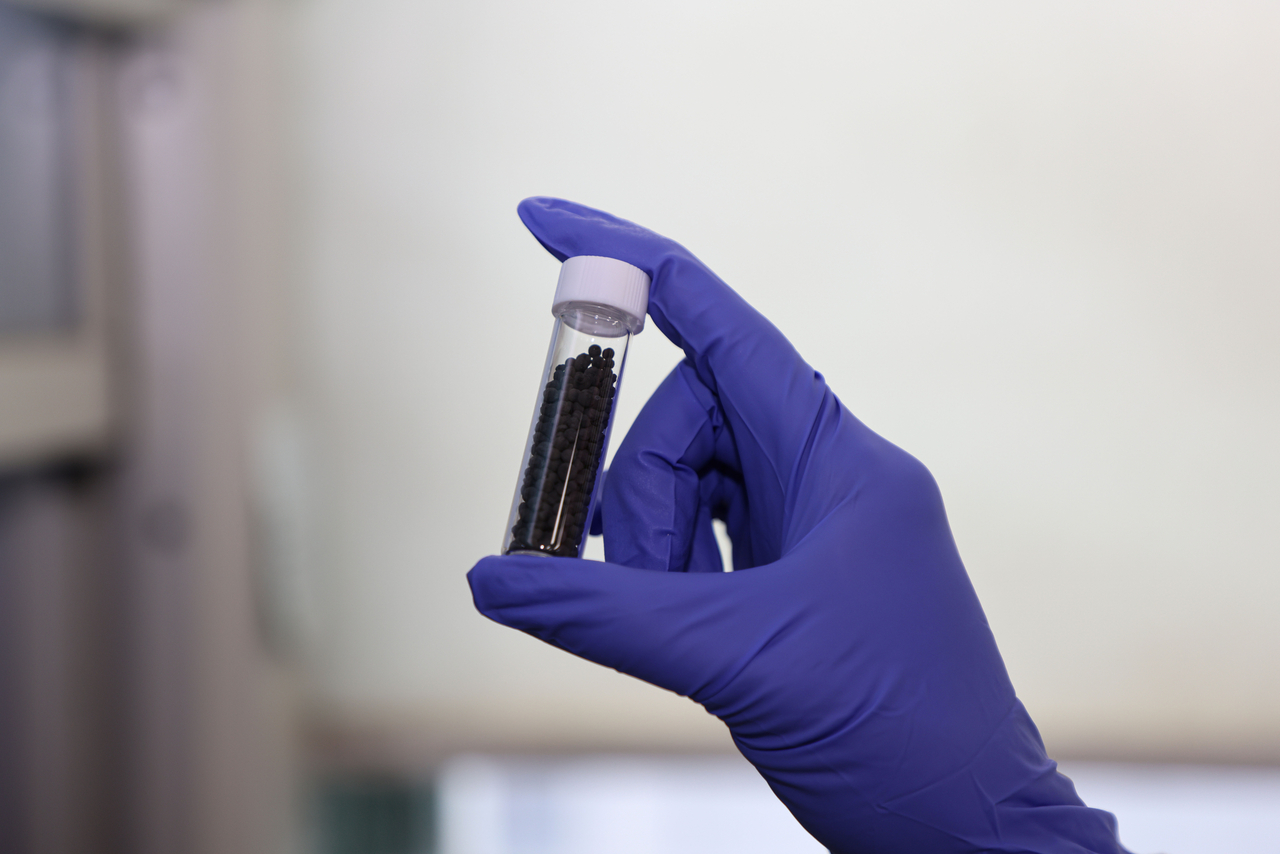
South Korean researchers have developed a new catalyst technology that prevents the loss of costly rare precious metals and boosts ammonia output 1.6 times compared with conventional methods.
The Korea Institute of Energy Research said a research team led by Yoon Hyung-chul of its Clean Fuel Research Division identified for the first time the phenomenon in which ruthenium, a precious metal used in catalyst manufacturing, volatilizes into a gaseous state during production — and successfully suppressed it by adding a small amount of aluminum.
Ammonia is a key raw material for fertilizers and a fuel that emits no carbon dioxide during combustion. It has drawn particular attention as a medium for storing and transporting hydrogen over long distances.
Iron catalysts have been used in ammonia production for more than 100 years, but the process requires pressures of 150 to 200 atmospheres, making it highly energy-intensive. Ruthenium catalysts, seen as a promising alternative, can synthesize ammonia at relatively lower pressures. Ruthenium is a rare precious metal with global annual production of less than 40 metric tons, however, which has limited its adoption.
The research team found that the root cause of ruthenium catalyst performance degradation was the loss of the precious metal during manufacturing.
When barium — a co-catalyst that enhances catalyst performance — was added at six times the conventional optimal amount and heated to 500 degrees Celsius, the ruthenium content plunged from 5 percent to around 1 percent. Gas analysis confirmed that ruthenium had volatilized and been lost during the heating process.
To address this, the team added about 3 percent aluminum to magnesium oxide, the catalyst support material. The aluminum acted as a kind of "anchor," holding ruthenium to the support surface; 91 percent of the ruthenium remained even at 500 degrees Celsius.
The ruthenium particle size also shrank by about 44 percent, from 3.27 nanometers to 1.84 nanometers, increasing the surface area available for the ammonia synthesis reaction.
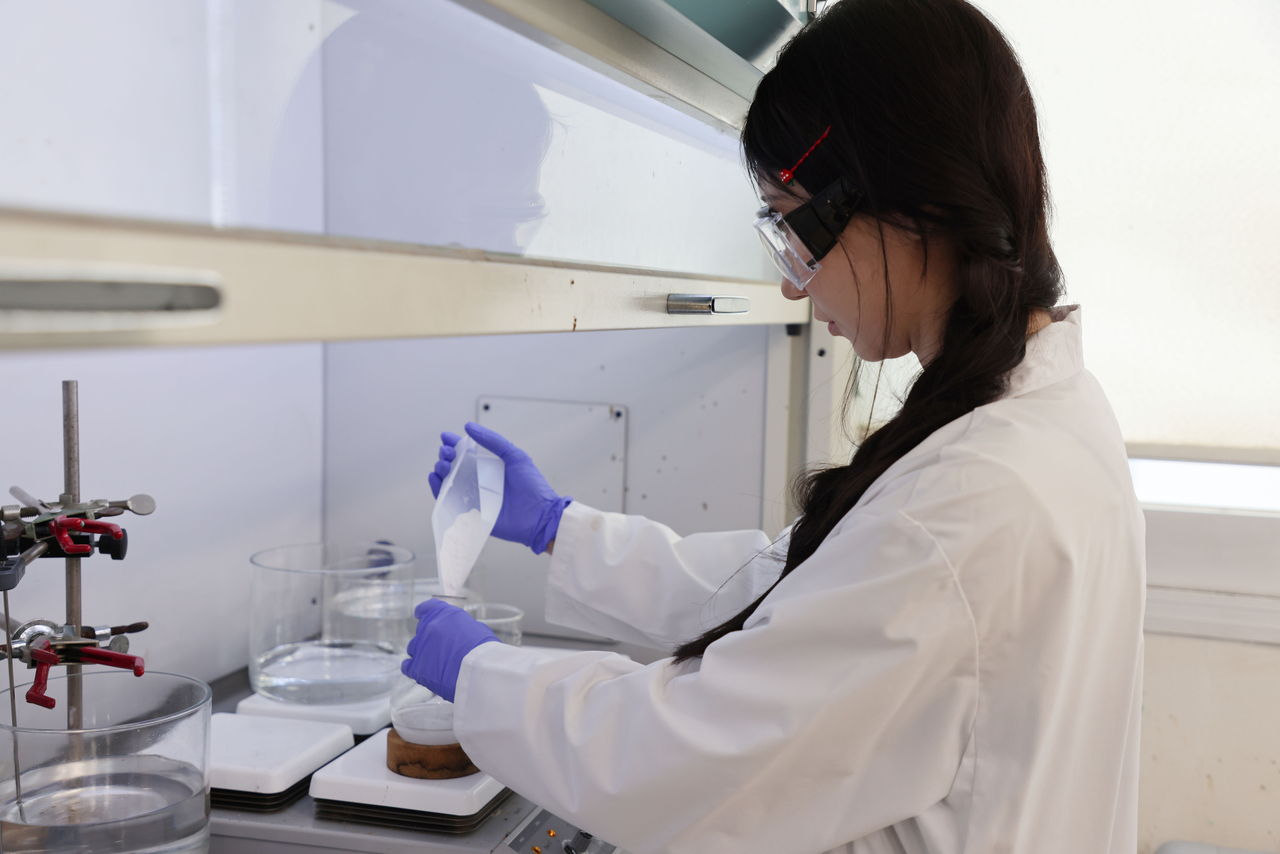
The new catalyst produced 1.17 grams of ammonia per gram of catalyst per hour at 400 degrees Celsius and approximately 50 atmospheres of pressure — about 1.6 times the maximum output of 0.75 grams achieved by a conventional ruthenium catalyst without aluminum.
The volume occupied by the same weight of catalyst also decreased by about 30 percent, an advantage for miniaturizing ammonia synthesis reactors. The team manufactured the catalyst at a scale of 415 grams and confirmed it maintained stable performance through 120 consecutive hours of operation.
"Adding just 3 percent aluminum prevents precious metal loss and will help lower ammonia production costs," Yoon said. "We plan to scale up catalyst manufacturing, verify performance through long-term operation tests, validate it in actual processes with prospective industry partners, and pursue technology transfer."
The findings were published Nov. 15 in Applied Catalysis B: Environment and Energy, an international journal covering the environmental and energy fields.
nbgkoo@heraldcorp.com




