
- Joint research by KAIST, Seoul National University and Postech
- Team develops precision enzyme-positioning technology using lipid droplets
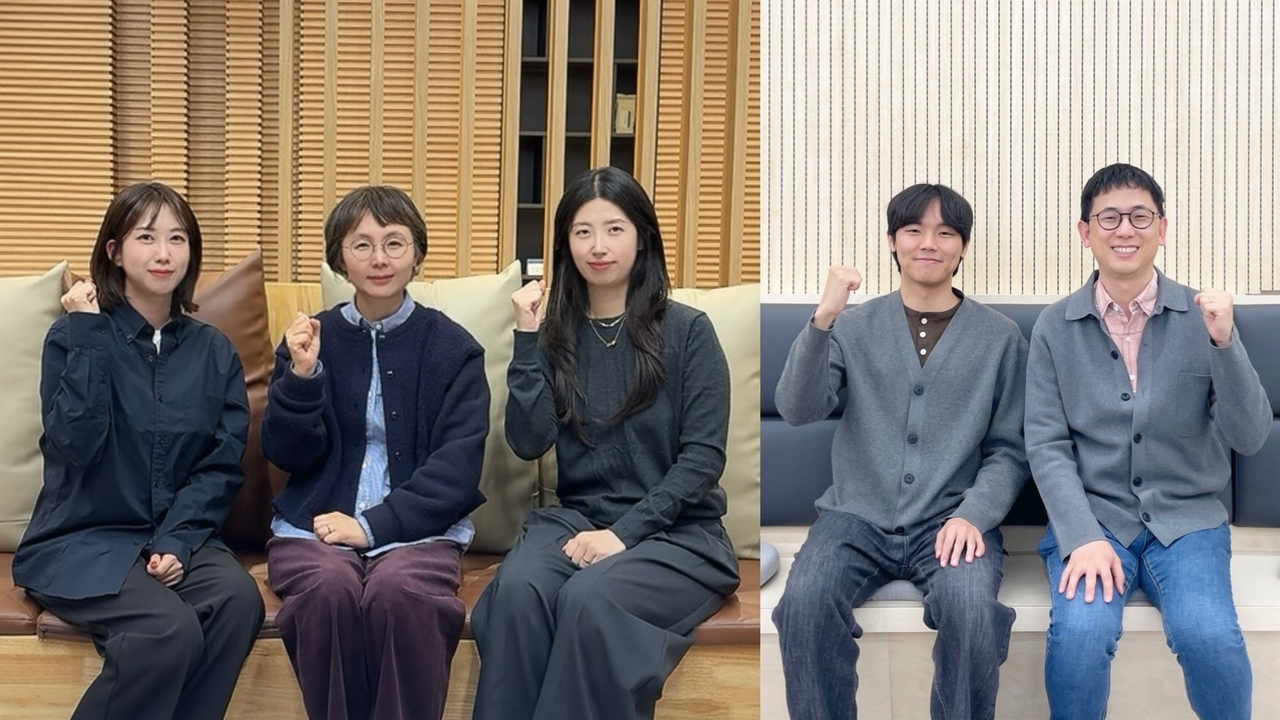
South Korean researchers have developed a technology that turns fat-storage compartments inside cells into high-value production factories. By precisely controlling the position and orientation of enzymes within cells, the team boosted natural pigment output by up to 13 times.
KAIST announced Thursday that a research team led by Professor Lee Ju-young of its Graduate School of Engineering Biology, working jointly with Professor Son Chang-yun of Seoul National University and Professor Oh Seung-su of Postech, developed the technology using lipid droplets inside yeast cells to maximize the production efficiency of useful compounds.
Microbial cell factories artificially engineer the metabolic processes of microorganisms to produce target substances. Enzymes that catalyze chemical reactions inside the cell work in sequence, converting raw materials into the desired product.
When both water-soluble hydrophilic substances and oil-soluble hydrophobic substances are involved in the same process, however, contact between enzymes and reactants becomes difficult, limiting production efficiency.
To address this, the team turned its attention to lipid droplets — fat-storage organelles inside cells. Lipid droplets have an oily interior surrounded by a water-based cytoplasm, giving them a natural interface that can bridge chemical reactions with opposing properties.
The researchers designed a structure that anchors proteins to the surface of lipid droplets and engineered enzymes to face either inward or outward as needed, building a customized production line in which each enzyme operates in the environment best suited to its reactants. Computer simulations also elucidated the molecular-level principles behind this directional control.
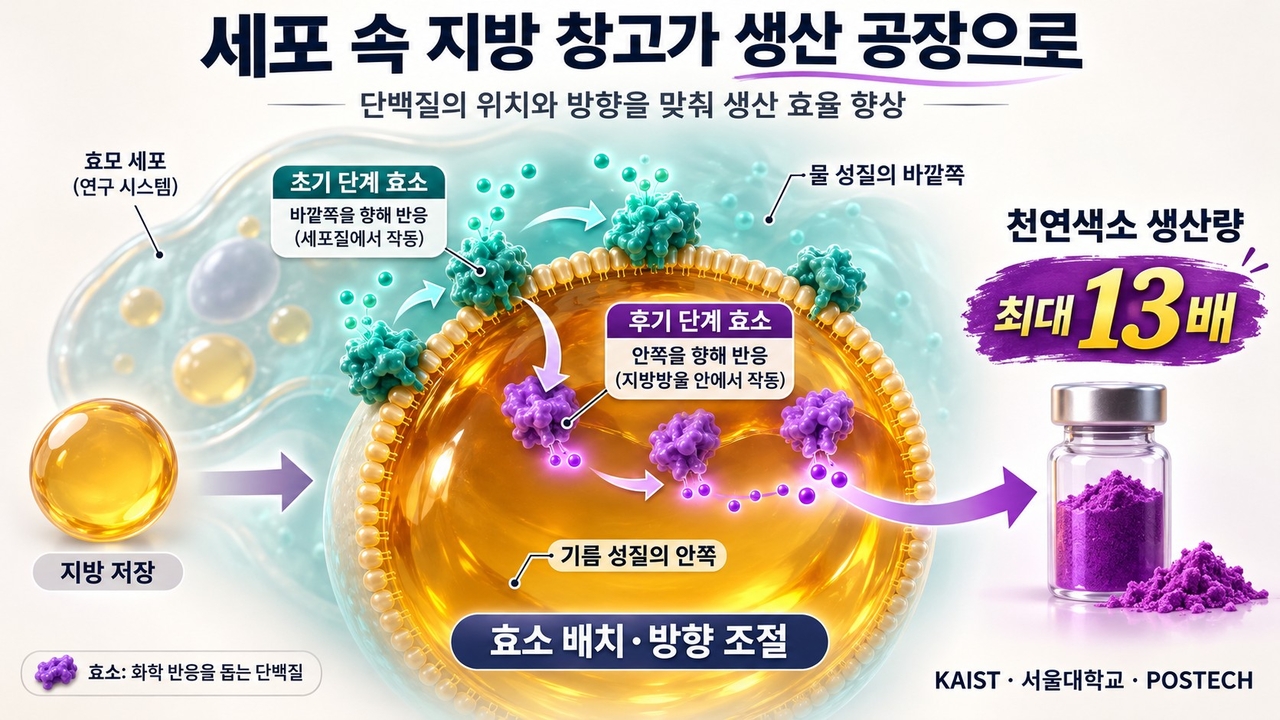
The team applied the technology to the production of prodeoxyviolacein (PDV), a natural pigment and pharmaceutical ingredient. By positioning early-stage enzymes on the outside of lipid droplets and later-stage enzymes on the inside, the researchers achieved up to a 13-fold increase in output.
The study goes beyond simply clustering enzymes in one location — it shows that production efficiency can be raised by controlling both the placement and orientation of enzymes to match the microenvironments within the cell.
The technology is expected to be used in building microbial cell factories for high-value biotech materials, including fragrances, cosmetics ingredients, and anticancer and antibiotic compounds.
The team plans to expand the protein-anchoring technology to a wider range of enzymes and integrate AI-based protein design to develop it into an optimized material-production platform. Validation of long-term culture stability and performance under large-scale culture conditions will be needed before practical application.
"This research represents a new design strategy for improving production efficiency by simultaneously considering the characteristics of intracellular microenvironments and the spatial arrangement of enzymes," Professor Lee said. "We expect it to open a new paradigm for precisely controlling the position and orientation of enzymes in the fields of synthetic biology and metabolic engineering."
The findings were published in the international journal Science Advances on Nov. 6.
nbgkoo@heraldcorp.com




