
50% chance of higher ultrafine dust concentrations than last winter
8th seasonal management scheme to cap coal plant output at 80%, restrict high-emission vehicles
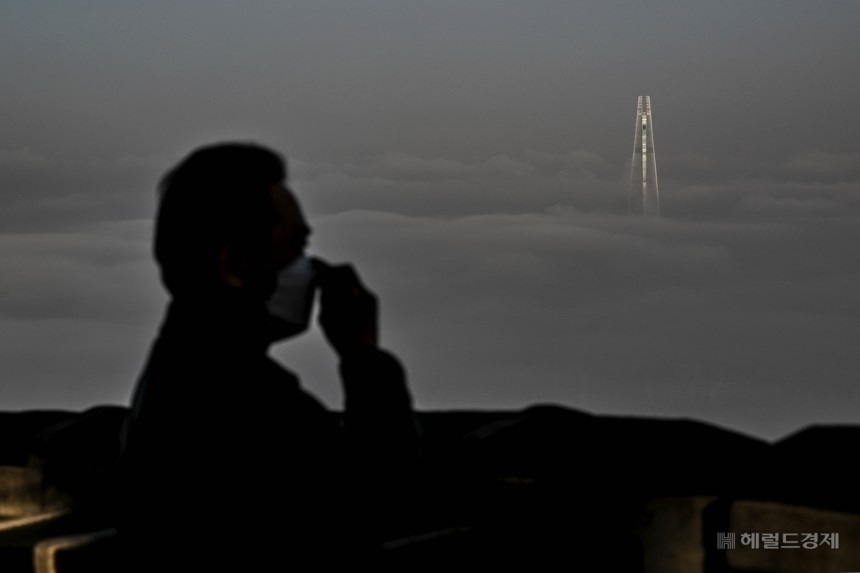
Ultrafine dust concentrations this winter are likely to exceed last winter's levels, with El Niño expected to stall air circulation and allow fine dust from both domestic and foreign sources to accumulate. The government will roll out a series of measures from next month through March to curb fine dust, including restrictions on coal-fired power plant operations and bans on high-emission vehicles.
The government convened the 20th Special Committee on Fine Dust and decided to implement the 8th Seasonal Fine Dust Management Scheme from next month through March, according to Yonhap.
The National Institute of Environmental Research put the probability of this winter's average ultrafine dust (PM2.5) concentration exceeding last winter's at 50 percent, with a 40 percent chance of similar levels and a 10 percent chance of lower levels. Last winter's average PM2.5 concentration stood at 19.8 micrograms per cubic meter.
Compared with the 10-year winter average from 2015 to 2024 — 25.7 micrograms per cubic meter — this winter's concentration is 60 percent likely to come in lower, with a 30 percent chance of similar levels and a 10 percent chance of higher levels.
The number of days when the national daily average PM2.5 concentration reaches 36 micrograms per cubic meter or above — classified as "bad" air quality days — is 50 percent likely to be higher than last winter, 30 percent likely to be similar and 20 percent likely to be lower. The probabilities relative to the 10-year average mirror those for concentration levels.
El Niño is the key factor behind the expected worsening. When sea surface temperatures in the tropical eastern Pacific rise above normal, high-pressure circulation tends to develop more frequently over the Philippine Sea and to the east of the Korean Peninsula. That stagnation traps fine dust — whether blown in from abroad or generated domestically — and prevents it from dispersing, driving up concentrations.
When high-pressure circulation sits to the east of the peninsula, warm and humid southwesterly winds can bring rain and snow that wash fine dust out of the atmosphere, lowering concentrations. However, the National Institute of Environmental Research expects the greater effect to be the formation of "secondary fine dust," as airborne pollutants absorb moisture. Atmospheric stagnation from the developing high-pressure system, combined with an influx of humid air, is expected to outweigh the cleansing effect.
The government plans to implement the 8th Seasonal Fine Dust Management Scheme with the goal of cutting emissions of ultrafine dust and fine dust precursors by about 137,000 metric tons and keeping the average PM2.5 concentration at 19 micrograms per cubic meter during the period. The average during the 7th scheme stood at 21.5 micrograms per cubic meter.
Under the plan, between 15 and 18 public coal-fired power generators will be shut down, and up to 46 will have their output capped at 80 percent, with the number of shutdowns adjusted according to power supply conditions. The government has committed to idling at least 15 units. During the 7th scheme, output restrictions on coal plants were lifted early after LNG prices surged amid the war in the Middle East.
Vehicles rated at emission grade 5 will also be barred from operating in the Greater Seoul area and six major metropolitan cities during the scheme period. An expansion of electric- and hydrogen-vehicle-only parking zones — introduced for the Ministry of Climate, Environment and Energy and its affiliated agencies during the previous scheme — will be extended to four local governments: Seoul, Gyeonggi Province, Sejong and Gwangju in South Jeolla Province.
Seven cities and provinces have also agreed to implement Level 2 emergency fine dust reduction measures even in situations that would normally trigger only Level 1 responses.
The government also plans to establish an integrated air quality control center at the Korea Environment Corporation. The center will comprehensively analyze fine dust forecasts and air quality monitoring network data to identify areas of concern and facilities with abnormally high emissions, enabling swift action.
In addition to seasonal winter and spring fine dust outlooks, the government will pilot monthly fine dust forecasts.
chami@heraldcorp.com




