
Military issues Alert for first time over Russian aircraft as jets come within moments of entering South Korean airspace
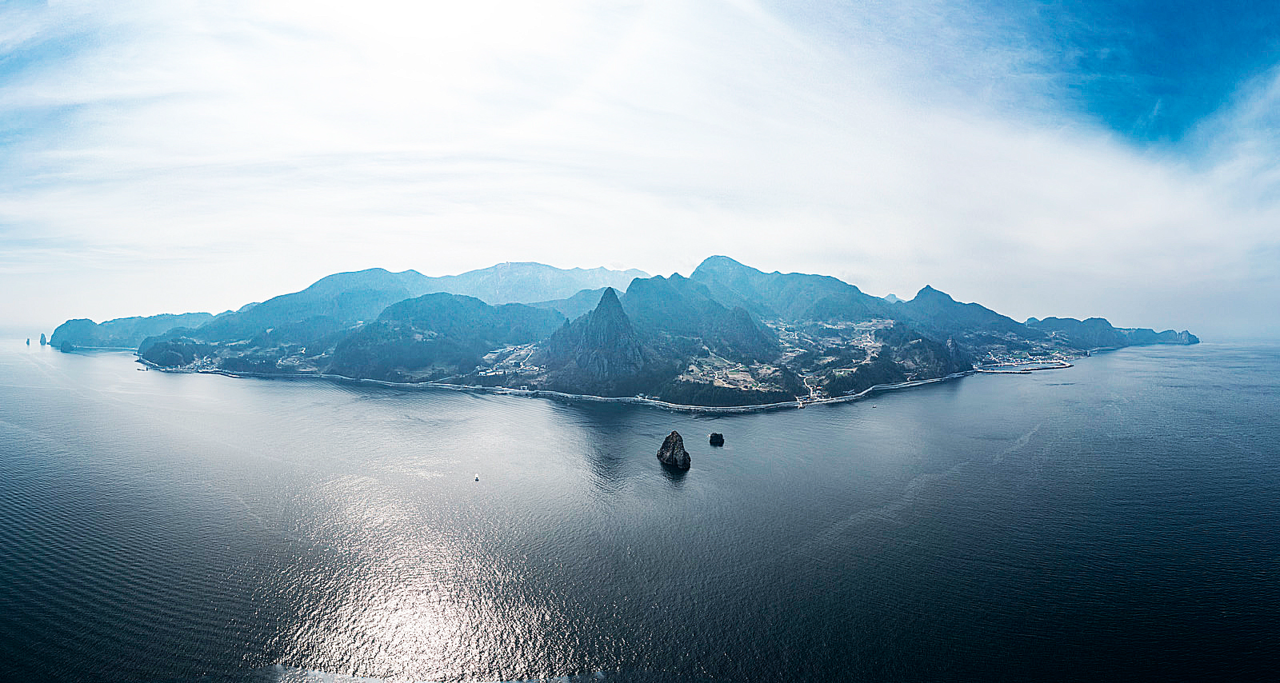
Russian military aircraft entered South Korea's Korea Air Defense Identification Zone without prior notice and closed in to within seconds of violating the airspace over Ulleungdo, the military said Tuesday. South Korean forces scrambled fighter jets and requested an Alert be issued in an emergency response. South Korea's Ministry of National Defense summoned the Russian defense attaché to Seoul to lodge a formal protest and urge that such incidents not be repeated.
Jang Do-yeong, spokesman for the Joint Chiefs of Staff, told a briefing Tuesday that the Russian aircraft "approached to just before violating Ulleungdo's airspace," adding that the military had "preemptively issued an Alert to ensure public safety, as an airspace violation was anticipated," according to Yonhap.
The aircraft entered the Korea Air Defense Identification Zone, or KADIZ, over the East Sea that morning without advance notice, flying south from the north toward Ulleungdo before drawing extremely close to the airspace north of the island. Russian military aircraft had previously flown to within about 20 kilometers of the outer edge of the airspace north of Ulleungdo in March last year, but Tuesday's approach was even closer, according to the military.
The military assessed that the aircraft would have reached South Korean airspace had South Korean Air Force fighters not been scrambled to intercept them.
A military official said Russian military aircraft travel at an average speed of 600 to 700 kilometers per hour — roughly 200 meters per second — adding that the figure should convey "how urgent the situation was."
After South Korean F-15Ks and other fighters were scrambled in response, the Russian aircraft banked in an L-shaped turn toward Japan, exited the KADIZ and flew back north. The Defense Ministry said it had "taken active countermeasures to protect our airspace in compliance with international law."
The aircraft remained inside the KADIZ for about 20 minutes, departing shortly after 8 a.m.
Four Russian military aircraft approached Ulleungdo's airspace that day, and bombers were reported to be among them.
Russia has long refused to recognize South Korea's authority over the KADIZ, arguing it has no basis in international law, and has repeatedly entered the zone without authorization. Data submitted to the National Assembly by the Joint Chiefs of Staff during a 2023 parliamentary audit showed that Russian military aircraft made about 65 unauthorized KADIZ entries between 2020 and June 2023.
This year alone, there have been multiple incursions, including on June 27 — conducted under the guise of a China-Russia joint air exercise — and Aug. 26. Most recently, Russian aircraft entered the KADIZ three times within a single week: on Wednesday and Friday of last week, and again Tuesday.
It is highly unusual for Russian aircraft to approach so close to South Korean airspace and trigger an Alert. Tuesday marked the first time the military had requested that the Ministry of Interior and Safety issue an Alert after determining that Russian aircraft entering the KADIZ could violate South Korean airspace.
That afternoon, the Defense Ministry summoned Russian Defense Attaché Nikolai Marchenko to its office in Yongsan-gu, Seoul, to lodge a stern protest over the close approach and urge that it not happen again. It was the first time the government had summoned a Russian official in Seoul to protest a KADIZ incursion since Russian aircraft made a similarly close approach in March last year.
chami@heraldcorp.com




