Ministry of Land, Infrastructure and Transport proposes rule changes requiring total-cost disclosure under the Automobile Management Act
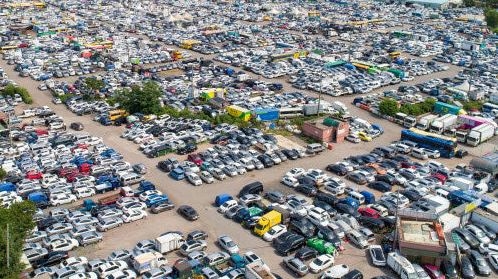
Used-car dealers will be required to display the total cost of a vehicle in advertisements, including the vehicle price plus brokerage fees and registration agency fees. Dealers will also be barred from inserting contract clauses that unfairly strip away liability for vehicle defects.
South Korea's Ministry of Land, Infrastructure and Transport announced Sunday that it will pre-announce proposed amendments to the Enforcement Decree of the Automobile Management Act, the Enforcement Rules of the Automobile Management Act, and the Automobile Registration Rules. The pre-announcement period runs from Tuesday through Jan. 4 next year. The measures follow up on a used-car consumer protection plan the government unveiled at a national policy coordination meeting on Aug. 6 as part of its national normalization agenda. The government plans to fast-track improvements that do not require legislative amendments.
Under the current system, used-car advertisements have typically listed only the vehicle price, with various fees disclosed only at the contract stage — leaving consumers facing higher costs than expected and fueling disputes. Under the proposed amendments, advertisements must display the total cost alongside itemized amounts for brokerage fees, registration agency fees, management fees, and performance and condition inspection liability insurance premiums, including any applicable discount or surcharge rates. Taxes and public charges such as acquisition tax are excluded.
For example, if a vehicle priced at 10 million won ($7,510) carries a management fee of 400,000 won, a registration agency fee of 100,000 won, and a performance insurance premium of 100,000 won with a 10 percent discount applied, the advertisement must show a total cost of 10.6 million won.
For installment sale advertisements, dealers must also disclose the cash price (including total cost), the amount of each installment payment, the number of payments, the installment interest rate, and the down payment. If the installment amount or interest rate has not been finalized, the advertisement must state a range — for example, "installment payment 200,000–250,000 won, interest rate 8–12 percent."
To make insurance premiums more transparent, the performance and condition inspection record will include a new field for the premium amount and any applicable discount or surcharge rate, and the person paying the premium will be entitled to receive a receipt issued by the insurer.
The amendments also clarify that dealers may not charge a brokerage fee when selling a vehicle they own directly. Management fees will be left to market forces, with consumers able to compare them through the total-cost disclosure requirement. A proviso that had caused disputes by capping management fees at public parking rates — a rule out of step with market reality — will be removed.
Dealers will also be restricted from inserting unfair exemption clauses in contracts. Under current practice, contracts sometimes include blanket provisions excluding dealer liability for defects that fall outside the coverage of performance and condition inspection liability insurance. The ministry said it will add explicit language to the standard vehicle transfer certificate — the official contract form for dealers — prohibiting clauses that, without reasonable justification, waive a dealer's liability for defects under the Civil Act or the Automobile Management Act.
The Act on the Regulation of Terms and Conditions already renders void any clause that is unreasonably disadvantageous to a customer or that excludes or limits a business operator's liability without reasonable cause. The ministry said the new provisions are expected to prevent consumers from having their legitimate rights curtailed by unfavorable contract terms.
The amendments also ease the storage and management burden on dealers. The requirement to remove and separately store license plates on vehicles held for sale will be abolished, and dealers will be permitted to use off-site storage facilities — in addition to their display lots — to temporarily hold vehicles for sale, as a measure to curb illegal parking.
Vehicles for sale must be kept at display or storage facilities, while sales activities such as showing listings to customers will remain restricted to showrooms and offices as before. Fines for violating these management standards will increase: a first offense rises from 200,000 won to 500,000 won, a second offense from 600,000 won to 1 million won, and a third offense from 1.8 million won to 2 million won.
The amendments also clarify accountability for vehicle performance and condition inspections. Under the current system, legal inspector status is assigned to the industry association that inspection firms belong to rather than to the individual firms that actually conduct the inspections; the change will shift that status to the individual firms, strengthening the effectiveness of oversight. In addition, local government heads in cities, counties or districts without inspection firms will be allowed to authorize mobile inspections when deemed necessary, with the same inspection items and standards applying as in regular inspections.
The ministry said it will also work with the National Assembly to pursue the remaining measures that require legislative amendments. It plans to introduce an amendment to the Automobile Management Act that would strengthen the reliability of performance and condition information, introduce refund rights and seller warranty obligations for used cars with serious defects, and establish fair trading order on online platforms.
Park Jun-hyung, director general of the ministry's Mobility and Automobile Bureau, said the amendments are expected to allow consumers to check the actual purchase cost from the moment they search for a used car online, and to substantially prevent dealers from unfairly evading liability. "We will also push ahead without delay on the remaining consumer protection measures that require legislative changes, so we can build a fair and transparent used-car market that the public can trust," Park said.
smh@heraldcorp.com